There is something so special about watching little learners discover the wonderful world of letters, sounds, and eventually reading! As a homeschool mom, I have always believed that building a strong foundation in early literacy doesn’t have to involve endless worksheets, complicated lessons, or hours sitting at a table. Sometimes, the simplest learning tools can make the biggest difference, especially when they make learning fun!
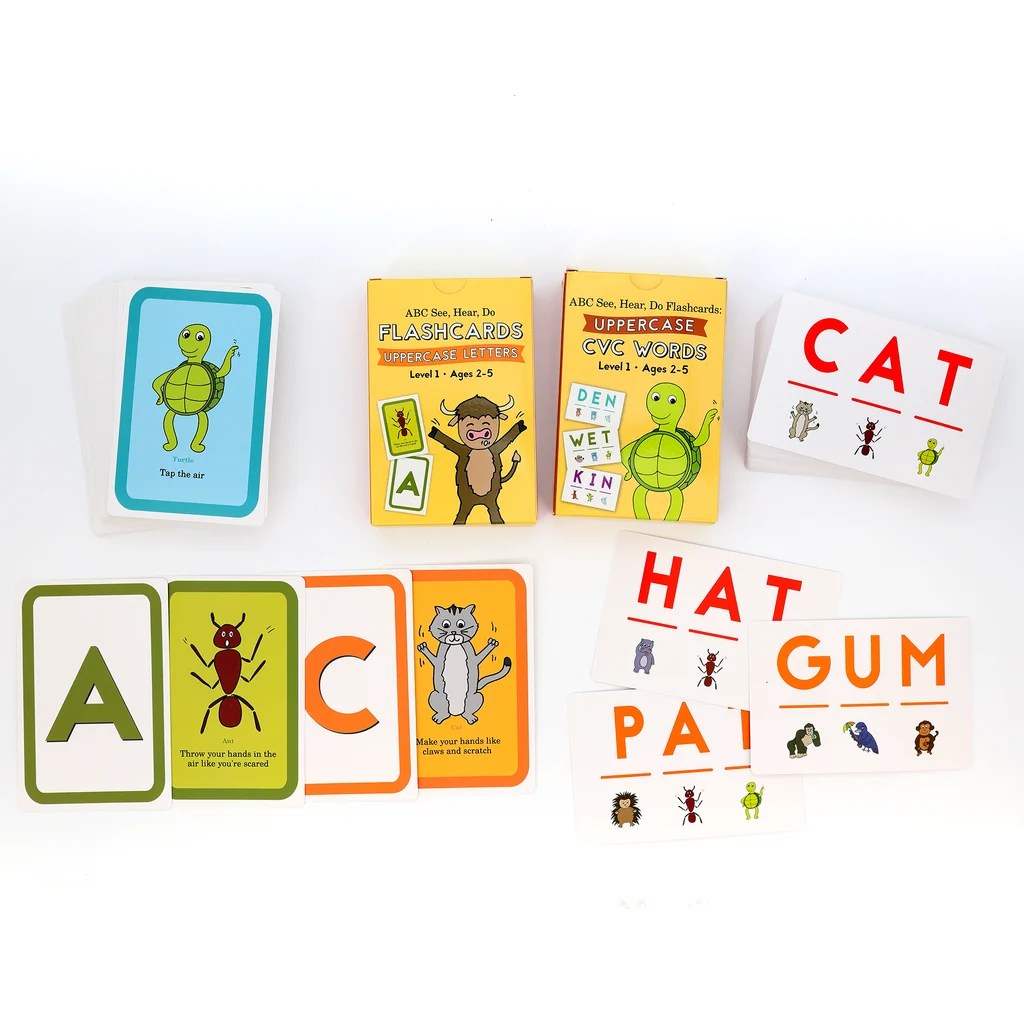
Recently, I had the pleasure of sharing two wonderful early learning resources from Timberdoodle Co.: ABC See, Hear, Do Flashcards: Uppercase Letters Level 1 and ABC See, Hear, Do Flashcards: Uppercase CVC Words Level 1.
What made these two sets extra special was that I had two very special little learners in mind when I received them. Rather than keeping them in our homeschool collection, I decided to share the joy of learning with my great-nephew and a sweet little friend of ours who are both beginning their own early learning adventures. nd let me tell you, it has been such a pleasure watching both kiddos work with their cards!
ABC See, Hear, Do Uppercase Letters Level 1: A Wonderful Beginning for Little Learners
When it comes to introducing the alphabet, I love resources that go beyond simply asking a child to memorize what a letter looks like. The ABC See, Hear, Do Uppercase Letters Level 1 flashcards offer a playful, multi sensory approach to early literacy. These cards introduce children to uppercase letters while encouraging them to connect what they see with the sounds they hear and the movements they make. The concept behind ABC See, Hear, Do is wonderfully simple: children see the letter, hear its sound, and use an accompanying action or movement to help reinforce what they are learning.
This approach is especially helpful for little learners who aren’t quite ready for traditional pencil-and-paper activities. Instead of sitting still and repeating letters, they get to participate in the learning process! I decided to gift this set to my great-nephew as he begins his journey into home learning. I wanted him to have something that would make his first experiences with letters exciting, engaging, and, most importantly, enjoyable. At this stage, it’s not about rushing children into reading. It’s about helping them become comfortable with letters, recognizing their shapes, hearing their sounds, and developing confidence as they learn something new.
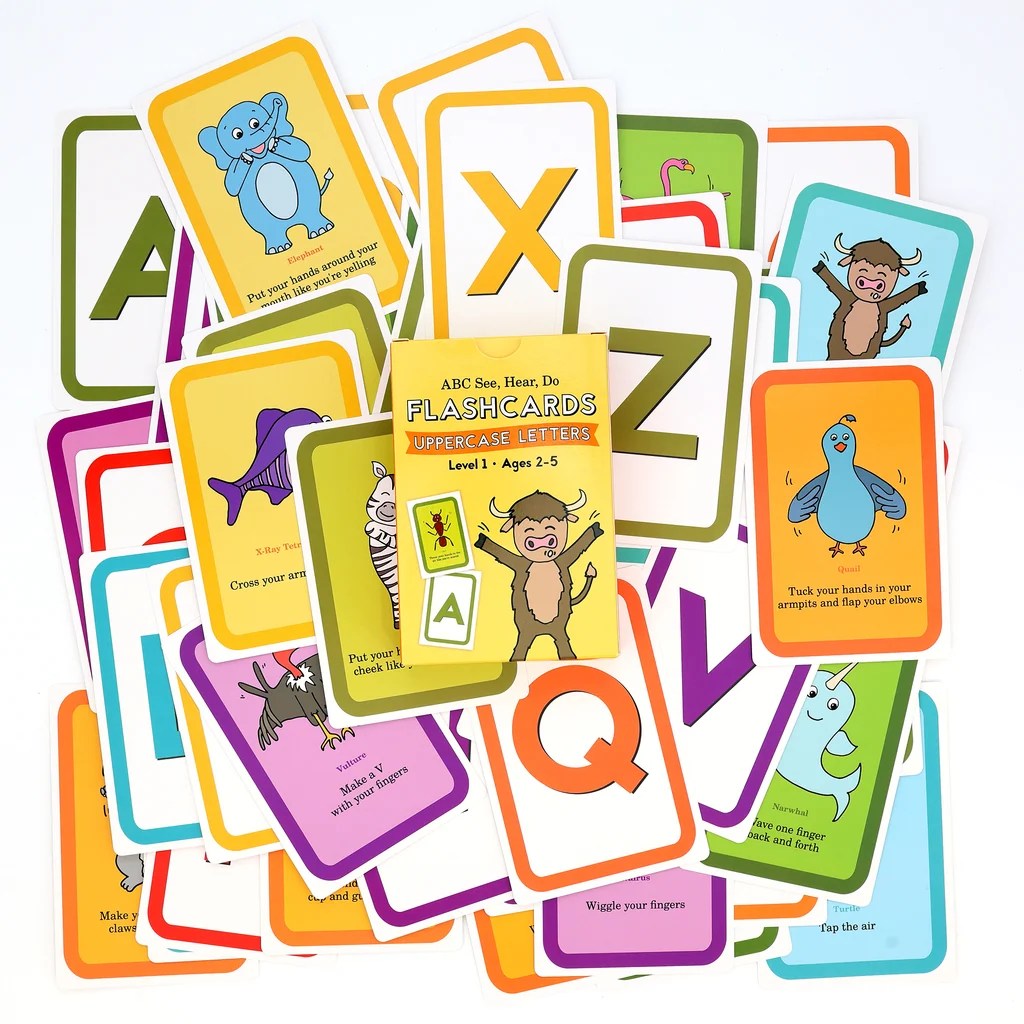
What I especially appreciate about the Uppercase Letters set:
- It introduces uppercase letter recognition in a child-friendly way.
- It encourages letter-sound connections, an essential early reading skill.
- It incorporates movement and visual learning rather than relying solely on memorization.
- It can be used for short, playful learning sessions without overwhelming younger children.
- It gives parents a simple way to introduce foundational literacy skills at home.
For families just beginning their homeschool journey, this is the type of resource I love recommending. You don’t need to be an experienced homeschool parent to sit down with your little one and make learning letters fun.
ABC See, Hear, Do Uppercase CVC Words Level 1: Taking Those First Steps Toward Reading
Our second set, ABC See, Hear, Do Flashcards: Uppercase CVC Words Level 1, went to a special little friend of ours who has officially started her three-year-old year doing all the homeschool things! She is beginning to explore reading, and I thought these cards would be a wonderful addition to her early learning activities. Now, if you are new to teaching reading, you might be wondering what CVC words are. CVC stands for consonant-vowel-consonant. These are simple three-letter words, such as CAT, DOG, and SUN, that help beginning readers practice blending individual letter sounds together to form words. Learning to blend sounds is a huge milestone in early reading development!
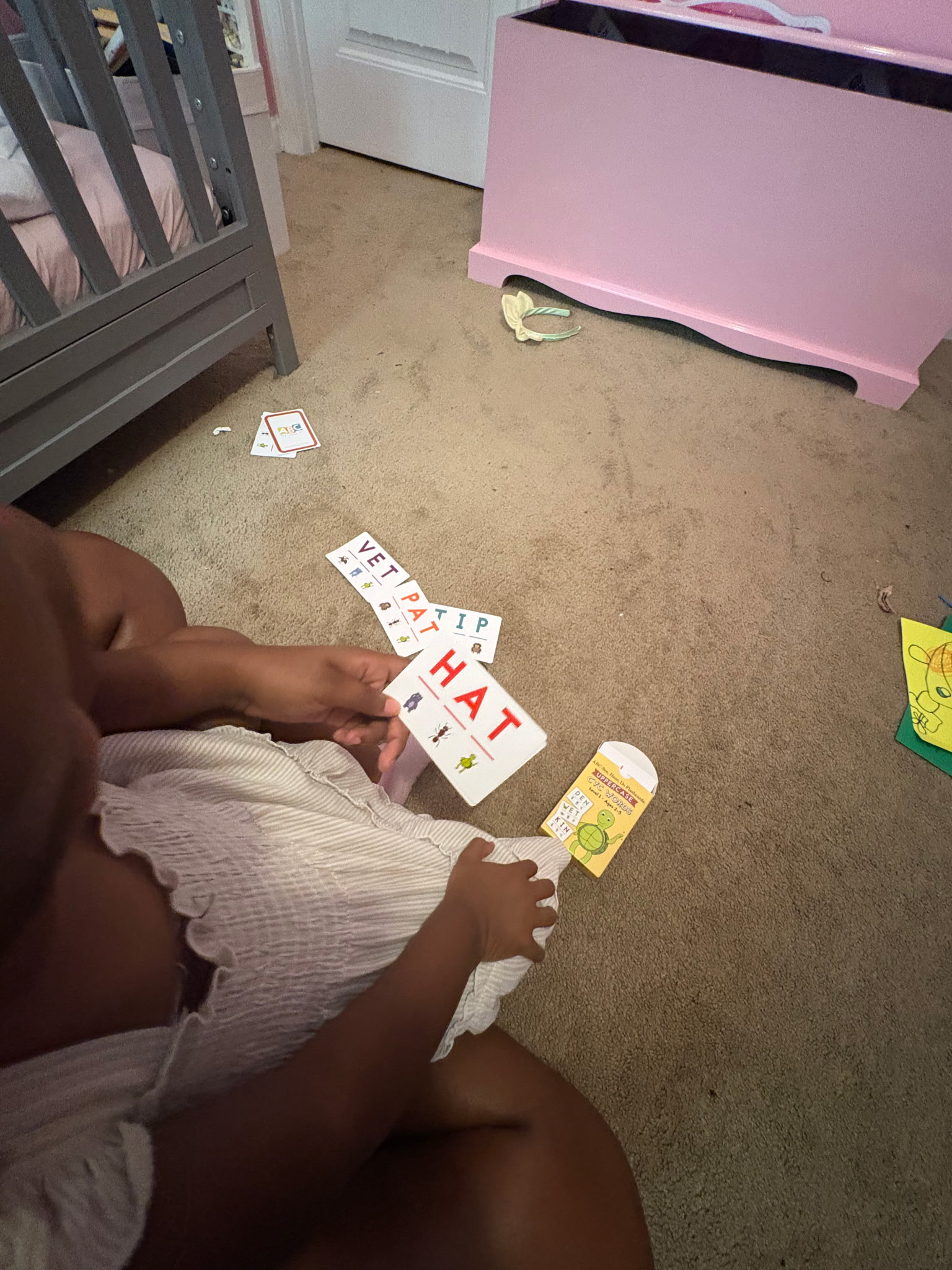
While the Uppercase Letters set focuses on helping children recognize letters and connect them with sounds, the Uppercase CVC Words set helps children begin putting those sounds together. What I love about this progression is that it builds naturally on the skills children are already developing.
The CVC flashcards give little learners opportunities to:
- Practice recognizing individual letter sounds within words.
- Develop phonemic awareness and beginning decoding skills.
- Learn how sounds blend together to create words.
- Strengthen early word recognition.
- Build confidence as they begin reading simple words independently.
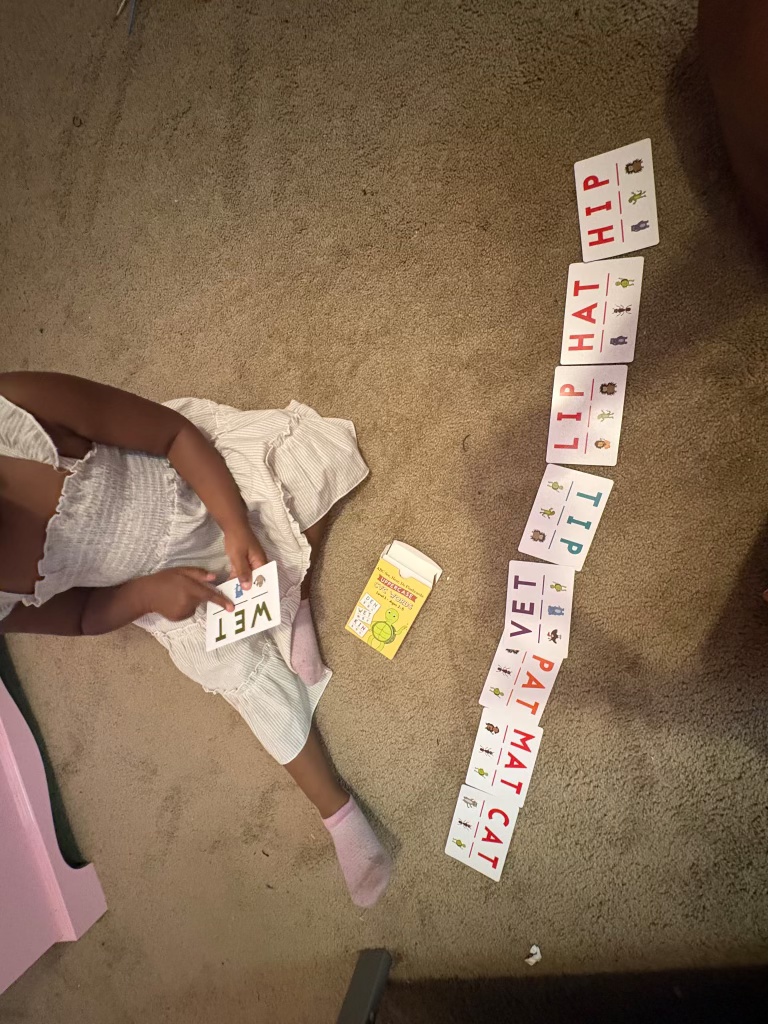
And because the ABC See, Hear, Do approach incorporates visual, auditory, and movement-based learning, it makes the process feel much more interactive than simply drilling word lists. For our little friend, these cards are a great way to explore the beginning stages of reading while still enjoying all the fun that comes with being three years old. One thing I always encourage parents to remember is that early learning is not a race. Some three-year-olds are eager to explore letters and words, while others are still developing those foundational skills through play. Both are perfectly fine! These cards can be introduced gradually, allowing children to work at their own pace.
Let’s Talk About the Cards Themselves: Quality, Durability, and Everyday Use
One thing I always consider when reviewing learning materials for younger children is durability. Let’s face it, little hands aren’t always gentle! Flashcards get shuffled, dropped, spread across the floor, carried around the house, and sometimes become part of an entirely different imaginative adventure. That is why I appreciate having dedicated, reusable flashcards rather than relying entirely on printed worksheets. The ABC See, Hear, Do cards have a colorful, easy-to-follow presentation that makes them inviting for young learners. Their individual card format is also practical because parents can select just a few letters or words at a time instead of overwhelming children with an entire alphabet or a long reading lesson. I especially like how easy they are to incorporate into everyday learning.
You can use them during morning time, at the kitchen table, on the living room floor, or as a quick activity between other homeschool lessons. For families planning to use their cards over several years or pass them down to younger siblings, I recommend storing them together after each lesson and keeping them away from snacks and drinks. With younger learners, taking care of our materials is another little lesson in itself! The cards are also easy to adapt to different activities. You can introduce a few new letters, revisit familiar sounds, play matching games, or encourage your child to demonstrate the movements that go along with what they’re learning.
Who Would Benefit Most from These Flashcards?
I think these sets are wonderful additions for several types of early learners.
Beginning preschool and Pre-K students: The Uppercase Letters set is an excellent starting point for children just becoming familiar with the alphabet and letter sounds.
Children showing an interest in reading: The Uppercase CVC Words set provides a natural next step for children who are beginning to recognize letter sounds and are ready to practice blending.
Hands-on and active learners: Children who enjoy movement and interactive activities may especially appreciate the See, Hear, Do approach.
Homeschool families with multiple young children: These cards can be brought out again and again as younger siblings reach different stages of early literacy.
Parents, grandparents, and caregivers: You don’t have to be a homeschool parent to use these resources. They are also wonderful for families who want to support early learning at home through short, meaningful activities.
I also think these would make thoughtful gifts for a child beginning preschool or starting a home learning journey. After all, that is exactly why I chose to share these sets with two special little people in our lives!
My Final Thoughts: Little Cards, Big Foundations!
As a homeschool mom, one of the greatest joys is watching children develop a love for learning. It doesn’t matter whether they are your own children, grandchildren, nieces, nephews, or special little friends. There is something incredibly rewarding about being part of those early educational milestones.
Gifting the Uppercase Letters set to my great-nephew as he begins his home learning journey and sharing the Uppercase CVC Words set with our little three-year-old friend has made this review especially meaningful.
It has truly been a pleasure watching both kiddos work with their cards, explore new skills, and begin building those important early literacy foundations. I love that these resources meet children at different stages of their learning journey. One child is beginning with letters and sounds, while another is taking those exciting first steps toward putting sounds together to read words. Both are learning. Both are growing. And both are developing skills that will serve them as they continue their educational journeys. The ABC See, Hear, Do Flashcards are a lovely reminder that early literacy doesn’t have to be complicated.
With the right resources, a little patience, and plenty of encouragement, we can make learning to read a positive and memorable experience.
If you are putting together an early learning collection, shopping for a little learner, or exploring homeschool curriculum for the first time, I definitely think these flashcards are worth checking out. And don’t forget to take a look at the 2026 Timberdoodle Co. Pre-K Curriculum Kit while you’re at it! You might just discover some wonderful new resources for your little learner.
Because sometimes, those little flashcards help build the biggest foundations for a lifelong love of reading!