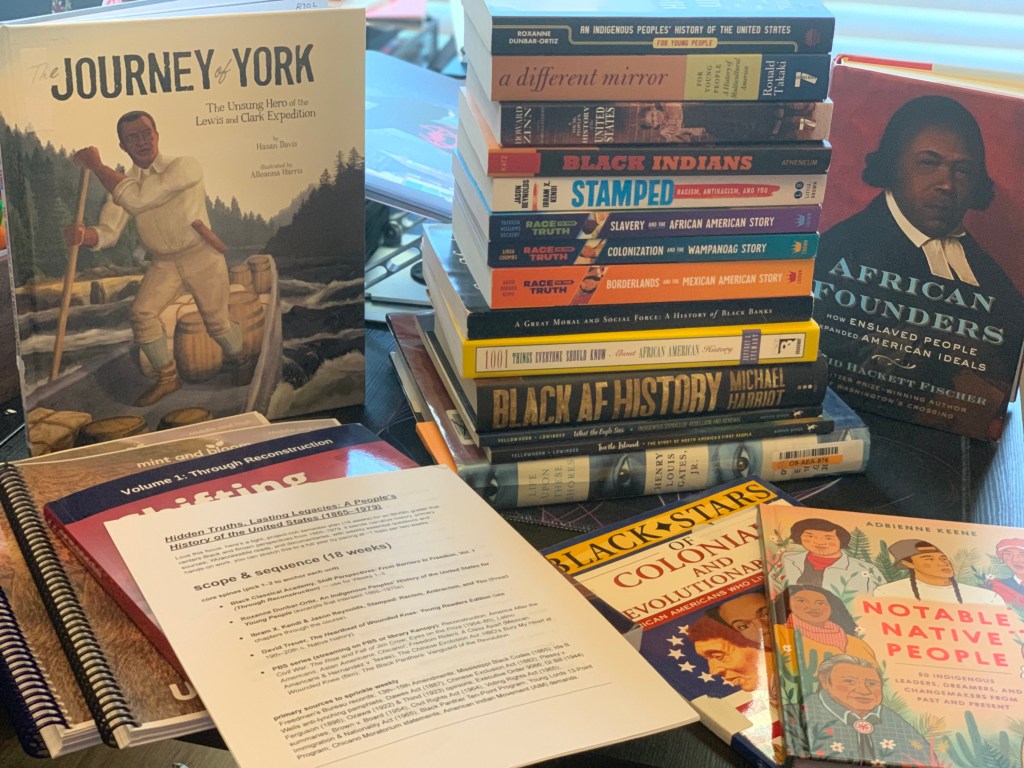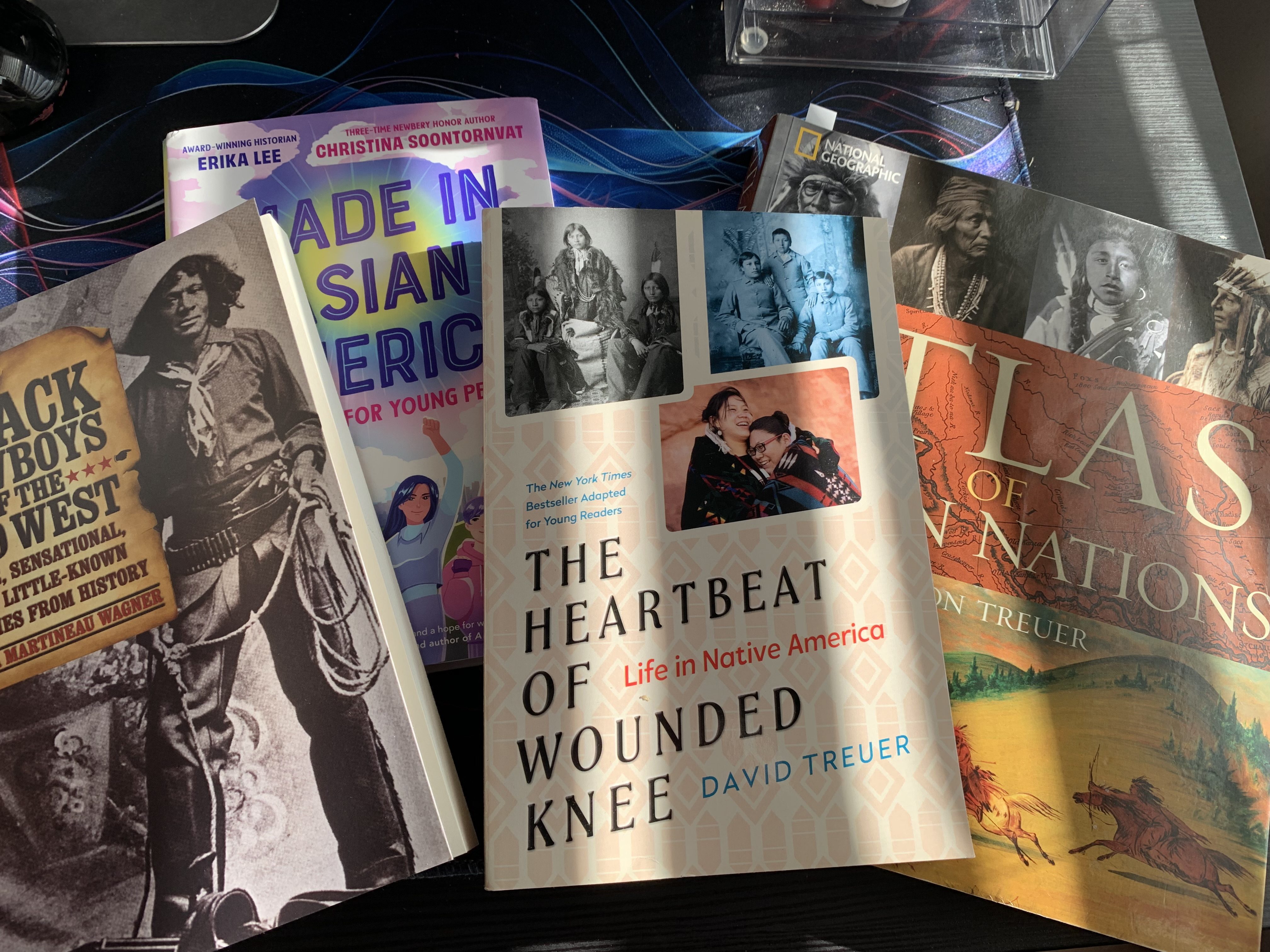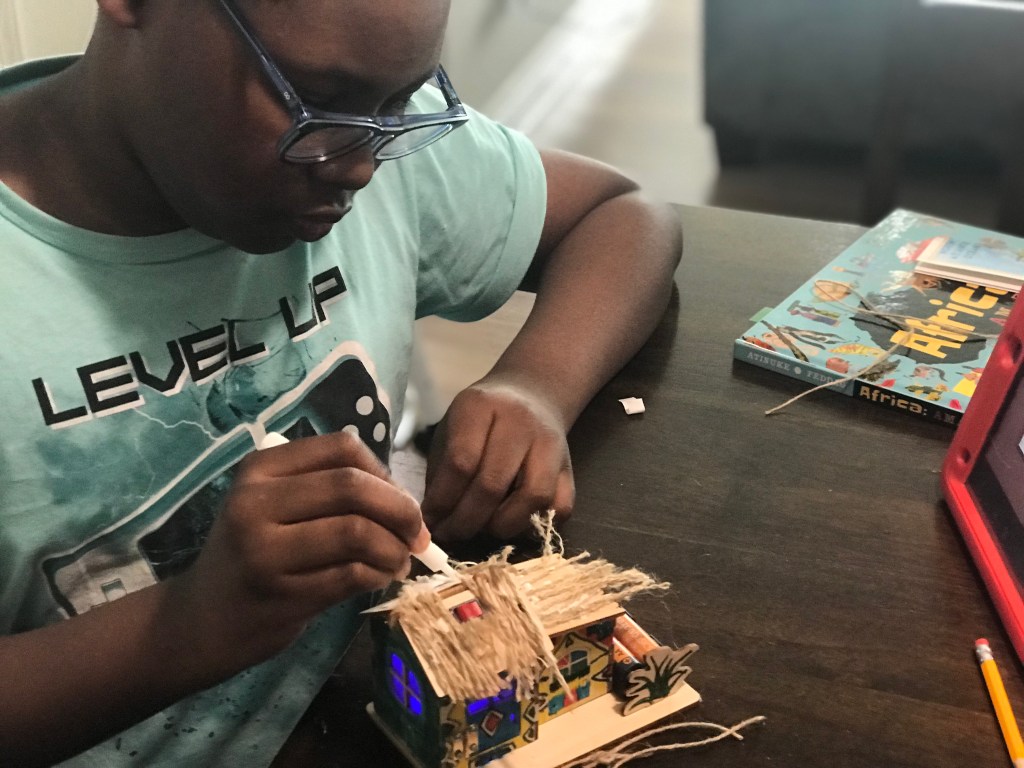
I am so glad resources like Your African History exist for students like my high schooler. This year, we are studying World History, and if you have been homeschooling for any length of time, you probably know that sometimes even the curriculum you carefully select will leave you searching for more. Not necessarily because the curriculum is bad, but because you realize your student needs another perspective. That moment happened for us while my son was reading one of his required history book about the pharaohs of ancient Egypt. After reading for a while, he came to me and said, “Mom, this book is informative, but it is telling the history of the pharaohs of Egypt kings from one perspective.”
And there it was.
He noticed it on his own.
We have become accustomed to moments like this throughout our homeschool journey. When something feels incomplete, we do what we have always done we pivot. We research. We add another source. We ask more questions. We look at who is telling the story, whose voices are included, and whose voices may be missing. Thankfully, this year we did not have to pivot very far because we already had one of our favorite resources in our homeschool arsenal: Your African History. I have talked about Your African History several times on my social platforms because it has become such a valuable resource for our family. We even continued using it over the summer. Eventually, I made the decision to stop not because my son was tired of it, but because I wanted us to have something exciting to return to during the school year.
My son loves history. But more importantly, he wants history that encourages him to dig deeper. He wants to know what happened, why it happened, who benefited, whose perspective is being presented, and how the past connects to what we see today. As he has gotten older, I have watched him move from simply learning historical facts to questioning historical narratives. That is exactly where I believe high school history should take our students.
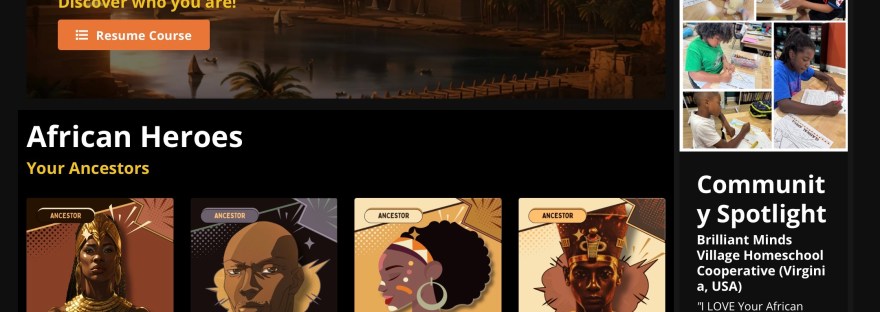
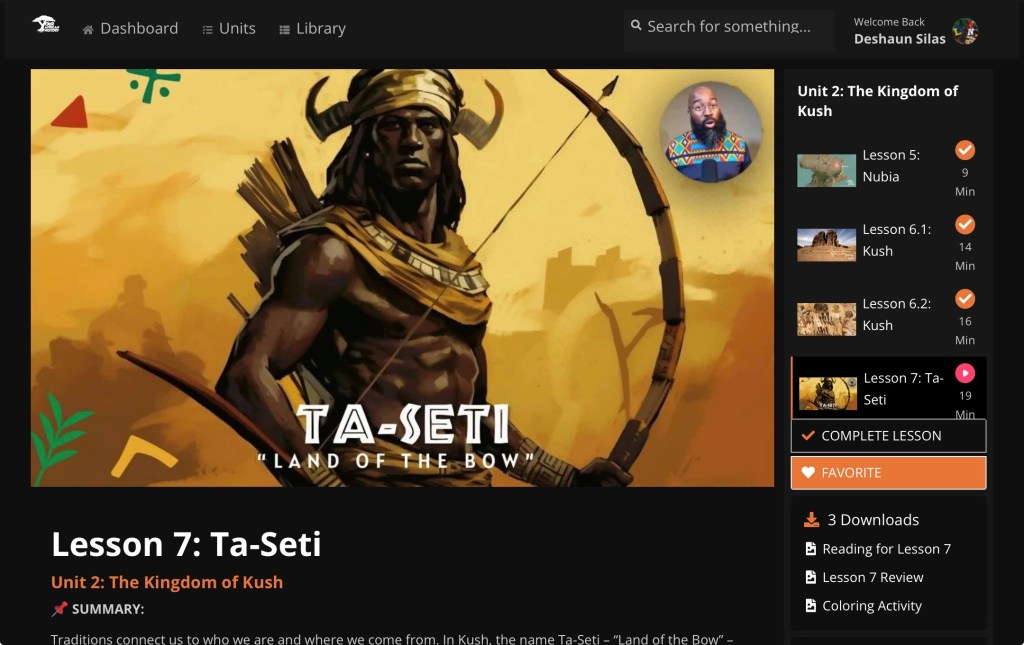
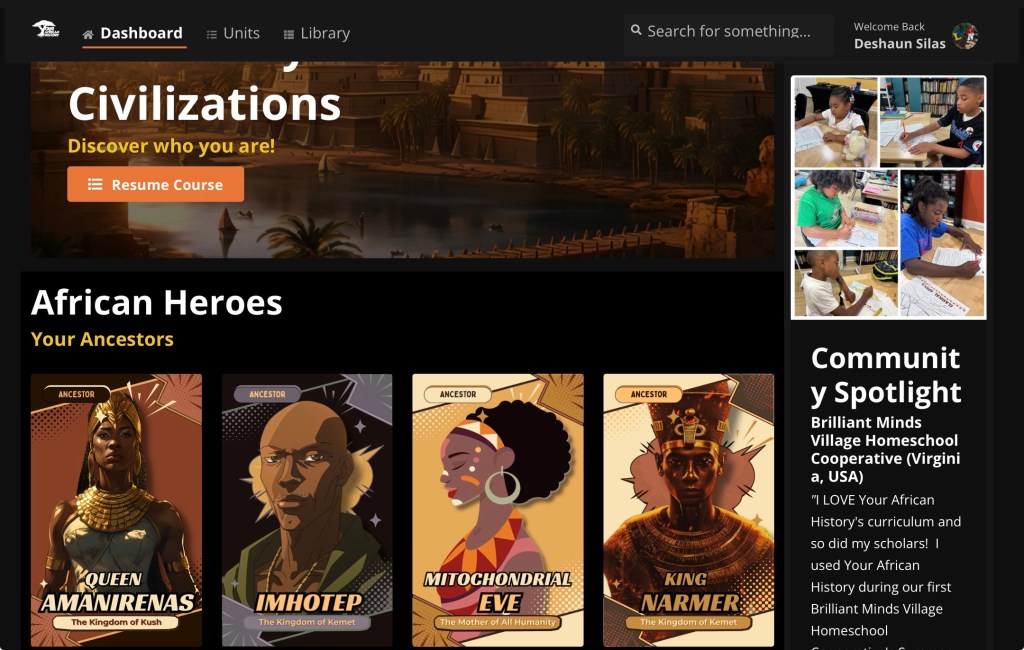
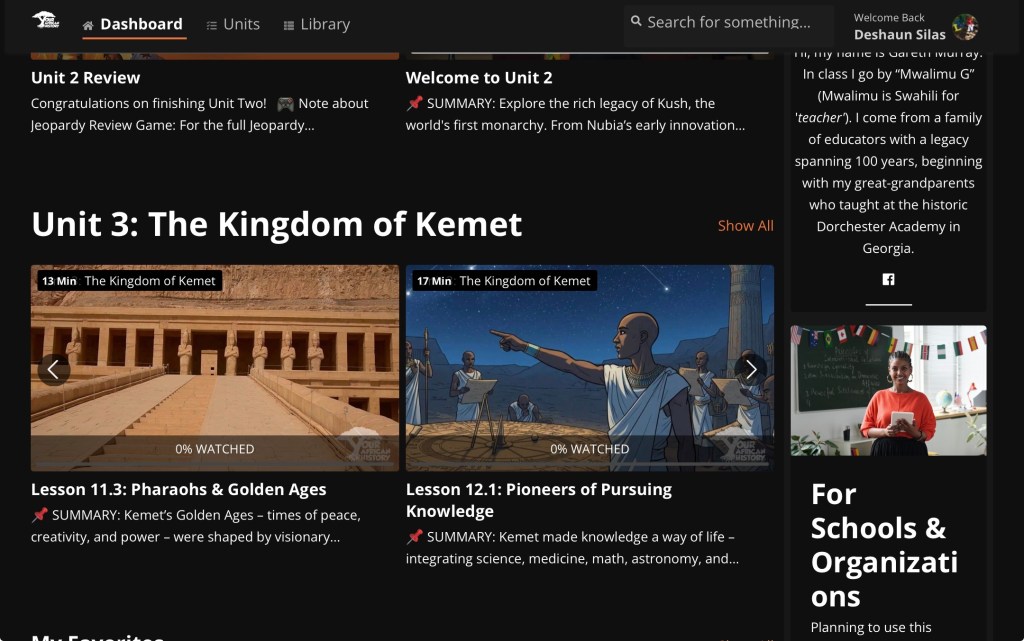
Your African History is an online educational platform centered on African history, culture, people, civilizations, and their influence on the world. It gives students an opportunity to explore African history through engaging lessons, storytelling, characters, visuals, and interactive learning experiences. Instead of treating Africa as a brief chapter within a much larger world history story, the platform gives students space to explore the depth and complexity of African history itself.
Designed to Grow With Your Student
Another thing I appreciate about Your African History is that this is not a resource students are expected to rush through in a few weeks. The course is designed to be completed over the course of one year and is geared toward students in grades 3–12, which gives families a lot of flexibility in how they incorporate it into their homeschool.
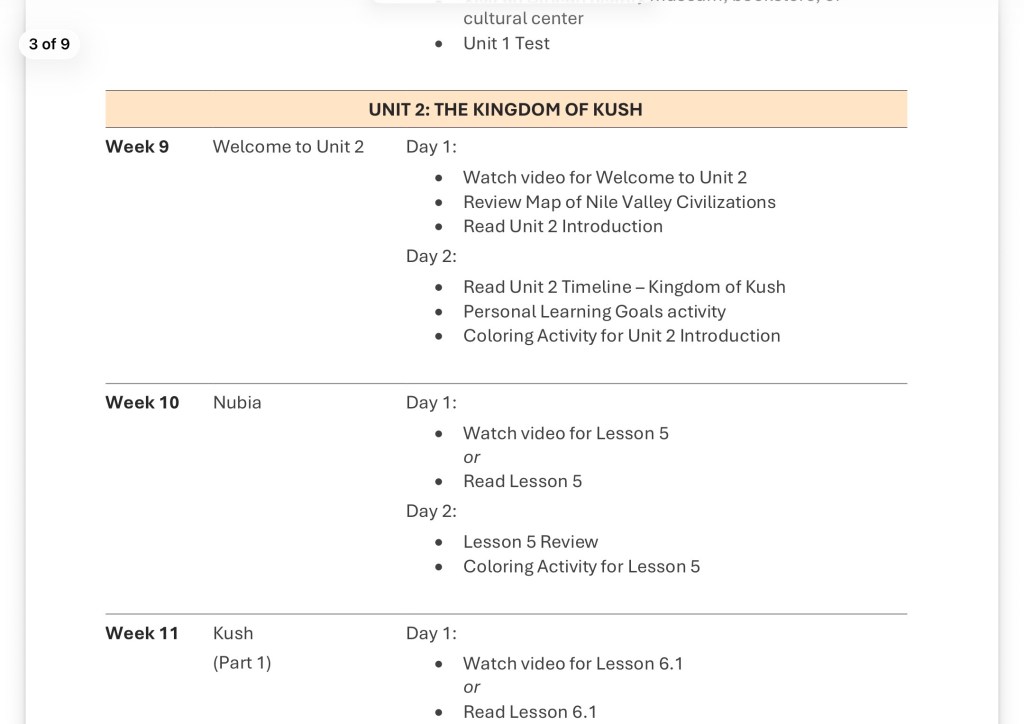
The program comes with a detailed syllabus and lesson-plan schedule, and there are several scheduling options for families to choose from. I really appreciate this because every homeschool does not operate the same way, and every family may not want to use the program at the same pace. In our homeschool, we typically follow the one-day-a-week schedule, allowing Your African History to complement the World History curriculum my son is already completing. Sometimes, depending on what we are studying or how deeply we want to explore a topic, I switch to the two-day-a-week schedule. Having those options allows me to use the program intentionally without making my high schooler feel as though I am simply piling another full history course onto his workload.
For high school especially, I love having that flexibility. I can look at what we are covering in our primary World History curriculum and strategically bring in Your African History where it adds another perspective, expands the discussion, or gives my son an opportunity to investigate a topic more deeply. Some weeks that means one lesson; other weeks we may spend two days with the platform because what we are learning connects so well with our current studies. It works with our homeschool instead of requiring our homeschool to work around it.
Recently, the platform received a beautiful upgrade. The new characters are visually engaging, the platform feels fresh and inviting, and there are even more features for students to explore. Even though my son is now working at the high school level, it does not feel like something he has outgrown. Over the last few weeks, he has genuinely enjoyed working through the platform alongside his World History curriculum.
And that “alongside” part is important.
We are not throwing away our World History books every time we encounter a perspective we want to investigate further. We are learning how to place resources beside one another. My son can read his assigned textbook or historical book and then use Your African History to explore additional context and perspectives. From there, we can discuss the differences, research questions that arise, and determine what additional primary and secondary sources we may need.
That is high school learning.
For me, Your African History is about much more than learning the names of ancient civilizations, kings, queens, empires, and historical events. It creates opportunities for students to examine how they think about African history in the first place. Too often, African history is reduced to slavery, colonization, poverty, or struggle. When that becomes the primary framework through which children encounter Africa, they can miss thousands of years of civilization, scholarship, innovation, trade, government, architecture, culture, resistance, intellectual traditions, and human achievement.
I also think about what happens when Black and brown history becomes less visible in what children encounter. What will future generations know about the people who came before them if we do not intentionally preserve, study, question, and discuss these histories?
That is why resources like this matter to me.
Whether your child is homeschooled or attends a traditional school, having access to additional historical resources can help them become a more thoughtful student of history. Our children should know how to encounter a historical claim and ask, What is the evidence? Who is telling this story? Is there another perspective? What sources support this interpretation? What happened before this event? And how does this history connect to the world I live in today?
Those are skills that extend far beyond a history course.
What Your African History Adds to Our High School Studies
- A broader lens on African history that allows us to explore people, civilizations, events, and ideas that may receive limited attention in a traditional World History resource.
- Critical-thinking opportunities that encourage my son to question, compare, investigate, and examine what he has previously learned.
- Connections between the past and present, helping him understand that history is not a collection of isolated events but a story whose effects continue across generations.
- Conversations about stereotypes and historical narratives, including where certain ideas about Africa originated and how those ideas have been repeated.
- Growth mindset, confidence, and empowerment, because there is something powerful about young people encountering histories that expand their understanding of what people who look like them have contributed to the world.
- A natural companion to our World History curriculum, giving us another resource to place beside textbooks, literature, documentaries, maps, primary sources, and other historical materials.
One of the additions I have especially enjoyed is Jamal’s story. To me, it feels like a call to action for young scholars. It pushes students beyond simply receiving information and toward becoming active participants in their own education. That is something I want my son to carry with him throughout high school and eventually into college: the confidence to read, question, investigate, and think for himself.
At the high school level, I do not want him to believe something simply because it appears in a textbook and I do not want him to automatically believe something simply because it appears on an alternative educational platform either. I want him to develop the skills to examine sources, compare perspectives, recognize bias, look for evidence, and form thoughtful conclusions. That is one of the greatest benefits I see in incorporating Your African History into our homeschool. Our goal is not just to finish a World History course and put another credit on his transcript. Most of all, I want him to understand that learning history comes with a responsibility.
A responsibility to ask questions.
A responsibility to seek evidence.
A responsibility to listen for voices that may have been overlooked.
A responsibility to challenge stereotypes without replacing them with new assumptions.
And a responsibility to keep learning.
One day, our children will be the adults responsible for teaching the next generation what came before them. I want my son to enter that future knowing that his history—and the history of people across the African continent and throughout the African diaspora is worthy of serious study, thoughtful discussion, and preservation.
That is why Your African History is not just another online resource sitting in our homeschool toolbox. For us, it has become part of how we teach our high schooler to approach history itself: read deeply, question thoughtfully, compare perspectives, search for evidence, make connections, and never stop learning simply because the textbook reached the end of the chapter.