
Choosing a history curriculum this year was not an easy task it was a huge struggle. I knew from the start that we didn’t want to spend weeks reviewing early U.S. history. Both my son and I wanted something different: a curriculum that allowed us to dig deeper into Indigenous, African, Hispanic, and Asian history, and to start our study at Reconstruction instead of repeating material we’ve already covered over and over again.
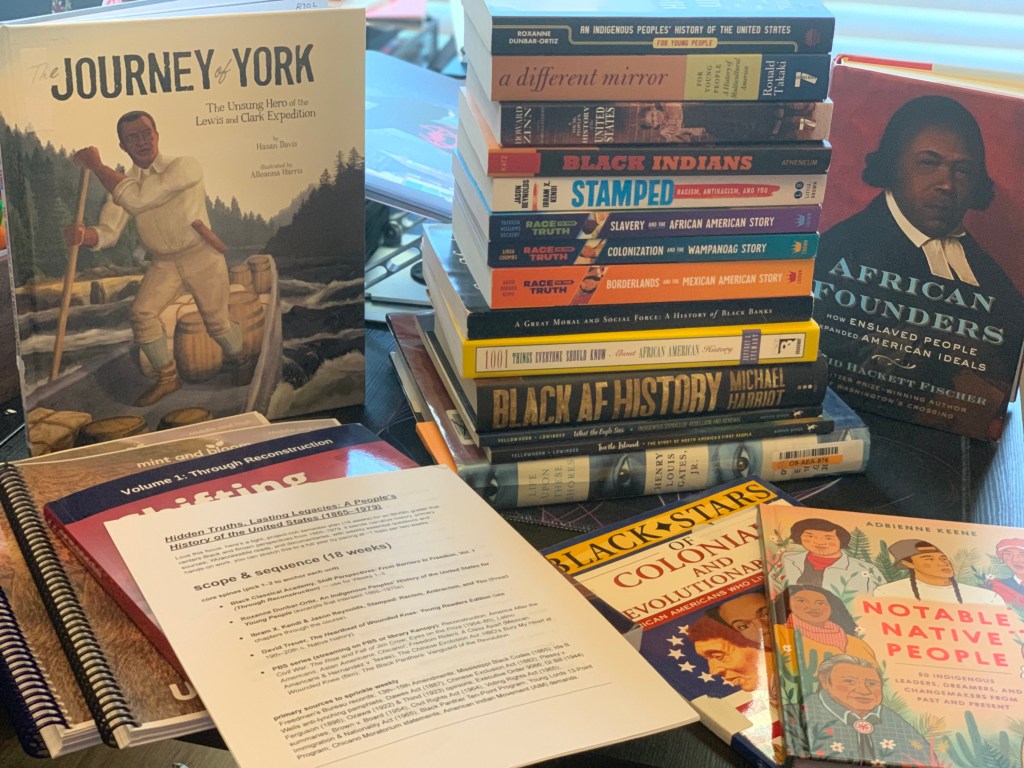
As my son often reminded me, “I know all of this why do we have to spend so much time going back through slavery?” I realized he was feeling the same way I was tired, re-traumatized, and ready to move forward. That’s when I decided it was time to shake things up and seek out resources that honored voices often left out of the mainstream narrative.
Why We Passed on a Traditional Approach
Most history curriculums for middle and high school start with the same framework: early exploration, colonial America, and then a heavy emphasis on slavery and the Revolutionary era. While important, this wasn’t what we needed this year. We wanted to move forward into parts of history that aren’t often highlighted, such as the Black towns that thrived in the late 1800s and 1900s, the rise of Black-owned banks, and the housing struggles that shaped African American communities.
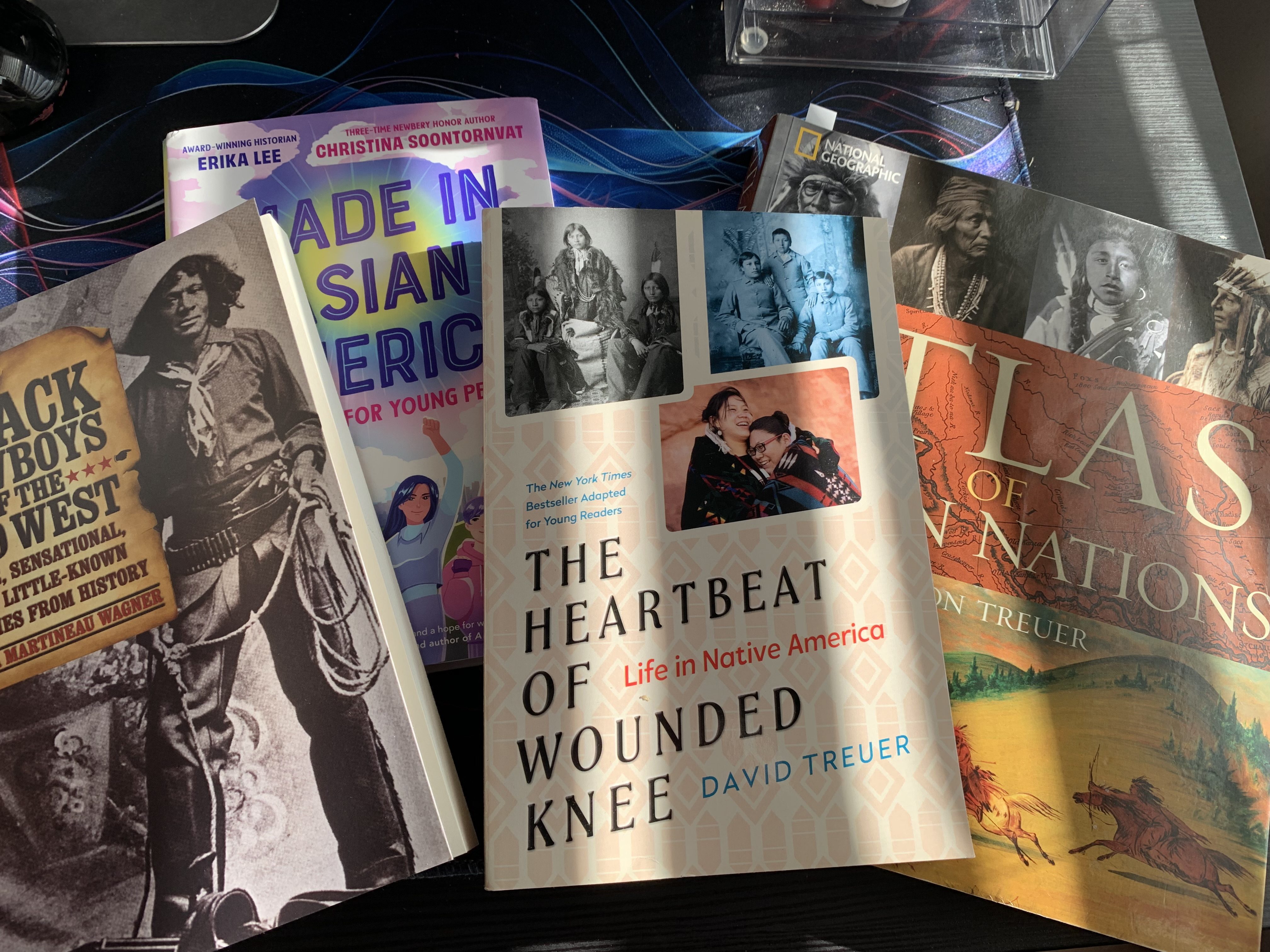
We also wanted to explore the roles Indigenous, Asian, and Hispanic Americans played after the Civil War topics like the Chinese Exclusion Act, the Dawes Act, landmark court cases involving Black and Brown communities, the Chicano Moratorium, the Black Panther Party, and the Young Lords.
Shifting Perspectives: A Standout Choice
One of the first curriculums that caught our attention last year was Shifting Perspectives by Tanya Adkins. This resource instantly resonated with us. It didn’t shy away from hard truths, but instead encouraged students to engage thoughtfully with history.
What I loved most was how it revisited parts of U.S. history that we hadn’t fully covered in depth, filling in gaps while keeping the focus beyond the same repeated storylines. My son was excited about the structure, and we’re already eagerly awaiting the release of Volume 2. For those areas we wanted to revist this year they are on the list and planned out.
For anyone looking to bring in Afrocentric perspectives that go beyond surface-level coverage, this curriculum is a gem. Be sure to check out my full review of it for more details!
Mint & Bloom: Fresh Voices in History
Next, I flipped through Mint and Bloom’s new Middle School/High School History curriculum when it dropped this summer and was impressed by how they flipped the narrative. Their approach intentionally gives voice to the unheard and emphasizes stories that often get overlooked in standard textbooks.
I especially appreciated:
- Interactivity: Activities that get kids thinking, analyzing, and connecting the past to the present.
- Representation: Their textbook selections felt intentional and inclusive, bringing in diverse perspectives.
While we won’t be using it as a standalone this year, Mint & Bloom is going to be a strong partner in shaping our history journey, the great part is I already owned about 90% of the books
Oh Freedom High School: Pieces We’re Keeping
We also considered Oh Freedom High School, but ultimately Volume 1 wasn’t a perfect fit for what we were looking for this year. Still, I couldn’t walk away from it entirely. I really liked the journal component and some of the book selections, which we’ll be weaving into our studies.
Sometimes the best curriculum isn’t an all-or-nothing choice it’s about pulling what works for your family and leaving the rest.
Creating Our Own Path
After reviewing these resources, I decided to merge the best parts of each and write our own history plan. This way, we can focus on the topics that matter most to us: the hidden stories, the overlooked communities, and the rich contributions of people who shaped history but rarely get center stage in textbooks.

This blend allows us to honor Reconstruction, dive into critical turning points like the Chicano Moratorium and the Dawes Act, and explore movements like the Black Panther Party and the Young Lords in a way that feels empowering, not exhausting.
Conclusion: Reclaiming Our History
This journey taught me that it’s okay to say no to the traditional script and yes to something that works better for us. History isn’t just about memorizing dates—it’s about understanding whose voices are amplified and whose are silenced.
By blending Shifting Perspectives, Mint & Bloom, and select pieces from Oh Freedom, we’ve built a history curriculum that doesn’t retraumatize, but instead empowers. We’re reclaiming history in a way that brings truth, representation, and healing into our homeschool. The great part is we can take our time we use these histories over the next two years.
For us, history this year isn’t about what’s always been taught it’s about uncovering what’s been hidden.

 Little Learner and Mom