African History, African Studies, African Studies High School, African Studies Middle School, Curriculum, Homeschool, homeschool curriculum, Online Learning

Beyond the Textbook- Why Your African History Belongs in Our High School World History Studies

I am so glad resources like Your African History exist for students like my high schooler. This year, we are studying World History, and if you have been homeschooling for any length of time, you probably know that sometimes even the curriculum you carefully select will leave you searching for more. Not necessarily because the curriculum is bad, but because you realize your student needs another perspective. That moment happened for us while my son was reading one of his required history book about the pharaohs of ancient Egypt. After reading for a while, he came to me and said, “Mom, this book is informative, but it is telling the history of the pharaohs of Egypt kings from one perspective.”

And there it was.

He noticed it on his own.
Screenshot

We have become accustomed to moments like this throughout our homeschool journey. When something feels incomplete, we do what we have always done we pivot. We research. We add another source. We ask more questions. We look at who is telling the story, whose voices are included, and whose voices may be missing. Thankfully, this year we did not have to pivot very far because we already had one of our favorite resources in our homeschool arsenal: Your African History. I have talked about Your African History several times on my social platforms because it has become such a valuable resource for our family. We even continued using it over the summer. Eventually, I made the decision to stop not because my son was tired of it, but because I wanted us to have something exciting to return to during the school year.
Screenshot

My son loves history. But more importantly, he wants history that encourages him to dig deeper. He wants to know what happened, why it happened, who benefited, whose perspective is being presented, and how the past connects to what we see today. As he has gotten older, I have watched him move from simply learning historical facts to questioning historical narratives. That is exactly where I believe high school history should take our students.

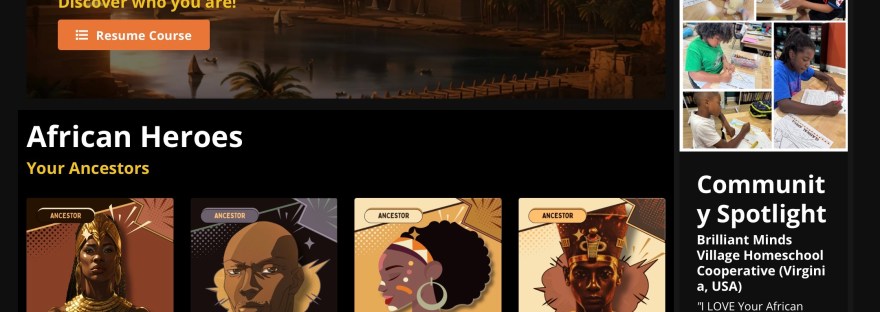
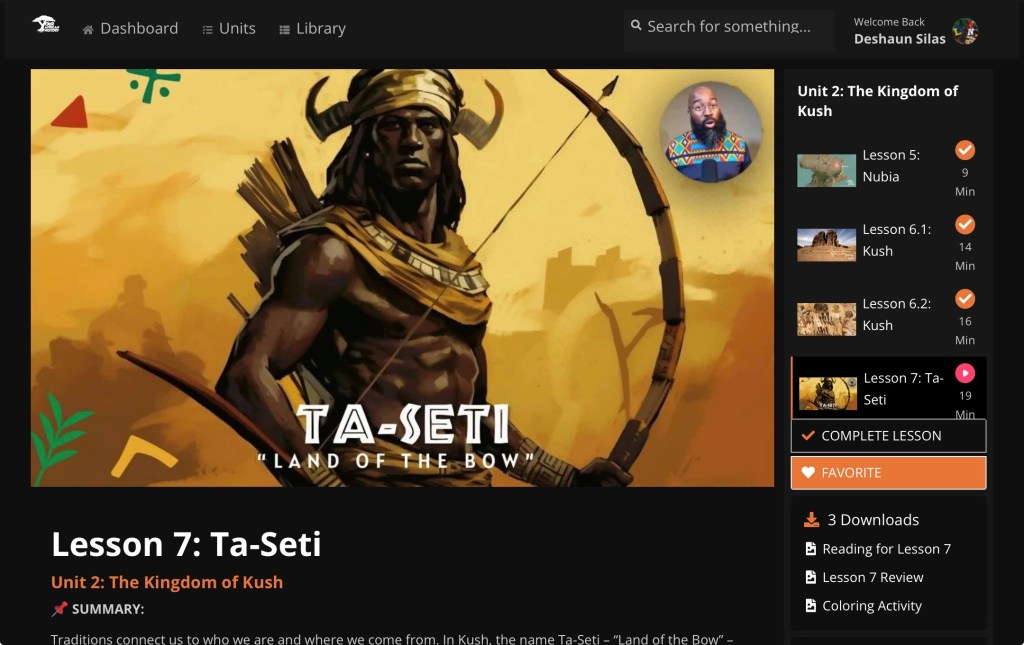
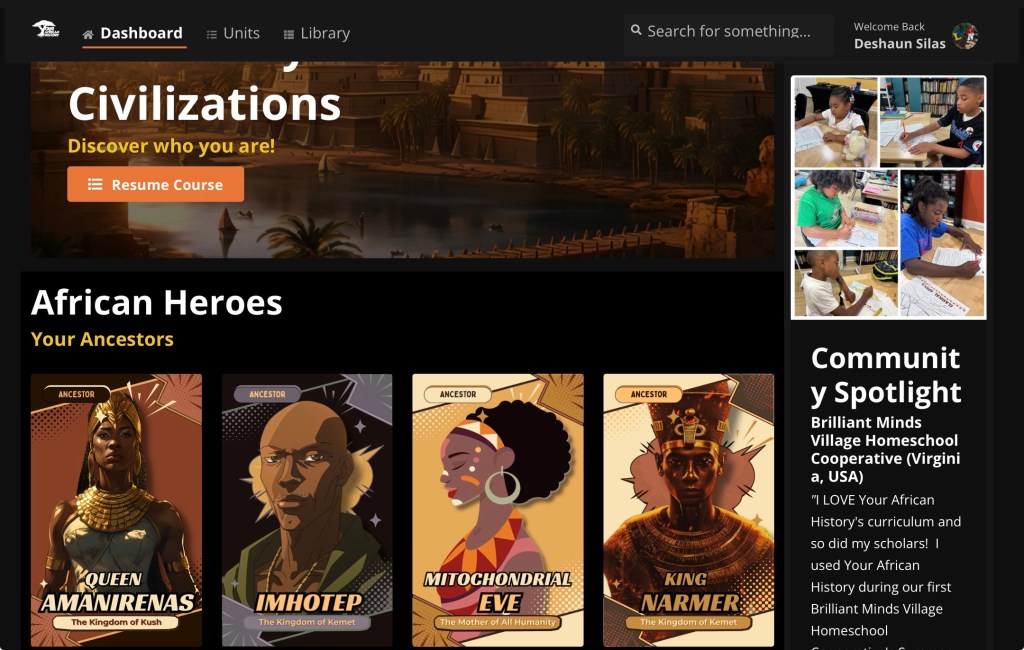
Your African History is an online educational platform centered on African history, culture, people, civilizations, and their influence on the world. It gives students an opportunity to explore African history through engaging lessons, storytelling, characters, visuals, and interactive learning experiences. Instead of treating Africa as a brief chapter within a much larger world history story, the platform gives students space to explore the depth and complexity of African history itself.

Designed to Grow With Your Student

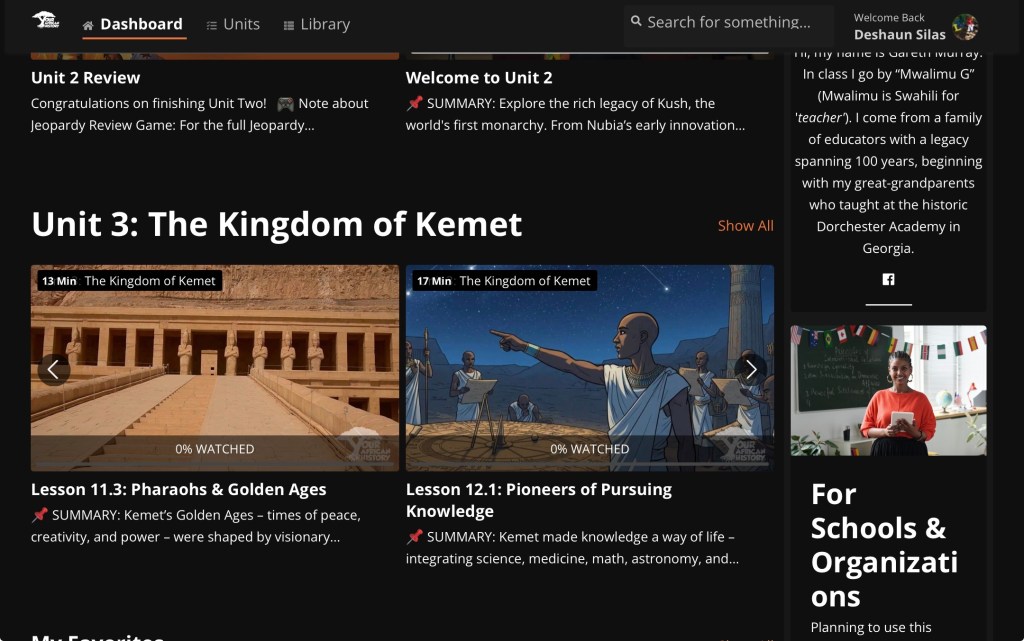
Another thing I appreciate about Your African History is that this is not a resource students are expected to rush through in a few weeks. The course is designed to be completed over the course of one year and is geared toward students in grades 3–12, which gives families a lot of flexibility in how they incorporate it into their homeschool.

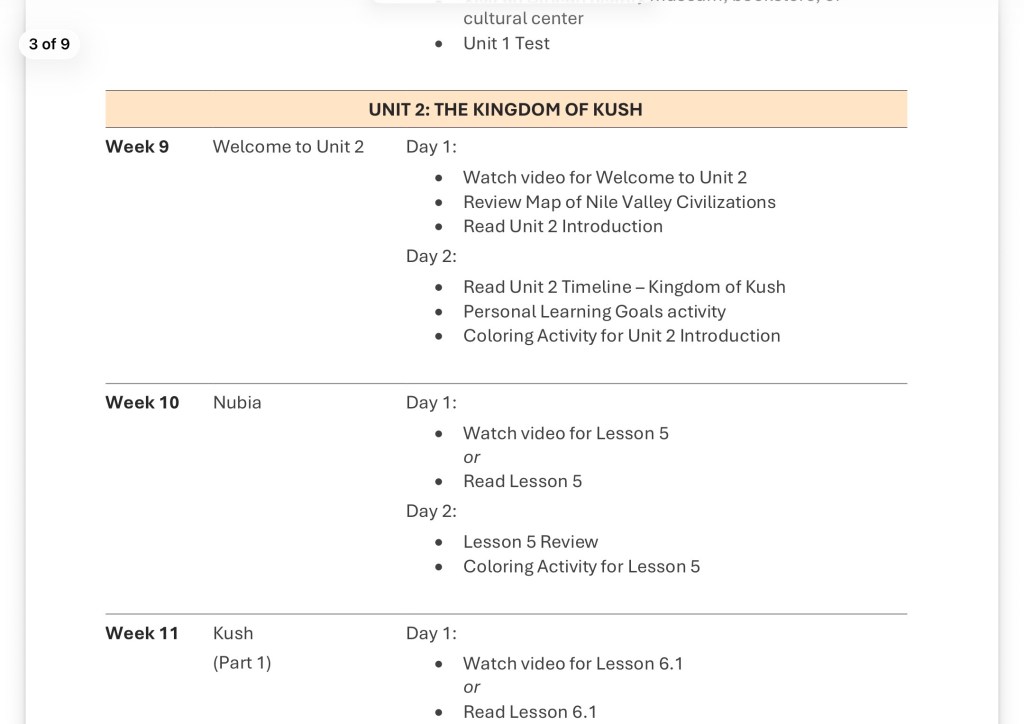
The program comes with a detailed syllabus and lesson-plan schedule, and there are several scheduling options for families to choose from. I really appreciate this because every homeschool does not operate the same way, and every family may not want to use the program at the same pace. In our homeschool, we typically follow the one-day-a-week schedule, allowing Your African History to complement the World History curriculum my son is already completing. Sometimes, depending on what we are studying or how deeply we want to explore a topic, I switch to the two-day-a-week schedule. Having those options allows me to use the program intentionally without making my high schooler feel as though I am simply piling another full history course onto his workload.
Screenshot

For high school especially, I love having that flexibility. I can look at what we are covering in our primary World History curriculum and strategically bring in Your African History where it adds another perspective, expands the discussion, or gives my son an opportunity to investigate a topic more deeply. Some weeks that means one lesson; other weeks we may spend two days with the platform because what we are learning connects so well with our current studies. It works with our homeschool instead of requiring our homeschool to work around it.

Recently, the platform received a beautiful upgrade. The new characters are visually engaging, the platform feels fresh and inviting, and there are even more features for students to explore. Even though my son is now working at the high school level, it does not feel like something he has outgrown. Over the last few weeks, he has genuinely enjoyed working through the platform alongside his World History curriculum.
And that “alongside” part is important.

We are not throwing away our World History books every time we encounter a perspective we want to investigate further. We are learning how to place resources beside one another. My son can read his assigned textbook or historical book and then use Your African History to explore additional context and perspectives. From there, we can discuss the differences, research questions that arise, and determine what additional primary and secondary sources we may need.

That is high school learning.

For me, Your African History is about much more than learning the names of ancient civilizations, kings, queens, empires, and historical events. It creates opportunities for students to examine how they think about African history in the first place. Too often, African history is reduced to slavery, colonization, poverty, or struggle. When that becomes the primary framework through which children encounter Africa, they can miss thousands of years of civilization, scholarship, innovation, trade, government, architecture, culture, resistance, intellectual traditions, and human achievement.
Screenshot

I also think about what happens when Black and brown history becomes less visible in what children encounter. What will future generations know about the people who came before them if we do not intentionally preserve, study, question, and discuss these histories?

That is why resources like this matter to me.

Whether your child is homeschooled or attends a traditional school, having access to additional historical resources can help them become a more thoughtful student of history. Our children should know how to encounter a historical claim and ask, What is the evidence? Who is telling this story? Is there another perspective? What sources support this interpretation? What happened before this event? And how does this history connect to the world I live in today?

Those are skills that extend far beyond a history course.

What Your African History Adds to Our High School Studies

  • A broader lens on African history that allows us to explore people, civilizations, events, and ideas that may receive limited attention in a traditional World History resource.
  • Critical-thinking opportunities that encourage my son to question, compare, investigate, and examine what he has previously learned.
  • Connections between the past and present, helping him understand that history is not a collection of isolated events but a story whose effects continue across generations.
  • Conversations about stereotypes and historical narratives, including where certain ideas about Africa originated and how those ideas have been repeated.
  • Growth mindset, confidence, and empowerment, because there is something powerful about young people encountering histories that expand their understanding of what people who look like them have contributed to the world.
  • A natural companion to our World History curriculum, giving us another resource to place beside textbooks, literature, documentaries, maps, primary sources, and other historical materials.

One of the additions I have especially enjoyed is Jamal’s story. To me, it feels like a call to action for young scholars. It pushes students beyond simply receiving information and toward becoming active participants in their own education. That is something I want my son to carry with him throughout high school and eventually into college: the confidence to read, question, investigate, and think for himself.

At the high school level, I do not want him to believe something simply because it appears in a textbook and I do not want him to automatically believe something simply because it appears on an alternative educational platform either. I want him to develop the skills to examine sources, compare perspectives, recognize bias, look for evidence, and form thoughtful conclusions. That is one of the greatest benefits I see in incorporating Your African History into our homeschool. Our goal is not just to finish a World History course and put another credit on his transcript. Most of all, I want him to understand that learning history comes with a responsibility.

A responsibility to ask questions.

A responsibility to seek evidence.

A responsibility to listen for voices that may have been overlooked.

A responsibility to challenge stereotypes without replacing them with new assumptions.

And a responsibility to keep learning.

One day, our children will be the adults responsible for teaching the next generation what came before them. I want my son to enter that future knowing that his history—and the history of people across the African continent and throughout the African diaspora is worthy of serious study, thoughtful discussion, and preservation.

That is why Your African History is not just another online resource sitting in our homeschool toolbox. For us, it has become part of how we teach our high schooler to approach history itself: read deeply, question thoughtfully, compare perspectives, search for evidence, make connections, and never stop learning simply because the textbook reached the end of the chapter.

African Studies, African Studies High School, African Studies Middle School, Black History, Family, Family Life, Homeschool, Homeschool Planner, Homeschool Record Keeping, Mom Life

Anchored in Change: How October and Homeschool Planet Kept Us on Track

This post may contain affiliate links at no additional charge to you!

October has been filled with surprises, independence, and accountability! This month brought several major transitions some that I hinted at last month but didn’t fully take effect until now.

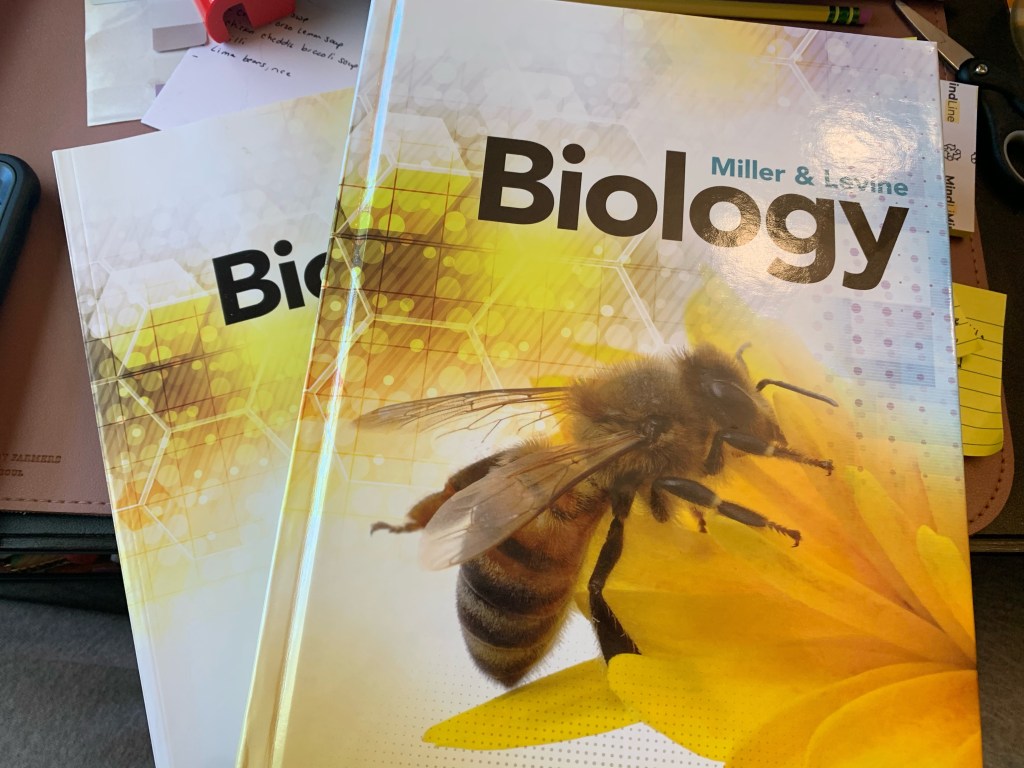
We officially dropped our previous “honors” biology class, which turned out to be a standard biology course marketed as something seriously less than. We’ve since moved into a true honors-level program Savvas Miller & Levine 2019 Biology and it has been phenomenal. The rigor, labs, research opportunities, and interactive learning tools have taken science to the next level. My son is now engaging with real labs, quizzes, tests, research projects, and practicums and yes, no more skipping textbook chapters and sections like in his old “honors” biology online class!

We don’t enroll in classes just to “check boxes.” For us, quality always outweighs quantity, especially on a college-bound path. My son has made it very clear that university is his goal, so we’re aligning his homeschool accordingly.

Math Milestones

We wrapped up Denison Algebra 1 (huge win!) and have now transitioned into Denison Geometry. To keep Algebra skills sharp, we’re continuing to use Mr. D Math. My son has already decided he wants to start Algebra 2 next semester alongside Geometry, so I’m pacing us carefully to keep balance and mastery in check.

Literature and English

Earlier this year, I mentioned we were shifting directions in literature and what a phenomenal change that’s been! In October, my son officially joined Nia Natal Academy, and it’s been a perfect fit. He’s thriving academically and socially, connecting deeply with his peers and teachers.

In English, they’re diving into research essays and literary analysis while exploring powerful works like The Hate U Give. The classroom discussions are rich with connections to current events, civics, and Black history and the students aren’t holding back! The critical thinking and real-world context in this class have been inspiring to witness. The class he is in is high school level and he is doing really well and keeping up.

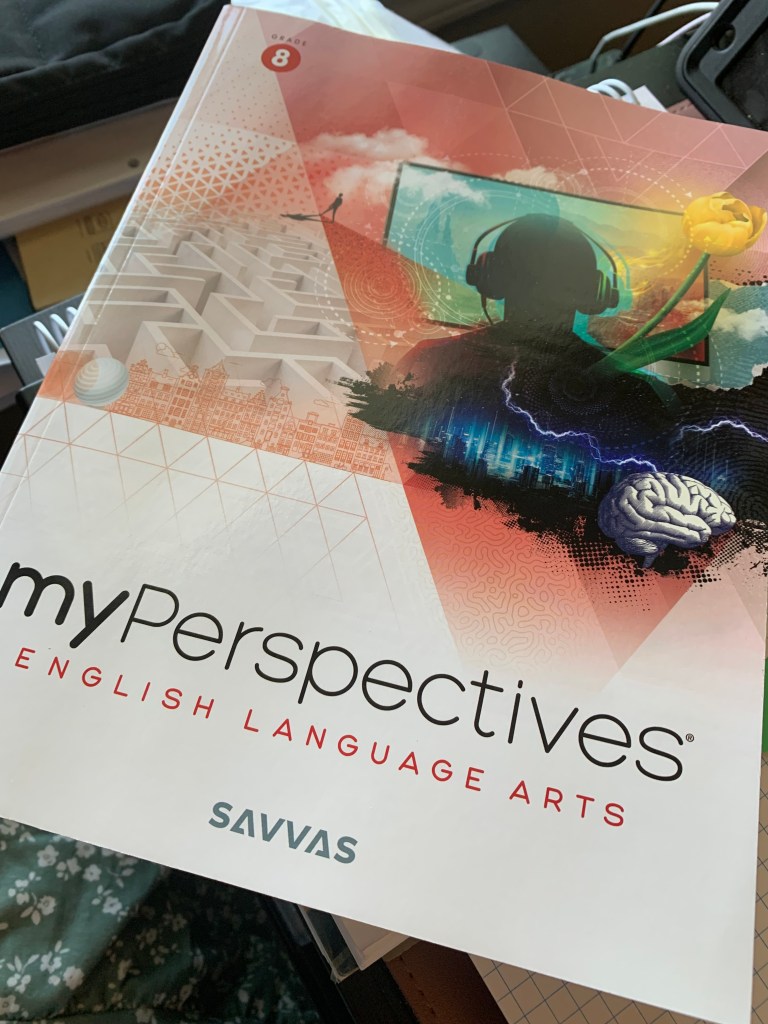
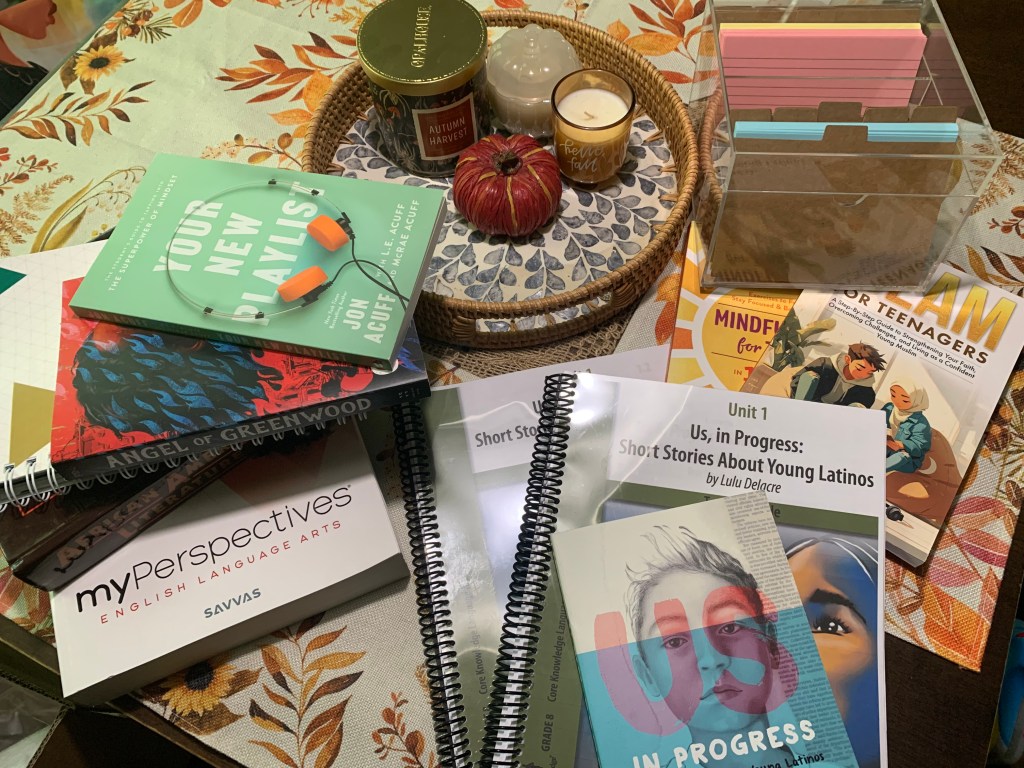
We are still using Michael Clay Thompson MCT Level 5 alongside Savvas 2025 MyProspective grade 8, both these are rigorous English curriculum that are above grade level.

His African Studies class has also been incredible. The teacher brings such depth and insight, challenging the students to think globally and act with purpose. Recently, the class began a world-building project where students created their own societies. My son campaigned for his role as Minister of Defense, which required a written platform, government assessment, and even a campaign video. This kind of project-based learning has had an amazing impact on him.

Leadership, Community, and Growth

Mid-October brought another exciting opportunity: an invitation to a public speaking workshop with Veritas a prestigious student society that meets weekly to study and refine leadership skills. He came out of that workshop absolutely energized and immediately decided to apply for membership. We’ve been gathering transcripts, essays, and recommendation letters since, and I’m so proud of how supportive his teachers and friends have been through this process.

Family Time

We have been spending more time together as family, going to the movies, field trips, game and movie nights. We are also cooking as a family two times a week. My husband has embarked on a new health journey and we have joined him. We all eating more healthy and enjoying new foods. Dad has stepped his game up and is attending homeschool co-ops with us and he also making time out of his busy schedule and spending at least one day a week being more hands on in our homeschool classroom.

Our Secret Weapon: Homeschool Planet in Action

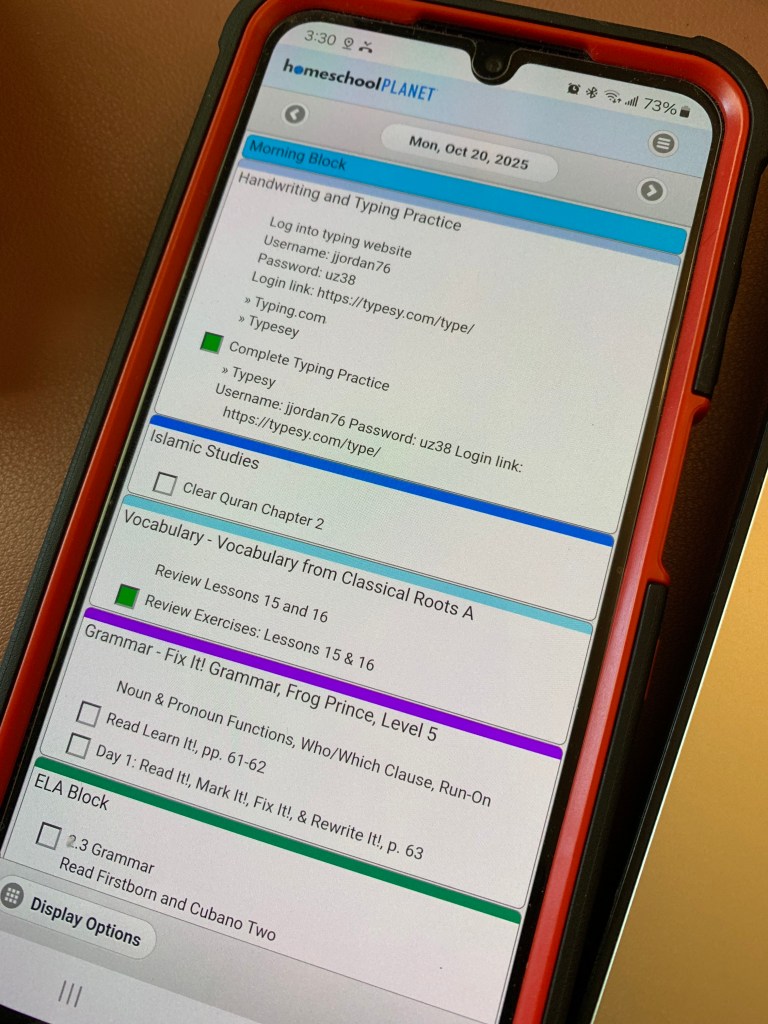
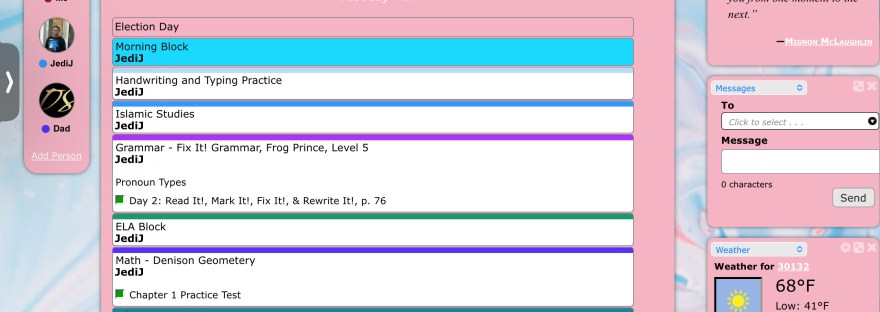
If there’s one tool that has truly held us together through all these changes, it’s Homeschool Planet. Having this platform in our homeschool arsenal has been an absolute game changer. With its constant updates and improvements, it’s become one of the most reliable tools in our homeschool toolbox especially when life gets unpredictable.

The Homeschool Planet app has elevated the experience even more. From managing our schedule, lessons, important dates, and even forgotten Zoom log-ins while at co-op, it keeps us on track no matter where we are.

Last month, when I fell sick and ended up in the hospital, I realized just how powerful this system really is. Because I had planned ahead and uploaded everything into Homeschool Planet, my son was able to follow along independently. He tracked assignments, managed deadlines, and even helped me keep this very update on schedule. It was one of those “in the clutch” moments that reminded me why organization tools like this are worth their weight in gold. Homeschool Planet truly keeps our homeschool orbit steady even when life throws us a curveball.

From My Son’s Perspective

“Yup, I finished Denison Algebra 1! I set a goal to complete it before my 13th birthday and I did it! At the time I’m writing this, I’m still waiting on that birthday to roll around, but I’m really proud of myself.

I also got a Gabb Wireless Phone after my Gabb Watch retired after four years of loyal service. My parents were hesitant, but since Gabb is designed for safe communication, we agreed it was the right next step especially now that I’m doing more independent activities and drop-offs. I am using it smartly and its been nice to connect with friends in a different way. I am also not distracted by social media and internet. The one thing I really love is GABB MUSIC!!!!!! Its the best all my favorite artist no commercials and clean music and lots of genre to pick from.

I love my new biology textbook and new classes with a diverse group of peers. It feels great to be in spaces where I can be my full Afro-Latino self curious, open, and unguarded. The books we’re reading and the conversations we’re having really matter. Homeschool finally feels like homeschool again a place where I can grow, think, and be me.

One of my favorite tools this year is Homeschool Planet. I’m using it for everything assignments, chores, field trips, reminders you name it. The Homeschool Planet app on my phone is especially helpful when my mom’s not around to unlock my MacBook (thanks to those parental controls!). It helps me stay organized, check my schedule on the go, and even coordinate with friends. Total game changer for middle and high schoolers.

This month, I hung out with friends at the Fall Festival, found Veritas and applied, participated in Junior Achievement Finance Park, did some volunteering, and joined a new leadership group. October has been busy but the good kind of busy. I’m really looking forward to November. Oh, and I almost forgot my African Studies class is EXCELLENT!”

A Scary but Valuable Lesson

The end of October brought an unexpected challenge. My mom had to be hospitalized, which was really scary for me. Thankfully, she’s now home and doing much better, but it was a wake-up call for all of us.

Seeing my mom in the hospital was hard it made me realize how much she does every single day to keep things running in our home. When she came home, she couldn’t jump back into her full routine, and my dad and I had to step up. After the first day, I really saw where I had been slacking and how often she quietly picks up the pieces. I’m really sorry for that, and I’m going to do better.

She tried to bounce back quickly but eventually realized she needed to ask for help—and we were happy to be there for her. To all the kids reading this: you only get one mom cherish her and HELP HER!

This experience taught us all about balance, gratitude, and teamwork. Sometimes life slows you down so you can see what really matters.

Closing Reflections

October reminded us that growth often comes with change and sometimes with challenge. This month tested our balance, strengthened our faith, and deepened our gratitude. From rigorous new classes to unexpected life lessons, we’ve experienced so much growth as a family.

And through it all, Homeschool Planet has been the steady hand keeping our homeschool world spinning.

I know this homeschool thing can be tricky we all want what’s best for our kids. But here’s the truth: just because a course, academy, or program is marketed as “the best of the best” doesn’t mean it’s the right fit. Sometimes you’re just paying for the name that says XYZ. Colleges don’t care about fancy labels; they care about academics, character, and depth.

They want to know can this student think critically? Are they a world changer? What will having this student bring to our campus community? Yes, grades and test scores matter, but so do curiosity, compassion, and the ability to hold meaningful conversations about the world around them. They don’t want robots they want thinkers and students who will go beyond the limit of the textbook.

Did they enjoy their learning journey? Can they discuss complex ideas about society and global events? Outside of sports, what else do they bring to the table? What makes them happy? What motivates them?

These are the questions that shape the kind of education I’m building for my son. I’m not chasing big names or shiny marketing I’m seeking substance. Because in our homeschool, it’s not about checking boxes; it’s about creating a thinker, dreamer, and lifelong learner who understand that his education and has purpose.

Here’s to a purposeful, healthy, and inspiring November! Click the Homeschool Planet banner below to grab your free trial.

African Studies High School, African Studies Middle School, Curriculum, Grammar, Homeschool

September Update: When Grammar Meets Literature and other Homeschool Shenanigans!

This September has been a month of clarity in our homeschool. If you’ve been following along, you already know my son LOVES grammar. It’s his jam. He gets the biggest kick out of completing his Fix It Grammar lessons every morning. This year he’s working through Level 5: Frog Prince, and let me tell you, this level has been testing my own gangster in grammar. Real talk I’ve started questioning all the grammar instruction I got in high school!

The best part? My son is thriving. He knows his stuff, he’s teaching me things, and grammar has become our daily warm-up before we move into literature studies.

Why We’re Choosing Literature Over Grammar This Year

Here’s the deal: I don’t have to push grammar with him. He’s naturally gifted, motivated, and has an outside writing teacher (Write with Mrs. Brown) who keeps him sharp. Instead of doubling down on something he’s already excelling at, I want to focus more energy on literature studies reading, analyzing, and engaging with stories that challenge him.

We tried an online literature class earlier this semester, but honestly, it was a mismatch. He wasn’t crazy about the book choices, felt unchallenged, and after three weeks, he was done. I don’t let him quit things easily he knows he has to give it a real shot and come to me with a valid reason and replacement plan. He did just that, and I respected his decision.

Now, we’ve shifted into using MyPerspective Language Arts 2025 as our anchor. It’s rigorous, literature-heavy, and provides plenty of resources through the online portal. When we’re not using MyPerspective, we pull from our African American Literature Textbook. Together, these two give him both depth and diversity. We wrapped up Oak Meadow English 8. We have put Oak Meadow Hero Journey for the Spring.

What We’ve Been Reading

If you want to know why literature is our focus it’s because my boy has been inhaling books like air. Here’s a snapshot of what he’s already read just this month:

  • Shatter Me
  • The Giver
  • Twilight and New Moon
  • Forgotten Girl
  • Wabi Tales
  • D’Aulaires’ Book of Greek Myths (reread)
  • D’Aulaires’ Book of Norse Myths (reread)
  • The Land
  • Michael Vey (Book 2)

Coming up for October:

  • CKLA Unit 8: Us, in Progress: Short Stories About Young Latinos
  • Gathering Blue (The Giver series, Book 2)
  • Michael Vey (Book 3)
  • Angel of Greenwood
  • Marcus No Habla Espanol
  • And for November: The Hobbit Illustrated Edition (special thanks to Johana from How We School for the recommendation). If you haven’t checked her out I highly recommend she has a YouTube, and two Instagram accounts. )
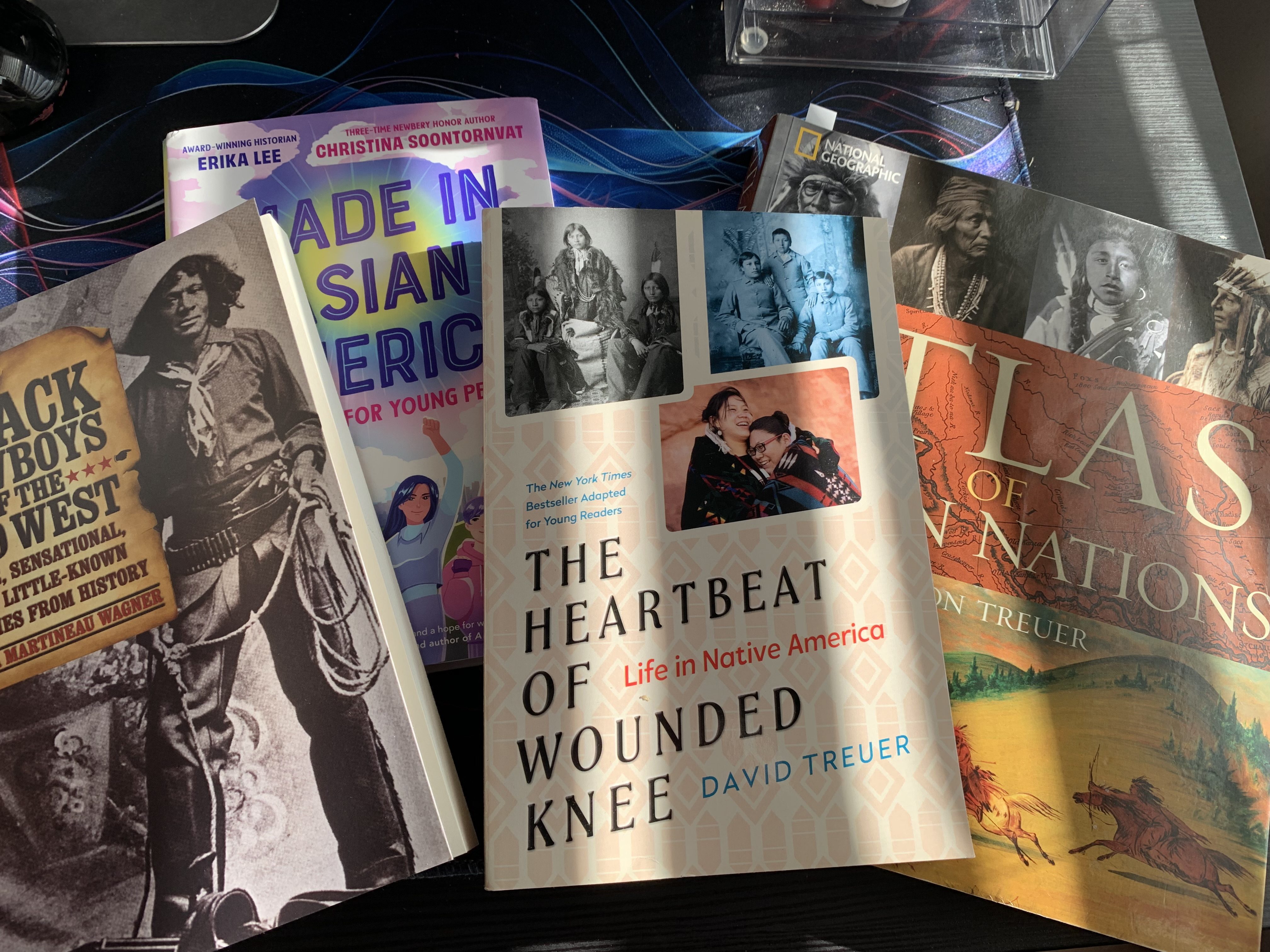
  • Indigenous chapters book.

Honoring Our Heritage

October will also be special because we’ll be focusing on Hispanic Heritage Month. As a family with both Dominican and Puerto Rican roots, we’ll be diving into events, food, culture, and history that celebrate and honor our heritage. This adds such a rich layer to our homeschool connecting literature, history, and personal identity all at once.

How We’re Choosing Books

I’m intentional about his book list. We read classics, but not the dusty, put-you-to-sleep kind we were forced to read back in the day, you know in the 1900’s. Instead, I’m curating relevant, diverse, and thought-provoking works that make for strong Socratic discussions. Check out stories of color if you are looking to change things up. I sprinkle in “must-reads” while also letting him choose. The balance keeps things fresh and prevents burnout.

We don’t do a novel study for every single book because let’s be real that’s the fastest way to kill the joy of reading. Instead, we pick one about every 6–8 weeks and dive deep. Right now, I have a few from Moving Beyond the Page lined up for later in the year.

Classes, Math, and Beyond

Outside of literature, he’s thriving in co-op this year with four excellent classes that keep him engaged. One big lesson I’ve learned? Some online classes just don’t fit. Especially in subjects where he’s already advanced, he needs a direct, interactive approach without all the extra noise.

Take his honors biology class he loves the teacher but was pacing ahead of the group, so he transitioned to pre-recorded lessons with the teacher’s support. That flexibility has been golden and allows him to dig deeper into the concepts over the course of the week.

In math, we’re wrapping up Algebra I with Denison Math, and it’s been a great fit. We’re also using Mr. D Math as a supplement. While Mr. D Math is excellent, my son says Denison “gets straight to the point” and eliminates extra fluff. Both have their place in our homeschool toolbox. Speaking of Mr. D Math did you know that Mr. D Math has ELA courses? We will be checking these out for next semester as an option, he is still undecided if he wants to do self paced or live. The great thing is Mr. D is accredited with WASC.

What’s New on the Schedule

I’ve tweaked our schedule to carve out time for:

  • His passion project
  • Community service
  • A few extracurricular activities

These additions are giving him outlets for creativity and leadership outside of academics, which I think is just as important at this stage.

Wrapping Up September

This month, I’ve really seen how shifting the focus to literature has opened doors for deeper learning, critical thinking, and joy in our homeschool. Grammar will always be his strong suit, but now literature is where he’s growing, questioning, and connecting the dots.

So here we are grammar still our daily warm-up, but literature? Literature is our feast.

Stay Tuned because the kiddo is guest writing on the blog………….!!!!

African American History Curriculum, African History, African Studies, African Studies High School, African Studies Middle School, Black History, Curriculum, Diverse History, Homeschool, homeschool curriculum, Inclusivity, US History

Flipping the Script: Teaching History Through Unheard Voices

Choosing a history curriculum this year was not an easy task it was a huge struggle. I knew from the start that we didn’t want to spend weeks reviewing early U.S. history. Both my son and I wanted something different: a curriculum that allowed us to dig deeper into Indigenous, African, Hispanic, and Asian history, and to start our study at Reconstruction instead of repeating material we’ve already covered over and over again.

As my son often reminded me, “I know all of this why do we have to spend so much time going back through slavery?” I realized he was feeling the same way I was tired, re-traumatized, and ready to move forward. That’s when I decided it was time to shake things up and seek out resources that honored voices often left out of the mainstream narrative.

Why We Passed on a Traditional Approach

Most history curriculums for middle and high school start with the same framework: early exploration, colonial America, and then a heavy emphasis on slavery and the Revolutionary era. While important, this wasn’t what we needed this year. We wanted to move forward into parts of history that aren’t often highlighted, such as the Black towns that thrived in the late 1800s and 1900s, the rise of Black-owned banks, and the housing struggles that shaped African American communities.

We also wanted to explore the roles Indigenous, Asian, and Hispanic Americans played after the Civil War topics like the Chinese Exclusion Act, the Dawes Act, landmark court cases involving Black and Brown communities, the Chicano Moratorium, the Black Panther Party, and the Young Lords.

Shifting Perspectives: A Standout Choice

One of the first curriculums that caught our attention last year was Shifting Perspectives by Tanya Adkins. This resource instantly resonated with us. It didn’t shy away from hard truths, but instead encouraged students to engage thoughtfully with history.

What I loved most was how it revisited parts of U.S. history that we hadn’t fully covered in depth, filling in gaps while keeping the focus beyond the same repeated storylines. My son was excited about the structure, and we’re already eagerly awaiting the release of Volume 2. For those areas we wanted to revist this year they are on the list and planned out.

For anyone looking to bring in Afrocentric perspectives that go beyond surface-level coverage, this curriculum is a gem. Be sure to check out my full review of it for more details!

Mint & Bloom: Fresh Voices in History

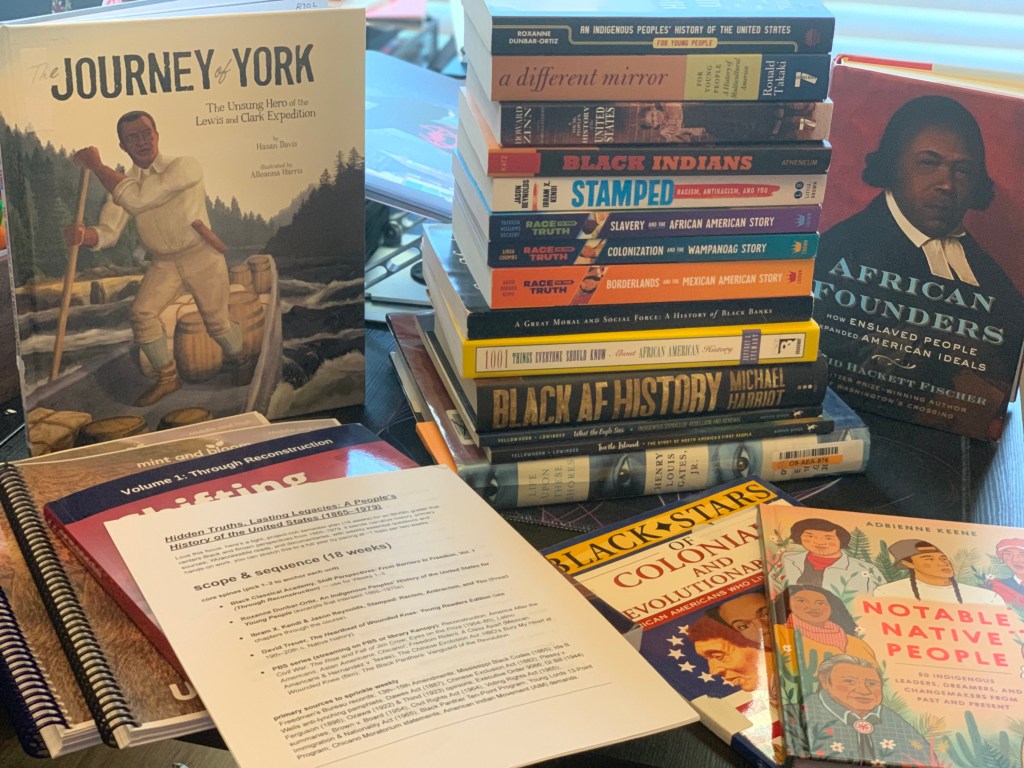
Next, I flipped through Mint and Bloom’s new Middle School/High School History curriculum when it dropped this summer and was impressed by how they flipped the narrative. Their approach intentionally gives voice to the unheard and emphasizes stories that often get overlooked in standard textbooks.

I especially appreciated:

  • Interactivity: Activities that get kids thinking, analyzing, and connecting the past to the present.
  • Representation: Their textbook selections felt intentional and inclusive, bringing in diverse perspectives.

While we won’t be using it as a standalone this year, Mint & Bloom is going to be a strong partner in shaping our history journey, the great part is I already owned about 90% of the books

Oh Freedom High School: Pieces We’re Keeping

We also considered Oh Freedom High School, but ultimately Volume 1 wasn’t a perfect fit for what we were looking for this year. Still, I couldn’t walk away from it entirely. I really liked the journal component and some of the book selections, which we’ll be weaving into our studies.

Sometimes the best curriculum isn’t an all-or-nothing choice it’s about pulling what works for your family and leaving the rest.

Creating Our Own Path

After reviewing these resources, I decided to merge the best parts of each and write our own history plan. This way, we can focus on the topics that matter most to us: the hidden stories, the overlooked communities, and the rich contributions of people who shaped history but rarely get center stage in textbooks.

This blend allows us to honor Reconstruction, dive into critical turning points like the Chicano Moratorium and the Dawes Act, and explore movements like the Black Panther Party and the Young Lords in a way that feels empowering, not exhausting.

Conclusion: Reclaiming Our History

This journey taught me that it’s okay to say no to the traditional script and yes to something that works better for us. History isn’t just about memorizing dates—it’s about understanding whose voices are amplified and whose are silenced.

By blending Shifting Perspectives, Mint & Bloom, and select pieces from Oh Freedom, we’ve built a history curriculum that doesn’t retraumatize, but instead empowers. We’re reclaiming history in a way that brings truth, representation, and healing into our homeschool. The great part is we can take our time we use these histories over the next two years.

For us, history this year isn’t about what’s always been taught it’s about uncovering what’s been hidden.

African American History Curriculum, African Studies, African Studies High School, African Studies Middle School, Black History, Critical Thinking and Logic, Curriculum, Curriculum Resource, History, Homeschool, homeschool curriculum, US History

History Curriculum That Speaks to Us: An In-Depth Review of Black Classical Academy’s Shift Perspectives: From Barriers to Freedom Volume 1 Through Reconstruction

We received Shift Perspectives: From Barriers to Freedom Volume 1 Through Reconstruction for our honest review!

As a homeschool mom committed to providing a well-rounded, culturally enriching education, I’m always on the lookout for high-quality, thought-provoking resources. Black Classical Academy’s new curriculum, Shift Perspectives: From Barriers to Freedom Volume 1 Through Reconstruction, has truly impressed me. This comprehensive curriculum includes both a textbook and a student workbook, designed to take middle school and high school students on an engaging journey through critical periods of American history, with a focus on African American experiences and contributions. Grab something hot to drink because this review is going to be a little longer then my traditional reviews!

Overview of the Curriculum

Shift Perspectives is a dynamic, multi-faceted curriculum that covers the history of African Americans from the inception of the transatlantic slave trade through the Reconstruction era. The textbook is rich in content, featuring primary sources, narratives, and critical analyses that bring history to life. The accompanying student workbook is equally robust, filled with activities that promote critical thinking, reflective writing, and collaborative learning.

Key Features

1. Comprehensive Content:

The curriculum delves into historical events with a focus on underrepresented narratives, highlighting the resilience and contributions of African Americans throughout history. It covers significant topics such as the impact of slavery, the fight for freedom, and the challenges of Reconstruction. Each chapter provides detailed accounts that challenge students to think critically about history and its long-term effects on society.

2. Engaging Student Workbook:

The student workbook complements the textbook beautifully, offering a range of activities that reinforce learning. From analyzing primary source documents to creative projects and topics such as “Impact of the Maafa on Capitalism” the workbook encourages students to engage deeply with the material. The reflective questions and essay prompts help students develop their analytical and writing skills.

3. Critical Thinking and Discussion:

One of the standout features of this curriculum is its emphasis on critical thinking and discussion. Each chapter ends with thought-provoking questions designed to inspire meaningful conversations. The curriculum is structured to encourage students to connect historical events to contemporary issues, fostering a deeper understanding of history’s relevance today.

4. Culturally Affirming:

I value resources that present history from diverse perspectives. Shift Perspectives does an excellent job of showcasing African American history not as a sidebar but as an integral part of the American story. It promotes cultural pride and awareness, helping students see themselves reflected in the history they study.

Who Would Benefit from This Curriculum?

Shift Perspectives is ideal for homeschool families, co-ops, and educators seeking to provide a more inclusive, in-depth study of American history. It is particularly beneficial for:

Middle School and High School Students: The content is accessible yet challenging, making it suitable for students from grades 7 and up. It provides a more nuanced understanding of history that goes beyond standard textbooks.

Families Seeking a Culturally Enriching Curriculum: This curriculum is perfect for families who want to teach history through the lens of African American experiences and contributions.

Students Interested in Social Justice and Advocacy: The curriculum’s focus on critical thinking and connecting past events to current social issues makes it a great fit for students passionate about social justice and advocacy.

Co-ops and Study Groups: The discussion-based format and group projects make this curriculum an excellent choice for homeschool co-ops and study groups looking for a structured yet flexible resource.

 A History Curriculum We Can Relate To

When I discovered Black Classical Academy’s latest curriculum, Shift Perspectives: From Barriers to Freedom Volume 1 Through Reconstruction, I knew immediately that it was a must-have for our homeschool journey. My son, who usually approaches new curriculum with a healthy dose of skepticism, couldn’t contain his excitement when he saw it. In fact, I had to hide the textbook and student workbook over the summer to keep him from diving in too soon! He insisted on me spiral binding his workbook because he said needed to be able to really give each activity its attention and respect.

As an Afro-Latino homeschool mom, I am constantly searching for resources that not only educate but also resonate with my family’s heritage and experiences. Shift Perspectives has exceeded my expectations in every way. The curriculum doesn’t just present history; it invites students to engage with the stories and struggles of African Americans from pre-colonial times through Reconstruction. It’s a narrative that is often overlooked or simplified, but Tanya Adkins, the creator, has ensured that it’s told with nuance and respect.

My son was overjoyed to finally have a history curriculum that he could see himself in—one that delves into the complexities and triumphs of our shared history. He’s been eager to explore each lesson, and I can already see how this curriculum is deepening his understanding and appreciation of the past. It’s not just history; it’s his story.

The Care and Detail Make All the Difference

One of the standout features of this curriculum is the meticulous care and detail Tanya Adkins has put into crafting it. Every page reflects a commitment to accuracy, inclusivity, and engagement. From primary source documents to thought-provoking questions and activities, Shift Perspectives encourages students to think critically and empathetically about the events and figures that shaped this era.

As a homeschool mom, I am incredibly grateful for the effort that has gone into making this curriculum accessible and meaningful. It’s clear that this isn’t just another history book—it’s a labor of love designed to empower and educate a new generation of learners.

I wanted to respect Mrs. Adkins hard work and dedication, therefore I decided not to include screenshots of textbook and the workbook. Trust me you won’t be disappointed, head over to Black Classical Academy so you can see for yourself.

Eagerly Awaiting Volume 2!

We’re only a few weeks into using Shift Perspectives, and already, it has become a favorite in our homeschool routine. My son and I are both eagerly anticipating Volume 2. It’s rare to find a history curriculum that not only educates but also resonates on such a personal level, and I am thrilled to have found that with Black Classical Academy.

Thank you, Tanya Adkins, for your dedication to creating a curriculum that is not only educational but also empowering. We can’t wait to continue this journey through history with you! It’s not just a history lesson—it’s an invitation to shift perspectives and understand the past in a way that informs our present and future.