De-Shaun Jordan is the founder of Little Learners Mom Consulting and Little Learner and Mom Homeschool Blog. For the last 8 years, she has exclusively homeschooled her son. DeShaun holds a Bachelor of Arts in Healthcare Management and is Montessori Certified. She is married to her high school sweetheart and mother to their 10-year-old son. DeShaun enjoys being a mom, cooking, organizing, and helping others looking to homeschool or in need of guidance with education intervention.
As a homeschool mom, I often reflect on the resources that shaped our early years. One of the very first science programs we used was the Real Science-4-Kids Focus On series, back when my son was in K–2nd grade. He enjoyed it so much, but honestly, I can’t help but wish this new and updated version Real Science-4-Kids Book 2 had been available back then. He would have absolutely thrived with it as a 2nd grader and loved every minute of it.
Now, years later, I’m thrilled to be reviewing this curriculum from the perspective of having used the earlier editions. And let me tell you—this new edition is every bit as engaging and rigorous, with even more structure and vibrant illustrations that make science come alive. Best of all, it’s secular and included in the brand-new Timberdoodle Co. Curriculum Kit 2025–2026 for 2nd grade. For families who value both solid science and ease of teaching, this update is a fantastic addition.
What’s New and Noteworthy in Real Science-4-Kids Book 2
1. Multi-Disciplinary Approach: This curriculum weaves Chemistry, Biology, and Physics together in one year. Instead of siloing topics, it introduces kids to the interconnectedness of science exactly how real scientists approach the world.
2. Open-and-Go Format: The clean layout, short readings, and step-by-step lessons make it incredibly user-friendly. I don’t need to spend hours preparing—everything is laid out for both parent and child.
3. Hands-On Experiments that Work: One of my favorite aspects is that the experiments are doable and meaningful. They don’t require obscure supplies, and they actually reinforce the lesson concepts in a memorable way.
4. Vibrant Visuals & Engaging Content: The colorful illustrations and clear diagrams make each page appealing. It’s structured enough for serious learning but still fun and approachable for young learners.
Digital Resources Included
Each set comes with digital access to the student book and teacher guide, which is great for flexible learning and printing.
On the Real Science-4-Kids website, you can preview free samples of the curriculum before you commit, and for those who want even more, there’s a Digital Library available at an additional cost. That library includes extended readings, quizzes, experiments, and enrichment opportunities perfect for science-loving kids who want to go further.
Who This Curriculum Is Great For
Families using Timberdoodle Kits who want a rigorous, secular science program.
Young learners ready for an academic challenge it feels about a year ahead of grade level.
Students who truly love science and thrive on digging deeper.
Homeschool parents who appreciate an open-and-go, structured program.
Families who enjoy hands-on learning with vibrant, engaging visuals.
My Honest Opinion
In my opinion, Real Science-4-Kids Book 2 is about a year ahead—and that’s a strength. For kids who love science, this program is a goldmine. It’s structured, user-friendly, and filled with vibrant illustrations that capture attention while keeping the focus on learning.
I can’t help but think how much my son would have loved this curriculum if it had been available during his 2nd grade year. It’s exactly the kind of science program he would have thrived on hands-on, engaging, and deeply satisfying to his curiosity.
Final Thoughts from This Homeschool Mom
As a mom who has used earlier Real Science-4-Kids editions, I can confidently say this updated version is a win. It builds on the strengths of the original series and delivers a more polished, vibrant, and structured experience.
If you’re looking for a secular, rigorous, and joyful science curriculum, you’ll be just as excited as I was to see Real Science-4-Kids Book 2 included in the Timberdoodle Co. Curriculum Kit 2025–2026 for 2nd grade. This is one science program that will both challenge and inspire your young learner—and it’s already a new favorite in our homeschool.
A year ago, I shared my thoughts on U.S. History, Part 1 from The Nomadic Professor. That course quickly became one of our favorite homeschool supplemental history experiences because it wasn’t just reading from a textbook it was living history. This year, we continued on with U.S. History, Part 2: The Noise of Democracy, and I can honestly say it has been just as rewarding, if not more so.
If you’re starting with early American history, I’d definitely recommend going back to my Part 1 review, but today I want to focus on what makes Part 2 so special for middle and high school homeschoolers.
What Makes This Course Different
On-Location Videos
Dr. William Jackson, the Nomadic Professor himself, actually films his lectures at historic locations. My son and I love this because we’re not just hearing about events, we’re seeing the landscapes and cities where they unfolded. It feels like history is unfolding right in front of you.
Comprehensive Dashboard
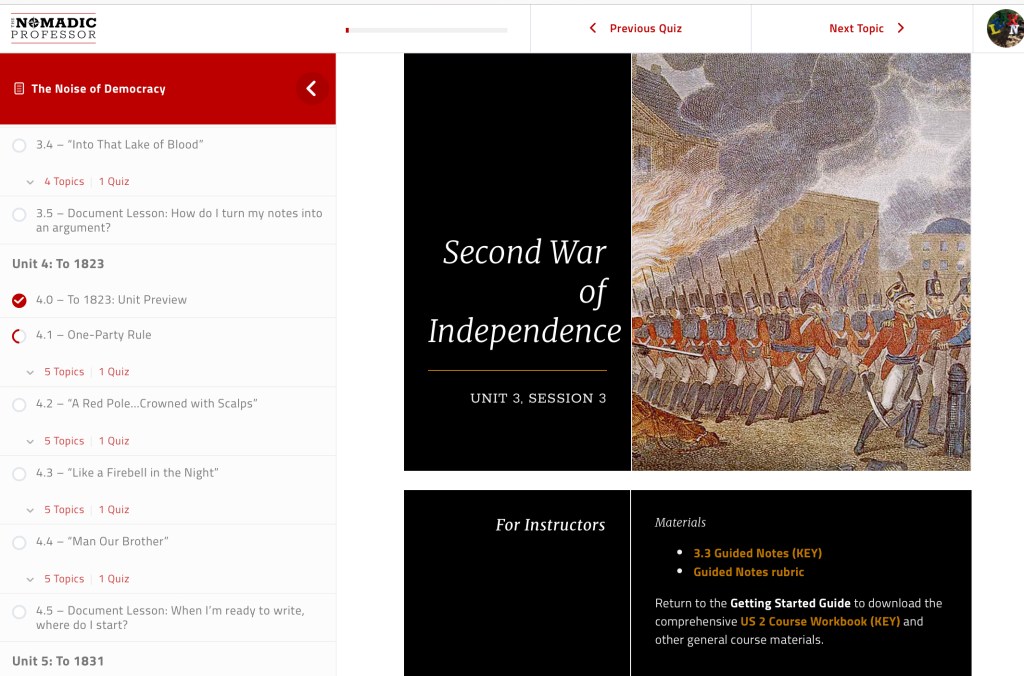
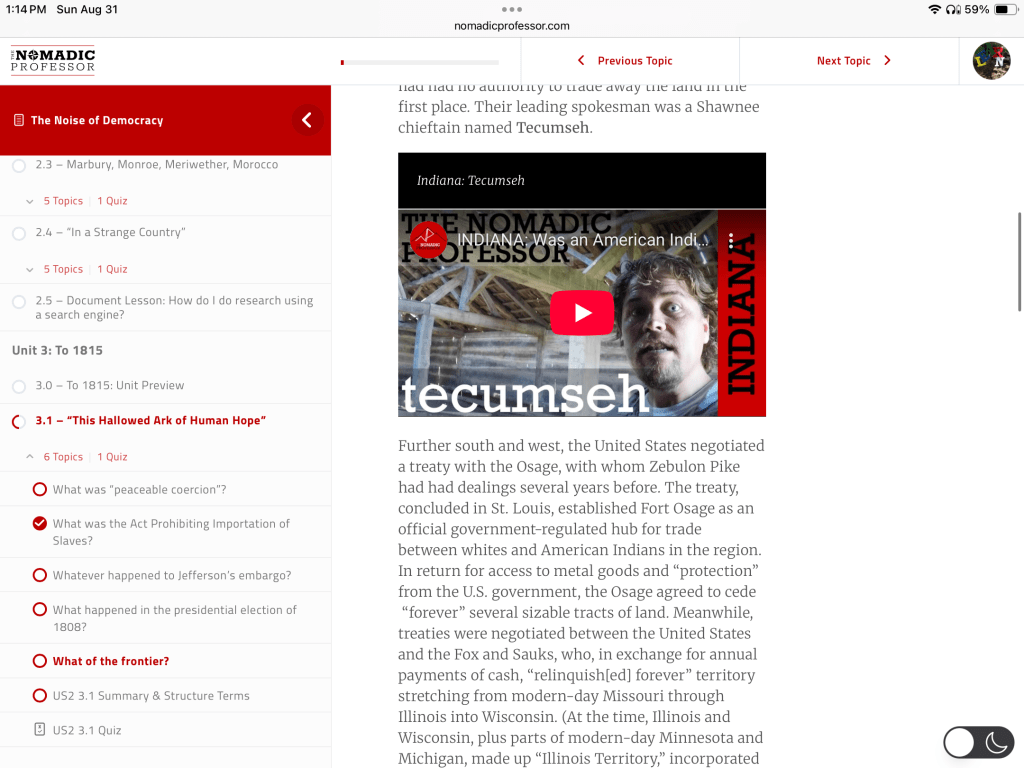
Everything you need is right inside the course dashboard—videos, notes, readings, quizzes, worksheets, writing prompts, timelines, and even audio versions if your child prefers to listen. I can’t tell you how much easier this makes my homeschool planning. No piecing things together from five different places.
Encourages Thinking Like a Historian
This isn’t a “just the facts” kind of course. Students are encouraged to weigh evidence, look at different perspectives, and think critically about the story of our nation. My son has been challenged to form his own opinions and back them up with evidence—skills he’ll carry well beyond history class.
What’s Covered in Part 2
Part 2, “The Noise of Democracy,” takes us from the ratification of the Constitution through Reconstruction. It covers the early republic, westward expansion, the Civil War, and the rebuilding of America after. It’s rich in both content and context, giving students the “why” behind the events, not just the “what.”
Right now in our homeschool, we are working through Units 3 and 4, which dive into the Indigenous wars and the Civil War. My son has been especially interested in learning more about how these events affected both Indigenous communities and enslaved people. I appreciate that the course doesn’t shy away from difficult but important parts of history it brings depth and balance to the bigger story of America.
Flexible for Every Homeschool Style
One of the best parts of The Nomadic Professor is its flexibility. You can use it as a stand-alone history course, with everything needed for a full year of U.S. history credit. Or, if you already have a history program you enjoy, it also works wonderfully as a supplemental resource adding depth, visuals, and critical thinking opportunities that many traditional programs lack.
Who This Course Is Best For
Upper Middle School and High School Students – The material is geared toward 8th–12th graders who are ready for more depth.
Visual and Auditory Learners – Kids who benefit from seeing and hearing as they learn will thrive with the on-location videos and audio options.
Homeschool Families Wanting Convenience – With everything laid out in the dashboard, it’s easy for both parents and students to follow.
Families Who Like Structure – For added convenience, you can use the Homeschool Planet lesson plans that line up perfectly with the course.
What keeps us coming back to The Nomadic Professor is how engaging and thought-provoking it is. My son isn’t just memorizing dates; he’s learning to understand history, ask questions, and make connections. The on-site videos give us the feeling of field trips without ever leaving home, and I appreciate that the curriculum gives me everything I need without extra prep.
Final Thoughts
If you’re looking for a high-quality history program for upper middle school or high school, I highly recommend The Nomadic Professor’s U.S. History, Part 2. It’s academically strong, visually engaging, homeschool-friendly, flexible enough to be a stand-alone course or a supplement, and even recognized by Timberdoodle as part of their 10th grade curriculum kit. For us, it has been a great continuation from Part 1, and we’re excited to keep going with the rest of the series.
This new homeschool year has already been one of the most unpredictable and “crazy” ones for our family. The stakes are changing. My son is 12 years old, and while he’s technically in 8th grade, he’s also working through pieces of high school curriculum. That means I’m now carefully keeping stronger records, deciding what deserves high school credit, and making sure not to overload or pad his transcripts. It’s a balancing act pushing forward without rushing him.
August has always been our “soft start” month, but this year I pushed the official count to September. That gave us room to breathe, explore, and transition into our rhythm. We kicked off with interest-led history, coding, and continuing Algebra 1. Later in the month, Honors Biology came into the mix, along with Outschool classes in law, history, literature, and science. We tried new extracurriculars like archery, swimming, community service, and golf, while also carving out time for field trips and family connection.
But here’s what I’ve learned: none of that works unless we prioritize self-care, mental healthy and relationships. That’s what holds everything together.
Hidden Stressors Our Kids Carry
When we think of stress, we often picture adults juggling bills, jobs, and family responsibilities. But our pre-teens and teens carry their own burdens many of which stay hidden. For some, it’s the pressure of transitioning into harder academics. For others, it’s navigating friendships, body changes, or the social expectations that come with growing up.
For Black and Brown children, there can be added stressors cultural identity, navigating stereotypes, and feeling unseen in certain environments. And while every child faces challenges, these unique pressures should not be ignored. At the same time, all children no matter their background need safe spaces where they can breathe, be heard, and just be kids.
Helping Pre-Teens and Teens Handle Stress
One of the best things I did this year was sit down with my son and ask him directly what was stressing him out. Kids don’t always volunteer this information, but once they feel safe, they’ll open up. Together, we made some adjustments:
Clear timelines. All assignments are due by Friday at 3 p.m. No hovering every day. No nagging. Just a rhythm he can depend on.
Weekly check-ins. Every Sunday, we spend 30 minutes going over the week ahead. If something looks heavy, we adjust.
Looping lessons. Instead of forcing every subject every day, we loop them for variety and less overwhelm.
End-of-day check-ins. These became one of the highlights of our homeschool. A chance to reflect, connect, and reset.
For personal self-care, my son asked for more downtime in the evenings. We turned his room into a sanctuary gamer theme, collectibles, cozy lights, and even a mini fridge stocked with healthy snacks. He loves his essential oils diffuser, tea lights, and a space where he feels in control. These small changes have given him peace and independence.
Setting Boundaries as a Family
Another big shift we made this year was around screen time and boundaries for all of us, not just my son. Together, we created a homeschool agreement that spelled out expectations for the whole family. Because we wrote it as a family, we’re all holding each other accountable.
And let me tell you, my son is serious about keeping me on track. If I slip, he’ll shut my laptop and remind me that my phone belongs upstairs in my bedroom. I’ve also turned off my social media notifications so I can stay present. Dad has his boundaries too we agreed as a family to respect our homeschool time during the day.
On my side, I rearranged my online teaching schedule to match what works best for us. I also made sure my classes never overlap with his online classes. That way, he knows he’s the priority, and I’m modeling what it looks like to set healthy boundaries.
Self-Care for Mom
As moms, we carry so much—planning, teaching, homemaking, and guiding. But pouring from an empty cup is not sustainable. For me, self-care isn’t optional; it’s survival.
Here’s what that looks like in my day-to-day:
Morning tea and quiet reflection. Before the house wakes up, I sip tea, read my Quran, and center myself.
Nightly brain dump. I write everything down before bed so my mind can rest.
Pampering routines. My new shower routine feels indulgent, but it’s also grounding.
Fresh air breaks. When the weather cools, I plan to spend more time on the porch with tea in hand.
Reading for joy. Not just audiobooks while multitasking, but truly reading, laughing, and enjoying stories.
Creative outlets. Journaling, scrapbooking, and planning bring me peace and creativity.
Music Playlist. I created a “Mental Reset” playlist on Amazon Music, so everyone in my house knows when they hear me ask Alexa to play it…..Mom needs some space.
Declare 1 hour of mom time daily!!!!!
Self-care doesn’t need to be extravagant it just needs to be intentional. Even one small change can bring more harmony into the home.
Level Up & Legacy Talks
One of the best new traditions we started is our Level Up & Legacy Talks. During this time, we read books like Letters to a Young Brother by Hill Harper, talk about culture, mindset, and growing up, and check in with each other. My son calls it his favorite part of the week. These talks are helping him build confidence, identity, and vision for his future. We a few books we are going to rotate through, but we are starting with this one and will move on to a new one soon.
And this year, we’re including Dad more too. When he’s available, he joins our homeschool day for Socratic conversations. It’s been powerful for all of us.
Why This Year Feels Different
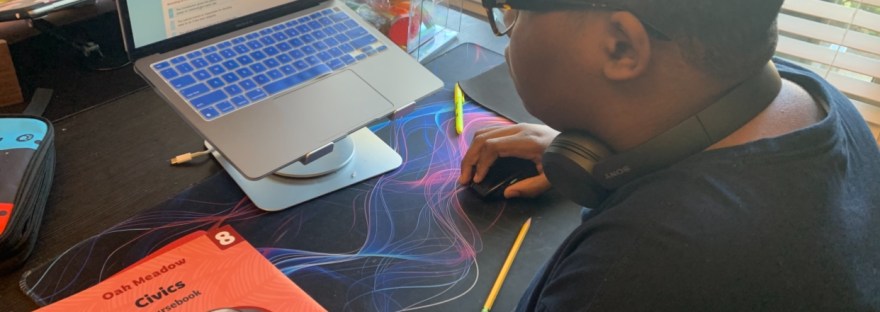
We’re still sticking with a few Oak Meadow Grade 8 its we are wrapping up, but we’ve added in their Personal Finance and Geography courses. Last year, my son loved Oak Meadow Civics, and this year we’re wrapping up what we didn’t finish. Balancing 8th grade with some high school-level work feels new and intense.
Homeschool Kids Aren’t Social?
I wish whoever started this rumor would go somewhere and have several seats. My kid is beyond socialized he keeps my planner filled with all his activities and events. He may not be “scheduled” in the traditional sense, but I’ll say this I actually have to send his dad a monthly itinerary just to keep track of everything!
For this upcoming year alone, he’s been invited to join Junior Beta and a formal Debate Team. Our homeschool co-op will be packed with fun and adventures, and come November, he’ll officially be part of the Teen Collective he’s counting down the days! He’s also joining the Homeschool Honor Society and has received formal mentorship invitations from both Georgia Tech and UGA.
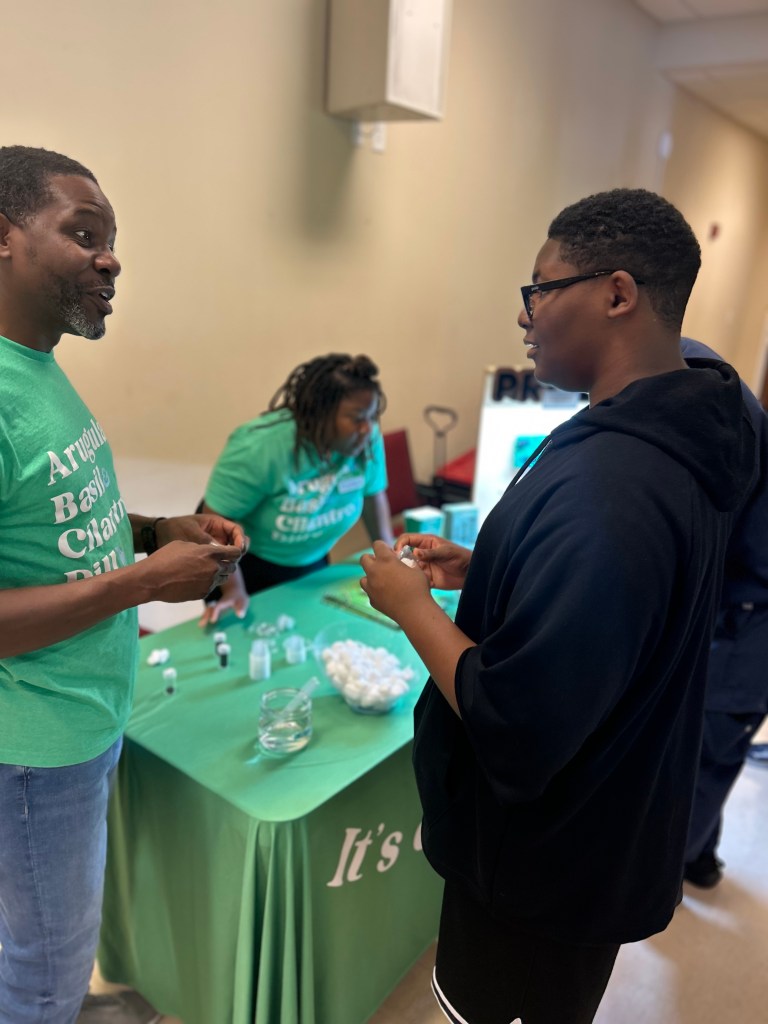
Fun Times with Friends!!
On top of that, we’ve got two big trips planned in October and December, and in January we may be heading to Rome, Italy, to present at the same conference we spoke at earlier this year.
2025 International School Choice Reform Conference
That’s why self-care for both of us has become a top priority. Stay tuned for our full 2025–2026 Homeschool Curriculum line-up; we’ve got a few surprises in store!!
The Power of Meal Planning
Another form of self-care? Meal planning. It may not sound glamorous, but freeing up that mental energy makes a big difference. Our simple routine looks like this:
Monday – Leftovers
Tuesday – Tacos
Wednesday – Leftovers
Thursday – Light (salads, sandwiches)
Friday – Pizza Night
Saturday – Leftovers or Light
Sunday – Big dinner (enough for Monday too)
This routine saves me time, energy, and stress. Even if you only meal prep every other week, it can bring breathing room into your homeschool.
Nobody’s Perfect—And That’s Okay
Homeschooling isn’t about perfection. It’s about finding what works for your family, making small adjustments, and showing up with love. We’re all trying to do what’s best for our kids. Some days will be smooth. Some will be messy. And that’s okay.
A Closing Word for Fellow Moms
This year has already been full of lessons, but the biggest one is this: prioritize your relationships and your well-being just as much as the academics. Because when our kids feel supported and we feel centered, the learning flows more naturally.
To all the homeschool moms reading this I invite you to pause, reflect, and think about what small changes could bring more harmony to your homeschool. Maybe it’s a nightly check-in, a personal self-care ritual, or a simple meal plan. Whatever it is, embrace it. Our families don’t need perfection; they need presence. Here’s to a school year filled with growth, connection, and peace.
This year, we’re on a new path of learning, and I’ve been making intentional adjustments to our homeschool curriculum choices. As we approach the high school years, my son has already stepped into high school–level math a bit earlier than expected. Last school year, he began Algebra I, and now he’s wrapping it up and will be moving into Geometry this October.
As a homeschool mom, I’m always on the lookout for tools that not only keep my son engaged but also give me peace of mind that he’s truly mastering the skills he needs. This year, we added the IXL Family Membership: Core Subjects (Yearly Plan) to our homeschool rotation, and it has been a game-changer especially on our “low-key Fridays.”
Fridays in our home are meant to be slower-paced: a chance to review, explore, and strengthen skills without the pressure of a heavy curriculum day. IXL Family Membership: Core Subjects (Yearly Plan) fits this rhythm perfectly, giving my son the opportunity to sharpen his skills while allowing me to track his progress in real time.
Using IXL for PSAT Prep
One of the standout features for us has been IXL’s PSAT prep program. My son is at the stage where preparing for standardized tests is becoming more and more important, and IXL has removed the guesswork from the process. The program adapts to his level, pinpoints where he needs the most practice, and guides him step by step.
Instead of me piecing together test prep resources, IXL Family Membership: Core Subjects (Yearly Plan) lays out exactly what he needs to focus on, and the real-time feedback has helped him grow in both confidence and accuracy.
Skill Plans and Textbook Alignment
Another reason IXL stands out is its alignment with state standards and leading textbooks. This is something most online platforms don’t offer, and it makes IXL one step above the rest.
I was thrilled to see a broad spectrum of publishers represented, giving me the ability to pick resources that fit our homeschool. Right now, my son’s favorite is TCI’s Government Alive! I suggested it as a way to fuel his passion for law and politics, and he’s absolutely loving it. I never imagined IXL could support his interests in such a personalized way.
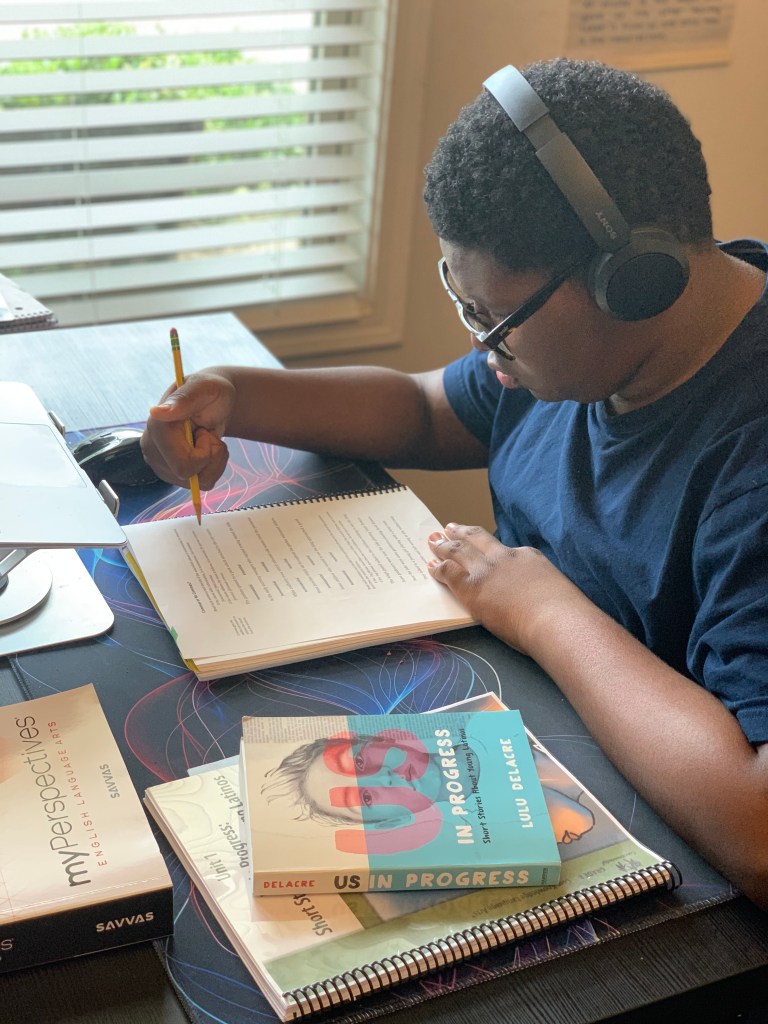
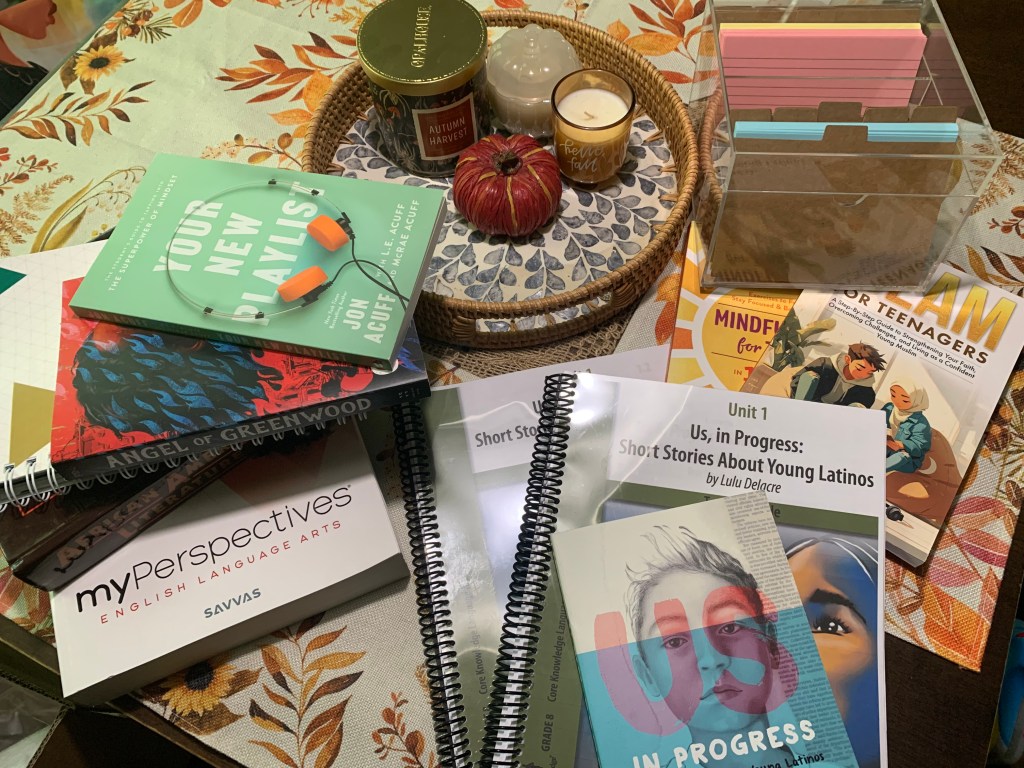
We’re also using MyPerspectives Language Arts curriculum, and IXL has been an incredible tool for providing extra practice and reinforcement alongside the program.
And I have to mention the Spanish curriculum it’s truly chef’s kiss. Comprehensive, engaging, and aligned to state standards, it’s helping my son gain real confidence in the language while supplementing the curriculum we already use.
Printable Skill Plans That Simplify My Job
Another feature I love as a parent is the detailed skill printable plans. I can print out skill trackers and assign them to my son, which keeps us organized and on track. This feature is especially handy when we want a paper reference for planning out our weeks. It gives my son a clear visual of what’s expected, and he takes ownership by checking things off as he completes them.
Parent and Student Dashboards
The parent dashboard is a goldmine of information. I can see exactly how much time my son spends, what skills he’s working on, and where he’s excelling or struggling. On the other hand, the student dashboard is designed to be motivating he loves seeing his awards, progress charts, and recommended next steps. It encourages independence, and I don’t have to constantly hover over him to make sure he’s learning.
IXL Family Membership: Core Subjects (Yearly Plan) isn’t just another “drill and kill” platform. The real-time analytics and diagnostics help me see exactly where my son is thriving and where he needs reinforcement. And instead of mindless repetition, the platform uses explanations and step-by-step feedback to teach the material in a way that sticks.This means my son isn’t just practicing he’s truly learning and mastering each skill.
Why IXL Is a Beneficial Resource for Homeschoolers
IXL offers a comprehensive K–12 curriculum that covers all core subjects, from Math to Science, with the option to add Spanish for an additional cost. The IXL skill library includes over 17,000 interactive skills designed to engage students in the learning process. As students progress through lessons, they receive instant feedback and support to strengthen their understanding.
Parents receive valuable weekly progress reports, ensuring you’re fully informed about your child’s growth. IXL also adapts to each student’s level, helping to close learning gaps and build confidence. With everything personalized for your family, it feels like having your own instructor at home—cheering on and supporting your child every step of the way.
I could go on and on about the benefits of IXL, but the best way to see the impact is to try it for yourself. If you’ve been looking for a resource that combines structure, flexibility, and personalization, IXL delivers on all fronts.
Right now, IXL is offering 25% off Family Memberships and honestly, this is money well spent. It’s been one of the best investments we’ve made in our homeschool, and I truly believe it can take your homeschool to the next level too.
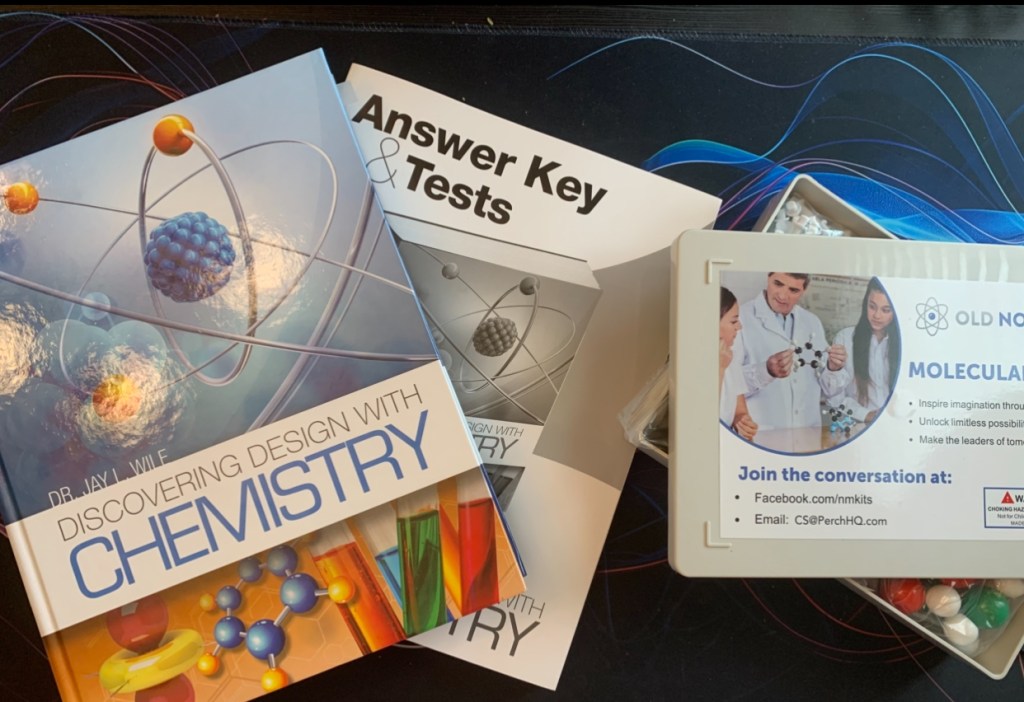
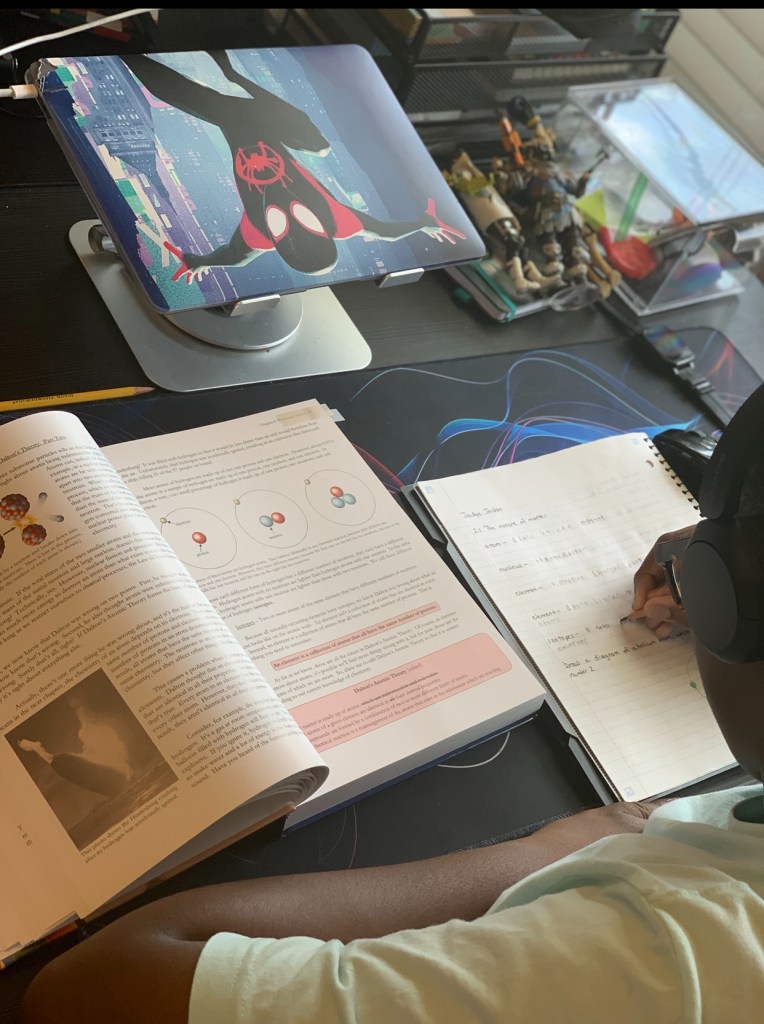
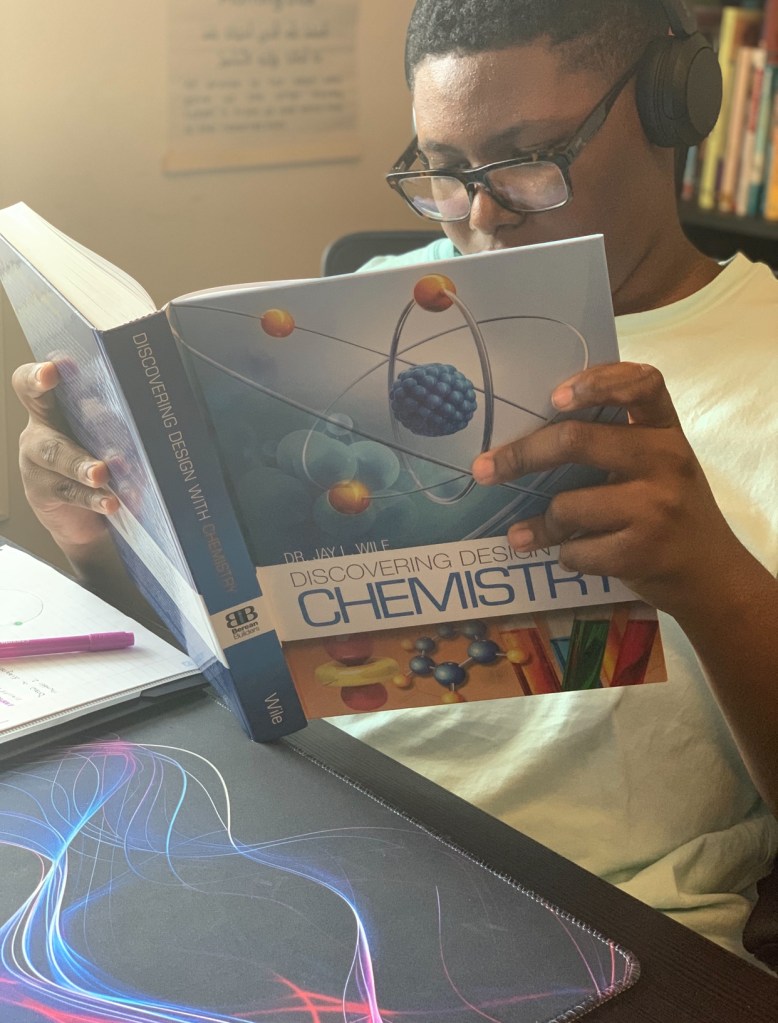
As a homeschool mom who has walked with my son through a variety of science curriculums, I’ve come to appreciate materials that are both challenging and approachable. This year, even while our main focus is Biology, we’ve been diving into Berean Builders’Discovering Design with Chemistry and I can confidently say it has been an outstanding addition to our homeschool.
Who Is Discovering Design with Chemistry For?
This curriculum is an excellent fit for:
Serious science students who enjoy a challenge and want a comprehensive chemistry foundation.
Homeschool families looking for a well-structured course that feels like a true high school (or even honors-level) experience.
Students with a passion for science who want to go deeper than just the basics.
The tone is friendly, approachable, and conversational yet the material itself is rigorous and engaging enough to prepare students for college-level chemistry. With a few added assignments, this curriculum could easily be used as an Honors Chemistry course. Berean Builders provides students with excellent high school foundation.
Our Experience Using It Alongside Biology
While our primary science focus this year has been Biology, my son’s passion for science naturally led us to start exploring this Chemistry course on the side. Surprisingly, it has enhanced our Biology studies as well. Topics such as molecular structures, bonding, and chemical processes have provided context for biological systems, making the Biology concepts more meaningful. My son has loved diving into Chemistry even while studying Biology it has satisfied his curiosity and broadened his scientific understanding.
Comprehensive and In-Depth
Just as I mentioned in my review of Berean Builders’ Science in the Atomic Age, Berean Builders does not disappoint here. Discovering Design with Chemistryhas the depth and clarity I remember from my own high school chemistry textbook, but it’s written in a way that is much more accessible for homeschoolers.
Some highlights include:
Comprehensive explanations of fundamental concepts such as atoms, molecules, and chemical reactions.
Well-structured labs that make it easy for homeschoolers to complete meaningful experiments at home.
Vibrant diagrams and illustrations that help visualize complex ideas.
Built-in review questions that ensure mastery before moving forward.
This is not a “light” chemistry program it is a serious, top-notch curriculum that prepares students for advanced science studies.
A Balanced Faith-Based Perspective
Like all Berean Builders curricula, Discovering Design with Chemistry includes Christian references. These are presented thoughtfully and respectfully—never in a way that feels overbearing or indoctrinating. Instead, they serve as gentle reminders that faith and science can complement one another.
Benefits of Berean Builders’ Discovering Design with Chemistry
Comprehensive & In-Depth – Covers all major chemistry topics (atoms, bonding, reactions, etc.) in a way that builds true understanding.
Rigorous Yet Homeschool-Friendly – Feels like a real high school chemistry course but is explained in a way students can follow independently.
Lab-Ready – Includes meaningful experiments that can be done at home with common lab supplies or easily sourced materials.
Engaging Visuals – Vibrant diagrams, charts, and illustrations make complex concepts easier to grasp.
Flexible Structure – Can be used as a standard high school Chemistry course or adapted into an Honors-level course with additional assignments.
Great for Independent Learners – The clear writing style allows motivated students to work on their own while still being fully supported.
Supports Other Sciences – Pairs beautifully with Biology or Physics for a well-rounded science foundation.
Why We Love Berean Builders Sciences
At this point, it’s safe to say we are big fans of Berean Builders. From Science in the Atomic Age to Discovering Design with Chemistry, the company continues to deliver materials that are both rigorous and homeschool-friendly.
My son loves how the textbook “feels real” it’s comprehensive and challenging, but also written in a way that makes him want to keep exploring. For a student with a true love of science, this curriculum has been incredibly rewarding.
If you are looking for a serious, in-depth, and engaging Chemistry curriculum for your homeschool, Berean Builders’ Discovering Design with Chemistry is an excellent choice. It’s structured enough to stand as a strong high school chemistry course and can easily be elevated to honors-level, check out Bereans Builders Honors Chemistry live classes and lab kits.
For us, it has been the perfect companion to Biology this year and has fueled my son’s passion for science even further. We’re excited to keep working our way through it and we know this is one of those resources that will stick with him long after high school.
Bottom line: Berean Builders Sciences continue to be top-notch, and Discovering Design with Chemistry is no exception. I highly recommend if your are looking a quality Chemistry curriculum you will not be disappointed.
We received access to Wordela for our honest review!
As a long-time homeschool mom, I’ve tested my fair share of educational tools and curriculum add-ons. This year, I was offered the opportunity to take a look at Wordela Homeschool, and it has completely transformed how we approach vocabulary in our homeschool especially in more complex subjects like Honors Biology and SAT prep.
Whether you’re homeschooling one child or many, whether they’re in kindergarten or preparing for college, Wordela Homeschool is a powerful, interactive, and easy-to-use vocabulary platform that meets every learner right where they are. The opportunity to review came to us at the write moment. Spelling is one of those areas that is a little tricky. We have tried many curricula, some worked but other just left us feeling unfulfilled or boring. Wordela has definitely become a game changer these last few weeks.
After trying several spelling curriculum, Wordela has come along and made spelling finally stick! – De-Shaun Little Learner and Mom
What Exactly is Wordela?
Wordela Homeschool is an online vocabulary-building platform designed for students in grades K–12, but with robust features that make it suitable for adult learners as well. It’s more than just flashcards and word definitions. Wordela offers adaptive, standards-aligned learning that’s both comprehensive and flexible.
It works by letting parents assign a specific grade level to each student. From there, each grade is broken down into subjects (such as Science, ELA, History, etc.), and within those subjects are topic-based vocabulary lists. For example, if your student is studying Earth Science or U.S. Government, there are vocabulary sets tailored exactly to those lessons.
I like using this better than note cards because it is more interactive and the pictures help me visualize and connect meanings of the words. -Jai age 12
Each word comes with multiple learning options including:
Word definition
Sentence usage
Audio pronunciation
Visual cues
Spelling practice
Word games
Quizzes and mastery checks
Students are free to choose how they learn the word (or follow a parent-assigned method), and the program keeps track of progress through levels of mastery making the learning process both self-paced and data-informed.
How We Use Wordela in Our Homeschool
This year, I’m using Wordela Homeschool primarily in two areas: SAT vocabulary review and Honors Biology support for my middle schooler. Honors Biology is incredibly vocabulary heavy. There are so many new terms and concepts to digest and Wordela Homeschool has been an absolute game-changer in making them click. We aren’t goong to stop there because we are also finding it helpful for math and other subjects.
I went through all his core subjects for the year and mapped out every key word or term he’d need. I then matched or created word lists inside Wordela so that before we begin any lesson, he’s already had a chance to interact with and understand the vocabulary in a hands-on way.
Wordela Homeschool gives parents complete visibility and easy control -Wordela
We’ve made Wordela Homeschool the first thing he does at the start of each learning block. It’s become a warm-up routine that gets his brain into gear and gives him confidence moving into more difficult subject matter. Instead of jumping cold into a textbook full of unfamiliar words, he starts with a fun and interactive learning experience that lays the foundation.
Why Wordela Is Working for Us
Supports All Learning Styles: Whether your student learns best visually, through repetition, audio, or interactive games, Wordela offers options that appeal to them. My son enjoys moving through the word work at his own pace and in a way that matches his strengths.
Multiple Ways to Learn Each Word: In each lesson, students can view definitions, hear pronunciations, use the word in a sentence, practice spelling, and more. This variety keeps things fresh and helps ensure retention, not just recognition.
Custom Word Lists: This is one of my favorite features. You can create your own lists—perfect for unit studies, novel vocabulary, spelling practice, or specialized classes. I’m currently building out custom lists for his Law and African Studies classes.
Gamified Learning: The entire program is designed with game elements, like points and progress tracking, which keeps kids engaged without it feeling like a chore.
Adapted for Homeschoolers: Wordela clearly had homeschoolers in mind when designing the platform. It’s flexible, easy to manage, and works well with any curriculum. Whether you follow a boxed curriculum or create your own eclectic mix, Wordela fits in seamlessly.
Extra Perks of Wordela
Parent Dashboard: Easily assign and monitor student progress.
Track Mastery Levels: Know which words need review and which have been mastered.
Affordable Pricing: For everything it offers—multiple users, grade-level vocabulary, custom lists, and a comprehensive platform—Wordela is very reasonably priced.
Standard-Aligned: If you want to stay on track with your state’s standards or plan for testing, this is a huge plus.
Final Thoughts: A Must-Have Vocabulary Tool
Wordela Homeschool has become one of the most impactful additions to our homeschool this year. It’s no longer a struggle to get through vocabulary. My son actually looks forward to it and that says a lot. Whether he’s learning complex biology terms or prepping for the SAT, Wordela Homeschool makes it all feel doable, engaging, and fun.
If you’re a homeschool parent looking for an interactive vocabulary program that supports core academics, personalized learning, and long-term retention, I can’t recommend Wordela enough. It’s one of those tools that quietly does the heavy lifting and makes you wonder how you ever homeschooled without it.
Let’s Be Real: Middle School Is Already a Wild Ride
Homeschooling middle school is not for the faint of heart. Between growth spurts, emotional whiplash, and the “new” version of your kid who woke up this morning suddenly too cool for phonics, it’s a whole job. Now imagine doing all that while you’re riding the hot, unpredictable wave of perimenopause. Y’all. I’m not saying we deserve medals, but give us a trophy shelf at least.
Wait…Is It Me or My Hormones?
If you’ve been homeschooling for a while, you probably know how to spot the signs of burnout: constant fatigue, lack of motivation, crying over your printer jamming (again). But what if those same symptoms aren’t just burnout? What if they’re hormones knocking at the door like, “Surprise! It’s me—Perimenopause.”
Here are a few signs you might be navigating that stage while also being the headmistress of your homeschool:
Sleepless nights…even though you’re exhausted.
Mood swings that feel like a bad tween novel.
Crying at the drop of a pencil (or because you actually dropped a pencil).
Forgetting where you put your glasses (while they’re on your head), sipping cold coffee at 2pm, and wondering why you walked into the pantry.
Perimenopause + Middle School = Emotional Gymnastics
Let me paint you a picture: Your middle schooler is having thoughts. Big ones. About the world. About themselves. About why math is pointless and how they should never have to write another paragraph again. Meanwhile, you’re sweating through your third shirt and questioning why you picked any of this year’s curriculum.
At least once a week, I look at our lesson plans and want to toss them in the trash like a salad I knew we weren’t gonna eat.
Cue the “We Don’t Care” Movement
You know what saved me? An Instagram mama @justbeingmelani who boldly started the “We Don’t Care” movement. If you don’t know who she is RUN to her IG!!! The idea is simple and liberating: we’re doing our best and that’s enough. The house isn’t perfect, the lesson didn’t go as planned, the tears fell (mine and his)…and you know what? We don’t care.
Say it loud for the sweaty moms in the back: We. Don’t. Care.
It’s permission to be human. To stop trying to be the Pinterest-perfect homeschooler when you’re just trying to survive another round of hormone-fueled highs and lows while your kid discovers sarcasm as a second language
How to Manage Perimenopause While Homeschooling (Without Losing Your Mind)
Here’s the good news you’re not alone, and you can manage this. Here’s how:
1.Check Your Hormones, Sis.. Before you switch curriculums again or rework your entire homeschool plan for the millionth time, check in with your doctor. A blood panel might tell you that what you thought was just burnout is actually a hormonal shift.
2. Create Buffer Days… Build “light days” into your homeschool week less academic pressure, more connection. This isn’t slacking off. It’s smart homeschooling that respects the energy of both teacher and student.
3.Find Your Homeschool People…Surround yourself with mamas who keep it real. You need at least one friend who’ll laugh with you when you’re crying over missing highlighters and who’ll text back “you’re not crazy, this is just hormones and middle school.” or when you having a moment they recognize the moment and listen don’t judge. For all my natural mamas’s I am 100% on board for the natural treatment methods. Just need to get those horomones checked.
4.Eat. Sleep. Move. Repeat.… Basic, I know. But blood sugar crashes, sleep deprivation, and zero movement make hormonal symptoms worse. Drink water like it’s your job. Stretch. Step outside. Take a walk without the kids. Eat the dang salad (unless you’re still mad about that one you threw away).
5. Talk to Your Kids (Yes, Even Your Tween) ….Explain age appropriately what you’re going through. It models self-awareness and gives them permission to speak up about their changing emotions too. Who knew homeschool could be group therapy?
6. Learn Your Triggers…I have been working on how I respond to people. Keeping my cool and not stepping all the way out character. So far I have been doing really well staying calm. Because baby I be ready to let it rip when I am having a moment.
When You See a Fellow Mama Spiraling…
Say something. Gently. With love. Send a text like, “Hey, are you okay? Or are you on your third coffee and crying over cursive like I was last week?”
Drop off a smoothie. Send a meme. Better yet, offer to co-op one afternoon and give her a break. Because sometimes we need someone else to recognize we’re on the hormone rollercoaster before we do.
Middle School Homeschoolers Don’t Help…But They’re Not the Enemy
Let’s not forget these little hormonal humans we’re raising are going through it too. One minute they’re laughing at fart jokes, the next they’re contemplating the meaning of life at 9:15 AM on a Tuesday while refusing to read the next chapter of their novel study.
They’re pulling away and needing us all at once. They’re learning to think critically, argue everything, and feel deeply about things like snack options. It’s a mess. But it’s also kind of beautiful, if we pause to see it.
Final Thoughts: We’re in This Together
Homeschooling through perimenopause isn’t a joke but laughing about it might save your sanity.
So the next time you’re mid-meltdown with a crying tween, a cold coffee in one hand and a broken dry-erase marker in the other, just remember:
You’re not crazy. You’re perimenopausal.
You’re not failing. You’re homeschooling.
And most of all…
We. Don’t. Care.
We care deeply about our kids. But we don’t care to be perfect. That’s not the assignment.
As a long-time homeschool educator, I’ve seen my fair share of math curricula. But I have to say the new MasterBooks Consumer Math for high school students truly impressed me. It reminded me so much of my own Consumer Economics class at my all-girls high school, a class that equipped me with the practical financial knowledge that has followed me throughout adulthood. Those early lessons shaped my financial awareness, and I feel fortunate to have been introduced to them at such a pivotal time. This curriculum brings that same level of intentionality and depth into today’s learning space and honestly, it couldn’t have come at a better time.
Not Just Financial Literacy…It’s Life Literacy
While many programs throw around the term “financial literacy,” Consumer Math by MasterBooks goes far beyond just teaching students how to balance a checkbook or calculate interest. This course is about real-life decision-making, responsibility, and empowerment. Students walk away with the ability to read pay stubs, compare insurance policies, file taxes, calculate gross and net income, create budgets, understand loans, and so much more. This curriculum doesn’t just teach numbers it teaches life.
Faith-Based, But Financially Focused
Yes, this is a faith-based curriculum, and it does include Christian references, but what I appreciated most is that the religious tone never overshadows the real-world financial education being delivered. The scriptures and moral guidance are tastefully woven in, offering values-based encouragement without deterring from the rigorous math and financial content. It’s a wholesome balance, making it ideal for families looking for faith-integrated academics that don’t compromise on academic depth.
One of the things I really appreciate is how user-friendly and well-organized this curriculum is. The book is divided into four quarters, making it manageable for scheduling and lesson planning throughout the school year. This structure gives both students and educators a clear roadmap, reducing overwhelm and making it easy to stay on track.
Additionally, the solution book is available as a digital download, which is perfect for parents who like the convenience of accessing answers and guidance on the go or printing what they need.
And here’s a standout feature: You don’t have to ditch your current math curriculum to use this one.MasterBooks Consumer Math works beautifully as a companion course. Whether your student is working through Algebra, Geometry, or Pre-Calc, this course adds meaningful real-world application without replacing core math instruction.
What Makes It Stand Out?
Several elements make this curriculum a standout:
Real-World Financial Forms: Students aren’t just learning theory—they’re engaging with real documents like tax forms, bank statements, and pay stubs. It gives them hands-on experience they’ll actually use.
Step-by-Step Math Instruction: Each lesson walks students through the math in a way that is clear and unintimidating. It’s also a great way to refresh foundational math skills in a practical context.
Colorful and Relatable: The book features vibrant visuals and diverse, real-life scenarios that keep students engaged. Whether it’s shopping, renting, or managing money, the examples feel modern and meaningful.
Who Is This Curriculum Great For?
This would be an excellent fit for:
High school students in grades 10–12
Homeschool families seeking a faith-based, real-life financial education
Students who are visual learners or benefit from hands-on, practical lessons
Teens preparing for college, employment, or independent living
Families who want to supplement their current math curriculum with relevant life skills
Parents looking to give their students a head start in adulting
MasterBooks Consumer Math is more than a math curriculum it’s a life prep course. It fills a vital gap by giving students the knowledge and confidence to make informed decisions about their financial futures. The mix of real-world application, faith-based encouragement, and clear math instruction makes this course a must-have in every high school student’s academic journey.
If you’re ready to move beyond textbook problems and start teaching real life, this curriculum is your next best step.
If you want a chance to get your own set of MasterBooks Consumer Math be sure to click the giveaway image for your chance to win giveaway ends August 31st, 2025!
Looking for a typing program that actually teaches something useful besides endless lines of “asdf jkl;”? Say goodbye to nonsense phrases and hello to real learning with purpose. Typesy Homeschool isn’t your typical typing platform it’s a full-blown cross-curricular typing experience that makes homeschool families like ours excited to log on!
What Makes Typesy Different?
Unlike most typing programs that rely on boring drills and gibberish sentences, Typesy Homeschool seamlessly integrates Common Core-aligned academic content right into its lessons. That means while your child is learning to type, they’re also being introduced to science facts, historical context, vocabulary, and more all while building speed and accuracy on the keyboard.
For us, we started with the 7th Grade Common Core course because the topics covered included science themes we were already studying. As we progress through the school year, we’ll move into the 8th Grade Cross-Curricular track, which introduces more complex material like history, language arts, and other interdisciplinary subjects. It’s typing and schoolwork rolled into one smart program. This mom has been using the program also to learn some new things and strengthen my own typing skills.
Learning with Games? Yes, Please!
Typesy also includes a variety of typing games that are both educational and fun—perfect for brain breaks or rewards after assignments. These games reinforce hand placement and speed without your child even realizing they’re practicing. It’s gamified learning done right!
Parent & Student Dashboards Make Tracking Easy
The Parent Dashboard is one of my favorite features. I can:
Assign lessons based on grade level or interest
Monitor my child’s typing accuracy, speed, and time-on-task
Track progress across all subjects integrated into the typing lessons
The Student Dashboard is clean, easy to navigate, and motivating. Students can see their badges, streaks, and real-time progress toward goals. It makes independent work feel manageable and rewarding.
Who Is This Good For?
Homeschoolers who want to align with state standards for typing or computer science
Middle school students who need to improve typing fluency and review academic content
Parents looking for interdisciplinary tools that combine core subjects with digital literacy
Families who are tired of boring typing lessons and want something more meaningful
From Kindergarten to Career Prep
Typesy Homeschool isn’t just for kids! There are typing and computer literacy courses for everyone in the family from early learners to teens prepping for the SAT/ACT, to adults and professionals needing to sharpen skills.
Typesy includes:
Adult & professional typing courses
Vocabulary building (excellent for SAT/ACT prep)
Microsoft Office training
Google Workspace skills
Intro to Coding courses
It’s rare to find a program that grows with your family, but Typesy truly delivers on that promise.
Aligned with State Standards? Yes, Ma’am!
One of the reasons I chose Typesy Homeschool is because it supports our state’s Computer Science requirements, which include a strong emphasis on typing proficiency and subject-matter integration. The built-in lessons help meet these requirements without me needing to piece together a separate curriculum.
Final Thoughts: Why We Love It
In our homeschool, we value tools that multitask with intention. Typesy Homeschool teaches a life skill typing, but does so in a way that supports and enhances our academic learning. It’s not just typing for typing’s sake. It’s typing with purpose, with content, and with fun.
So if you’re looking for a smart, standards-aligned, subject-rich, and student-friendly typing program, Typesy Homeschool is the one. It’s the typing curriculum I didn’t know we needed until we couldn’t imagine our week without it!
Let me back up before someone decides to come for me about this blog post, this is my truth and I am sharing it for my own peace and sanity. If someone finds it helpful I am glad I could shed a little light on our experience.
As we near the end of our middle school journey, I find myself in a season of deep reflection. My son is only 12 and technically suppose to be entering 7th grade this upcoming year, but because we’ve always homeschooled with flexibility, we’ve done hybrid years, bouncing between grade levels based on his needs. This past year was a 7th/8th-grade blend, and the year ahead will be 8th/9th.
One big question I’ve been grappling with is:
Do we stick with a full 8th-grade curriculum or continue our hybrid model?Should I savor this final year of middle school or press ahead into high school coursework?
Letting My Child Take the Lead
Here’s what I know for sure:
My son asked for a more comprehensive science curriculum this year. And we decided on one together. Yes, I said we. Too often, as homeschool parents, we map out the entire school year without ever asking our kids what they want. Some of us ask out of formality, but do we really listen? Then we just continue on with our own agenda. We get caught in the race for rigor, credits, dual enrollment and forget that they’re the ones learning it. Just making decision because it just easier and manageable for us. Its our kids doing the work and carrying the load. Then we get upset if things aren’t progressing the way we want and then the stress and the battles begin.
Now, don’t get me wrong my husband and I still set core goals. There are non-negotiable. But because my son clearly expressed his passions (medicine and law), we’ve made space for his interests to take center stage. We follow his lead and build around that.
Our Math Journey: From Burnout to Breakthrough
We’re continuing with Denison Math and Mr. D Math this year. And before I go further yes, Denison Math does have a track for students who struggle, but that’s not why we chose it. My son actually loves math and has always excelled. We chose Denison because it helped him fall back in love with the subject.
A few years ago, I forced him through Saxon 6/5 right after finishing Abeka 3 he placed out of Saxon 4/5. Why did I do this? I am going to keep it real I was SELFISH!!! Saxon worked for me, I loved it and after all its one of the top tier math curriculum in the homeschool community. Plus I dropped well over $100 for this curriculum plus the online platform. It was overkill. Too many repetitive problems, too much over explanation, and not enough challenge. He confessed to me this year that he didn’t learn anything new that year. That he felt like he was suffocating. That it was just busywork and he was bored. He hated it.
Imagine my shock. He held that in for years.
After that, we ditched Saxon for good. We transitioned through the last levels of Math-U-See and completed Mr. D’s Preparing for Pre-Algebra in one academic year. Then we landed on Denison Pre-Algebra and I saw the light come back into him. He was thriving, not just surviving.
He’s now moved into Denison Algebra 1 and Mr. D Algebra Gamified. He uses Mr. D for quizzes and exams and is acing every one. He’s confident, calm, and free to enjoy other subjects too. Since we aren’t spending hours on one subject. We are tag teaming note-taking which has worked great for us at the suggestion of homeschool mom friend. We are working math together, he is happy and welcomes doing math six days out of the week. HE has sat a goal for himself he wants finish geometry by Summer 2026. At the time of me writing this he is wrapping chapter 12 and has 5 more chapters to go in Algebra 1. He has a great foundation and is doing really well in his SAT math prep class this summer. He even took classes at John Hopkins Center for Talented Youth online math class and did very well with his middle school and high school peers. In May he did some professional testing for gifted and talented kids and he placed high on the math section.
The Cost of Not Listening
Looking back, not listening to him that year cost us more than just time. It caused unnecessary power struggles and damaged his trust. What did I actually teach him that year? That I didn’t trust his instincts about his learning.
That moment changed everything for me.
Now, he has a voice in our homeschool planning. His concerns are valid, his input matters. Yes, he still does hard things, and no, he won’t love every subject but he knows I trust him. That I see him and not the curriculum!
Beyond the Checklist
I don’t want our homeschool to just be a checklist of college prep boxes. I want it to be a partnership rooted in respect. He’s not in 1st grade anymore he’s capable of evaluating curriculum, reviewing class descriptions, and assessing if something is a good fit. The whole purpose of us choosing homeschool was give him a voice in his education and not perpetuate the same educational system we wanted no parts of.
I almost made the same mistake again this year by enrolling him in a class without consulting him. But he looked it over, did his own research, and told me it wasn’t a good fit. I reviewed it myself and he was absolutely right.
It wasn’t a fit for us. And maybe next year it will be. But this year, we’re choosing peace, purpose, and partnership. If we need to change some things after giving it a good try that is okay, because he knows we have his back and will hold him accountable for his decisions and we trust him.