
As a homeschool mom who is always looking for tools that truly support diverse learners, I recently explored KidzType, an online typing program designed specifically with kids in mind. My son tested it out with me for this review, and after working through several levels, we both agreed it’s extremely user-friendly, engaging, and structured in a way that can genuinely benefit kids with autism, dyslexia, and other learning differences.
What Is KidzType?
KidzType is a free, web-based typing platform that offers:
Colorful, kid-friendly graphics
Simple levels that progress gradually
Typing drills, games, and practice activities
Immediate feedback
No overwhelming menus or distractions
There’s no account needed to get started. Kids simply click and begin.
Why KidzType Works So Well for Kids on the Autism Spectrum
After watching my son explore the program, I immediately saw why this could be such a strong fit for autistic students.
1. Predictable Structure
Autistic learners often thrive when routines and expectations remain the same. KidzType uses:
Repetitive patterns
Consistent layout
Clear visuals
This predictability helps reduce anxiety, which can be a barrier in other online learning tools that rely heavily on pop-ups or fast-changing interfaces.
2. Low-Stimulus Design with Just Enough Engagement
KidzType manages a perfect balance:
Fun enough to hold attention
Calm enough not to overwhelm sensory systems
The activities use soft colors and simple animations instead of loud flashing graphics, which makes it easier for kids to stay focused without sensory overload.
3. Self-Paced Learning = Less Frustration
Many autistic kids become frustrated when they feel rushed or pressured. KidzType allows students to:
Repeat lessons as many times as needed
Work at their speed
Build muscle memory gradually
Because it is self-paced, children can slow down or speed up depending on how they feel that day something that’s incredibly helpful for emotional regulation and reducing frustration.
4. Motor Skills & Hand-Eye Coordination Support
Typing is a life skill, but it also strengthens:
Fine motor skills
Bilateral coordination
Sequencing
Sequencing
These are areas where many autistic children benefit from extra practice, and KidzType gives them a structured, pressure-free place to build those skills naturally.
Why KidzType Also Supports Students with Dyslexia
As a homeschool mom, I could see how the program benefits kids with dyslexia as well. Typing often helps dyslexic learners because it:
Minimizes letter reversals
Supports sound-to-symbol recognition through repetition
Builds automaticity with letter placement
Helps students who struggle with handwriting fatigue
KidzType’s repetitive drills and keyboard-based practice allow dyslexic learners to focus on accurate key strokes without the additional stress of handwriting.
My Son’s Experience With KidzType
My son tested KidzType with me for this review. He immediately commented on how friendly and simple the layout was. After a few minutes he said:
“I can see how this would help autistic kids. It doesn’t feel stressful, and I can go at my own pace.”
He also pointed out that the games and skill levels were easy to understand and didn’t feel overwhelming. He appreciated the clear instructions and steady rhythm of the lessons something that many neurodivergent kids benefit from.
Final Thoughts
As a homeschool mom who works with many different learning styles including autistic and dyslexic children I was impressed by KidzType simplicity, calm structure, and thoughtful pacing.
KidzType is:
Free
Accessible
Easy to Navigate
Gentle on Sensory Needs
Excellent for building confidence
Supportive of multiple learning differences
If you are a homeschool parent looking for a typing program that won’t frustrate or overwhelm your child, KidzType is absolutely worth trying. It’s a tool I can confidently recommend, especially for families with autistic or dyslexic learners who benefit from structured, predictable, and student-paced online programs.
This post may contain affiliate links at no additional charge to you!
October has been filled with surprises, independence, and accountability! This month brought several major transitions some that I hinted at last month but didn’t fully take effect until now.
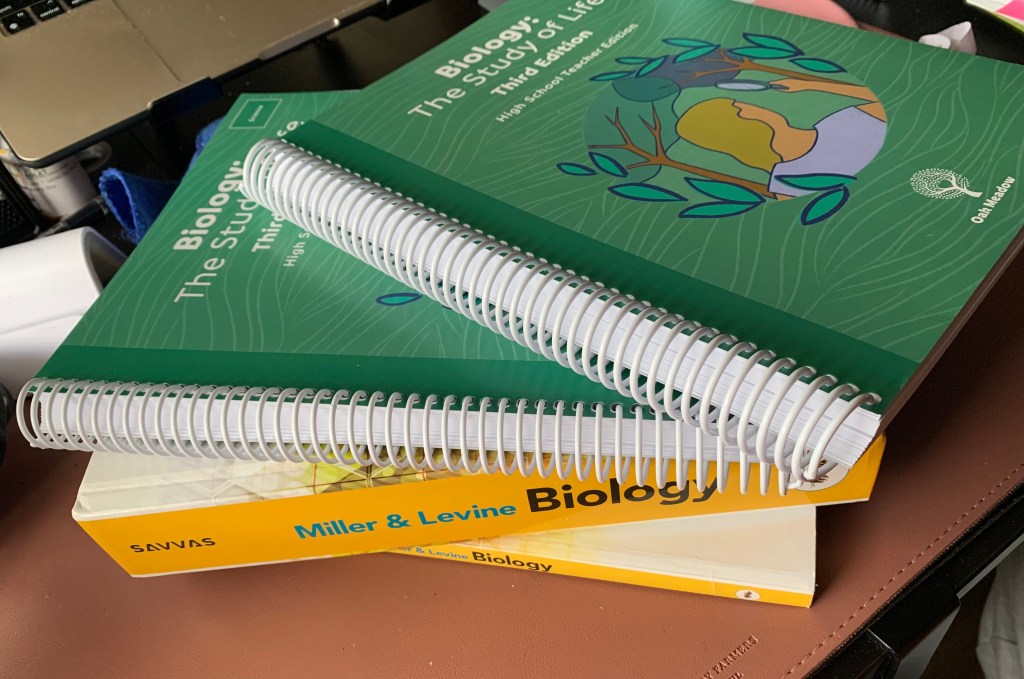
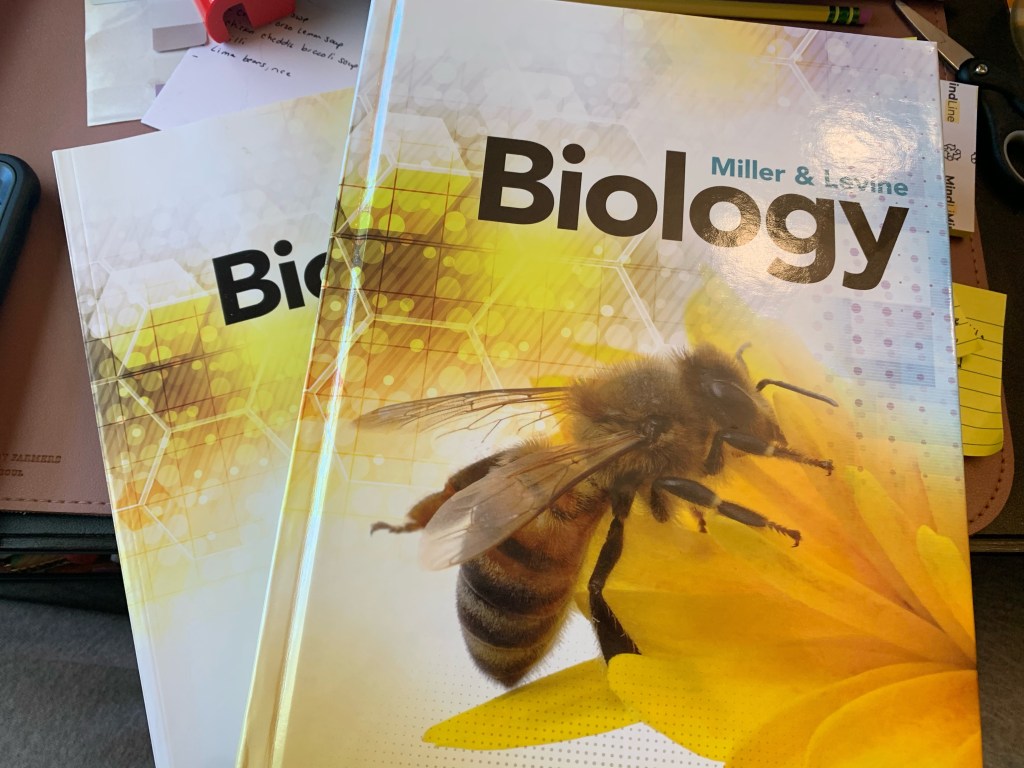
We officially dropped our previous “honors” biology class, which turned out to be a standard biology course marketed as something seriously less than. We’ve since moved into a true honors-level program Savvas Miller & Levine 2019 Biology and it has been phenomenal. The rigor, labs, research opportunities, and interactive learning tools have taken science to the next level. My son is now engaging with real labs, quizzes, tests, research projects, and practicums and yes, no more skipping textbook chapters and sections like in his old “honors” biology online class!
We don’t enroll in classes just to “check boxes.” For us, quality always outweighs quantity, especially on a college-bound path. My son has made it very clear that university is his goal, so we’re aligning his homeschool accordingly.
Math Milestones
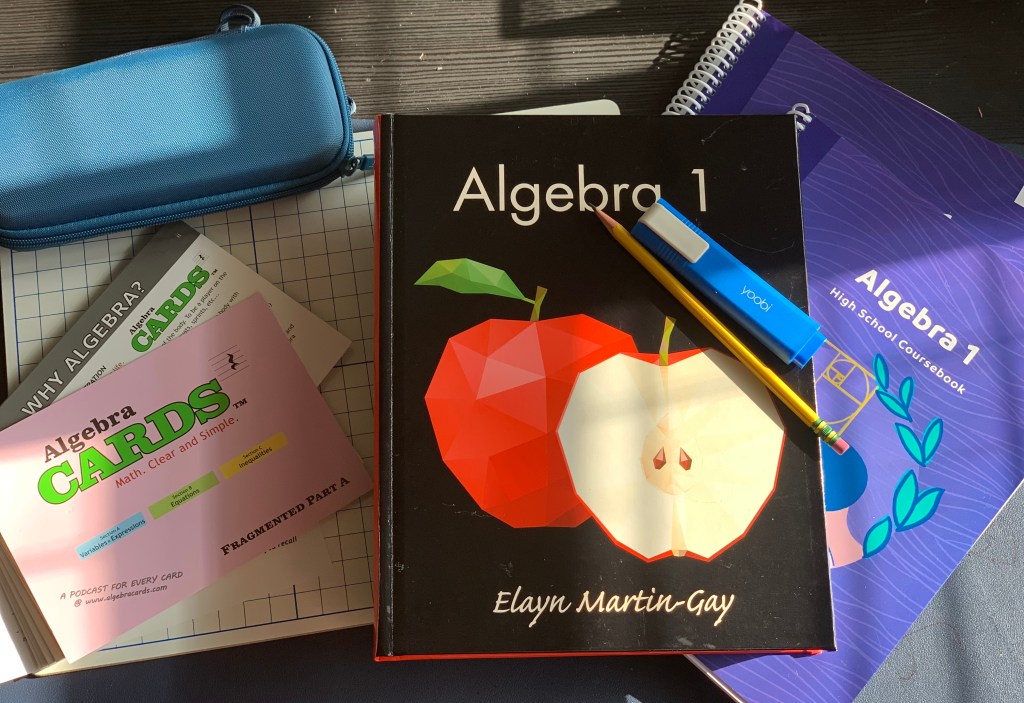
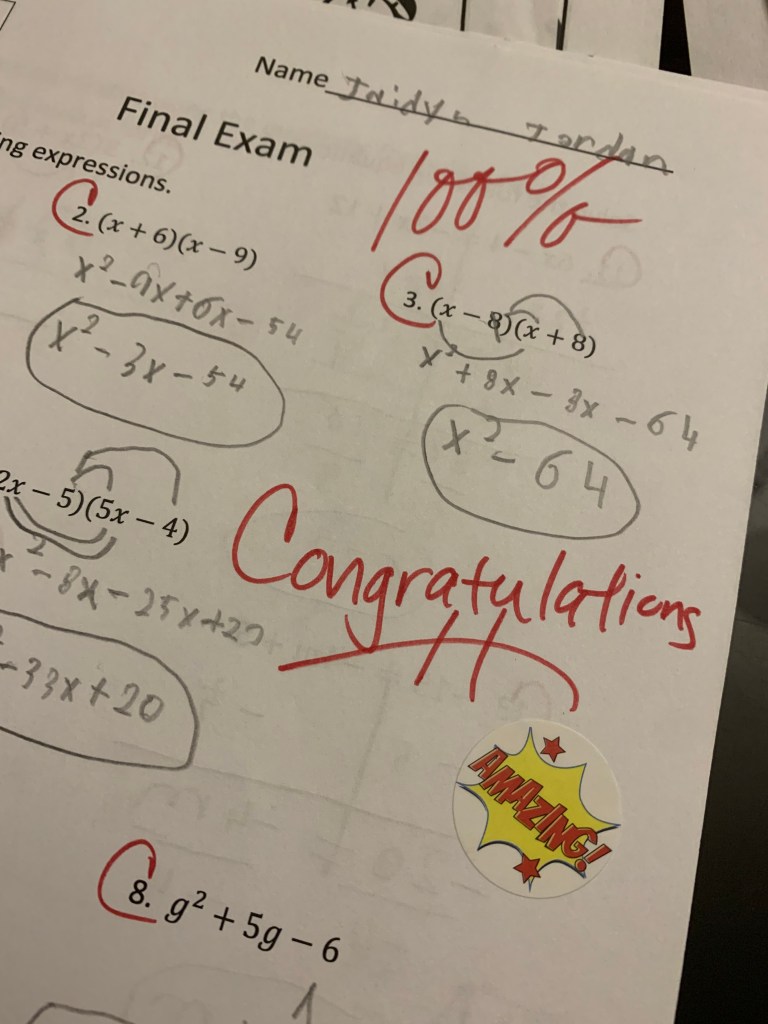
We wrapped up Denison Algebra 1 (huge win!) and have now transitioned into Denison Geometry. To keep Algebra skills sharp, we’re continuing to use Mr. D Math. My son has already decided he wants to start Algebra 2 next semester alongside Geometry, so I’m pacing us carefully to keep balance and mastery in check.
Literature and English
Earlier this year, I mentioned we were shifting directions in literature and what a phenomenal change that’s been! In October, my son officially joined Nia Natal Academy, and it’s been a perfect fit. He’s thriving academically and socially, connecting deeply with his peers and teachers.
In English, they’re diving into research essays and literary analysis while exploring powerful works like The Hate U Give. The classroom discussions are rich with connections to current events, civics, and Black history and the students aren’t holding back! The critical thinking and real-world context in this class have been inspiring to witness. The class he is in is high school level and he is doing really well and keeping up.
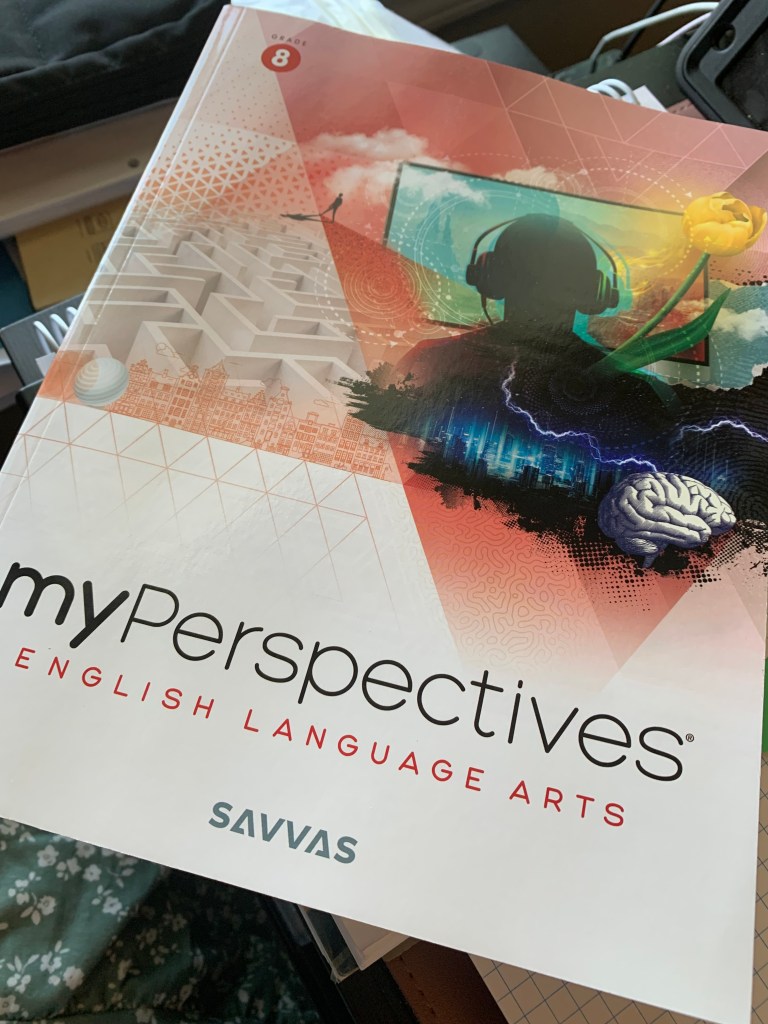
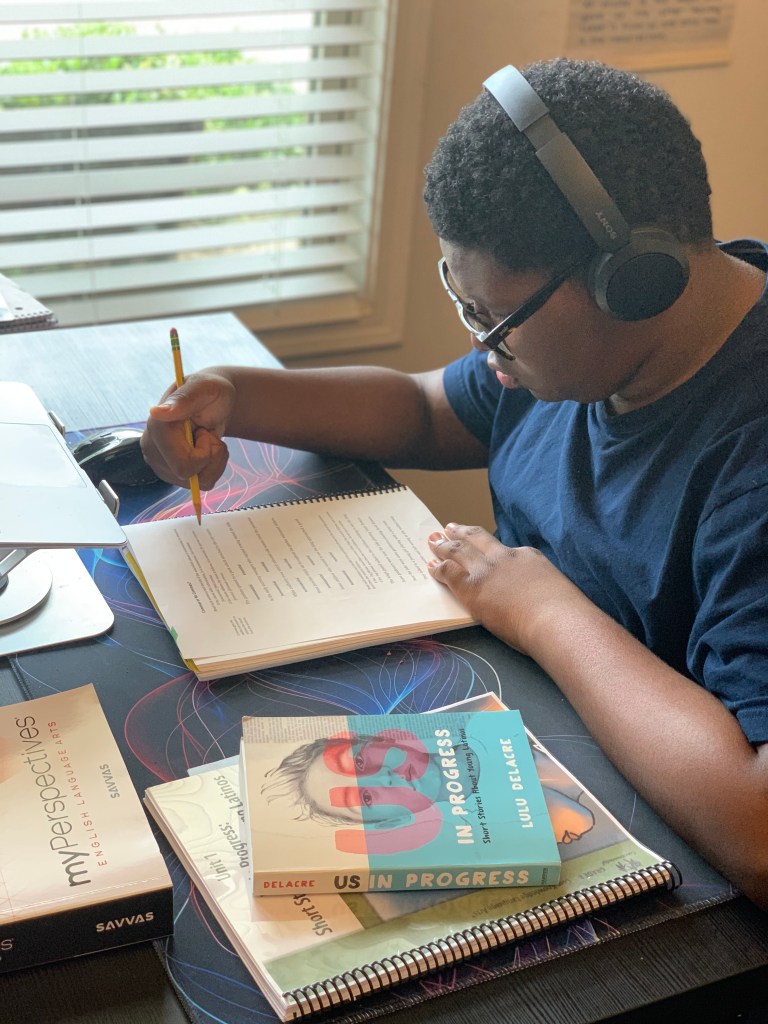
We are still using Michael Clay Thompson MCT Level 5 alongside Savvas 2025 MyProspective grade 8, both these are rigorous English curriculum that are above grade level.
His African Studies class has also been incredible. The teacher brings such depth and insight, challenging the students to think globally and act with purpose. Recently, the class began a world-building project where students created their own societies. My son campaigned for his role as Minister of Defense, which required a written platform, government assessment, and even a campaign video. This kind of project-based learning has had an amazing impact on him.
Leadership, Community, and Growth
Mid-October brought another exciting opportunity: an invitation to a public speaking workshop with Veritas a prestigious student society that meets weekly to study and refine leadership skills. He came out of that workshop absolutely energized and immediately decided to apply for membership. We’ve been gathering transcripts, essays, and recommendation letters since, and I’m so proud of how supportive his teachers and friends have been through this process.
Family Time
We have been spending more time together as family, going to the movies, field trips, game and movie nights. We are also cooking as a family two times a week. My husband has embarked on a new health journey and we have joined him. We all eating more healthy and enjoying new foods. Dad has stepped his game up and is attending homeschool co-ops with us and he also making time out of his busy schedule and spending at least one day a week being more hands on in our homeschool classroom.
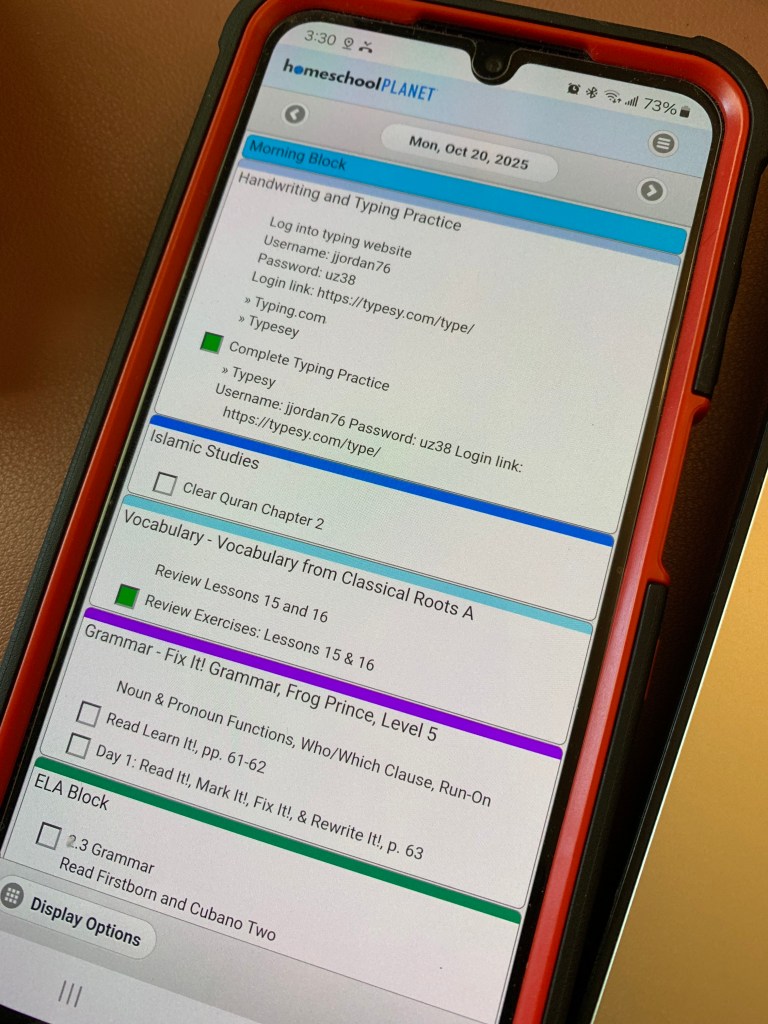
Our Secret Weapon: Homeschool Planet in Action
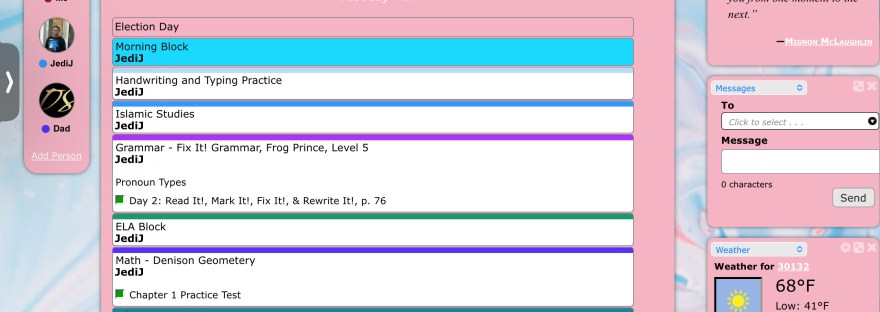
If there’s one tool that has truly held us together through all these changes, it’s Homeschool Planet. Having this platform in our homeschool arsenal has been an absolute game changer. With its constant updates and improvements, it’s become one of the most reliable tools in our homeschool toolbox especially when life gets unpredictable.
The Homeschool Planet app has elevated the experience even more. From managing our schedule, lessons, important dates, and even forgotten Zoom log-ins while at co-op, it keeps us on track no matter where we are.
Last month, when I fell sick and ended up in the hospital, I realized just how powerful this system really is. Because I had planned ahead and uploaded everything into Homeschool Planet, my son was able to follow along independently. He tracked assignments, managed deadlines, and even helped me keep this very update on schedule. It was one of those “in the clutch” moments that reminded me why organization tools like this are worth their weight in gold. Homeschool Planet truly keeps our homeschool orbit steady even when life throws us a curveball.
From My Son’s Perspective
“Yup, I finished Denison Algebra 1! I set a goal to complete it before my 13th birthday and I did it! At the time I’m writing this, I’m still waiting on that birthday to roll around, but I’m really proud of myself.
I also got a Gabb Wireless Phone after my Gabb Watch retired after four years of loyal service. My parents were hesitant, but since Gabb is designed for safe communication, we agreed it was the right next step especially now that I’m doing more independent activities and drop-offs. I am using it smartly and its been nice to connect with friends in a different way. I am also not distracted by social media and internet. The one thing I really love is GABB MUSIC!!!!!! Its the best all my favorite artist no commercials and clean music and lots of genre to pick from.
I love my new biology textbook and new classes with a diverse group of peers. It feels great to be in spaces where I can be my full Afro-Latino self curious, open, and unguarded. The books we’re reading and the conversations we’re having really matter. Homeschool finally feels like homeschool again a place where I can grow, think, and be me.
One of my favorite tools this year is Homeschool Planet. I’m using it for everything assignments, chores, field trips, reminders you name it. The Homeschool Planet app on my phone is especially helpful when my mom’s not around to unlock my MacBook (thanks to those parental controls!). It helps me stay organized, check my schedule on the go, and even coordinate with friends. Total game changer for middle and high schoolers.
This month, I hung out with friends at the Fall Festival, found Veritas and applied, participated in Junior Achievement Finance Park, did some volunteering, and joined a new leadership group. October has been busy but the good kind of busy. I’m really looking forward to November. Oh, and I almost forgot my African Studies class isEXCELLENT!”
A Scary but Valuable Lesson
The end of October brought an unexpected challenge. My mom had to be hospitalized, which was really scary for me. Thankfully, she’s now home and doing much better, but it was a wake-up call for all of us.
Seeing my mom in the hospital was hard it made me realize how much she does every single day to keep things running in our home. When she came home, she couldn’t jump back into her full routine, and my dad and I had to step up. After the first day, I really saw where I had been slacking and how often she quietly picks up the pieces. I’m really sorry for that, and I’m going to do better.
She tried to bounce back quickly but eventually realized she needed to ask for help—and we were happy to be there for her. To all the kids reading this: you only get one mom cherish her and HELP HER!
This experience taught us all about balance, gratitude, and teamwork. Sometimes life slows you down so you can see what really matters.
Closing Reflections
October reminded us that growth often comes with change and sometimes with challenge. This month tested our balance, strengthened our faith, and deepened our gratitude. From rigorous new classes to unexpected life lessons, we’ve experienced so much growth as a family.
And through it all, Homeschool Planet has been the steady hand keeping our homeschool world spinning.
I know this homeschool thing can be tricky we all want what’s best for our kids. But here’s the truth: just because a course, academy, or program is marketed as “the best of the best” doesn’t mean it’s the right fit. Sometimes you’re just paying for the name that says XYZ. Colleges don’t care about fancy labels; they care about academics, character, and depth.
They want to know can this student think critically? Are they a world changer? What will having this student bring to our campus community? Yes, grades and test scores matter, but so do curiosity, compassion, and the ability to hold meaningful conversations about the world around them. They don’t want robots they want thinkers and students who will go beyond the limit of the textbook.
Did they enjoy their learning journey? Can they discuss complex ideas about society and global events? Outside of sports, what else do they bring to the table? What makes them happy? What motivates them?
These are the questions that shape the kind of education I’m building for my son. I’m not chasing big names or shiny marketing I’m seeking substance. Because in our homeschool, it’s not about checking boxes; it’s about creating a thinker, dreamer, and lifelong learner who understand that his education and has purpose.
Here’s to a purposeful, healthy, and inspiring November! Click the Homeschool Planet banner below to grab your free trial.
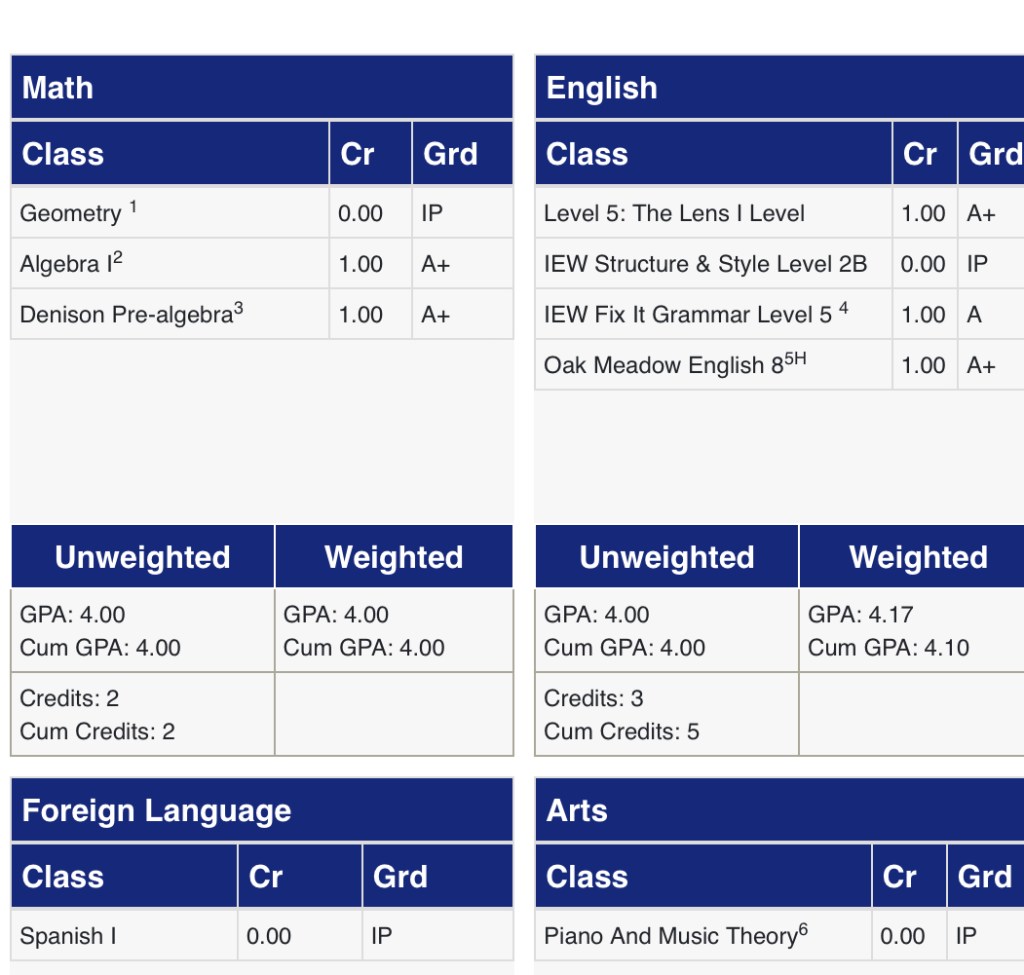
Recently I was asked to provide a transcript for my son in order for him to apply to a prestigious academic program. I was so relieved that I had already been using Homeschool Records to track his academics through his 7th/8th grade year, especially since he did a hybrid school year last year and is again this school year for 8/9th. Having his records already organized meant that I wasn’t scrambling to piece things together at the last minute. You may also recall I reviewed Homeschool Records last year. We are still using it and I am so glad we are.
When I needed to produce his transcript, Homeschool Records was a life-saver. With just a click of a button, I was able to generate a professional, impressive transcript that looked exactly like what the admissions people expected. No frantic formatting, no last-minute data entry, no worries about how to present hybrid/homeschool credits. I felt confident handing it over.
Here’s a deeper dive into how Homeschool Records works, what it offers, and who it best serves.
What Homeschool Records does
It’s a web-based platform that allows you to “create, manage & store all your homeschool records in one place”designed especially for Grades 8-12.
It covers key record-keeping elements: transcripts & reports, course descriptions, attendance tracking, volunteer/community service hours, reading logs, instructional hours.
The workflow: you input your student’s courses (with descriptions, grades, credits) once. Then the system uses that information to automatically build reports, including transcripts.
Recently I discovered the new feature of being able to duplicate classes a game-changer for us. For example, when planning the spring term I could duplicate a class from the fall term and just update the grade or status. Huge time saver.
Also features like marking a course as “in progress” or “planned” are built in, so the transcript can reflect “this course is ongoing” or “this course is scheduled for next term” which is perfect for hybrid/homeschool students who may have non-traditional sequencing.
Sharing courses with other students in your account, this is a great option for multi-family students.
The newest launch: a Transcript Evaluation Service — meaning the platform is now offering a review/validation of your transcript to help ensure it meets college/university expectations (in my case, that give me extra peace of mind) small additional fee applies.
Why it was ideal for our context
My son’s hybrid school year: Because we were using both homeschool curriculum and hybrid/in-class elements, keeping everything organized was complex. Homeschool Records let me track each component (in-class, homeschool days, online days) under one roof.
Middle school into early high school transition: Since we’re moving from 7th/8th grade into higher grades, establishing good records now means less stress later when high school officially begins.
Efficiency: I literally spent only minutes entering course descriptions and grades; the heavy lifting (formatting, report generation) was handled.
Planning & progress-monitoring: The duplicate-class feature helped me plan ahead and see my son’s progress over time (term to term).
Professional look: The transcript output looked clean and credible exactly what is needed when you’re submitting to an academic program that expects high-school-level documentation.
Screenshot
Who would benefit from using Homeschool Records
Homeschooling families whose students are entering high-school years (Grades 8-12) and may need transcripts for college, programs, scholarships.
Hybrid homeschool families (mix of in-person, online, homeschool days) who want one place to track all academic work.
Homeschool parents who want minimal fuss: you enter the data and the system does the heavy lifting — ideal for busy parents who don’t want to become transcript-formatting experts.
Families who want to plan ahead: Being able to mark planned/in-progress courses means you can build a roadmap from middle school through high school, making sure you’re on track.
Those wanting professional documentation: For admissions, scholarships, evaluations a polished transcript matters, and this platform delivers.
Exciting New Dual Enrollment Feature
And now, Homeschool Records has taken it a step further with the new Dual Enrollment Planner! This feature helps families seamlessly track and organize college-level courses taken during high school, including credits, grades, and institutions. It ensures your student’s dual enrollment experience is clearly documented and professionally displayed on their transcript something that really catches the eye of admissions officers.
The Breakdown
One of the biggest concerns for homeschool parents is creating a strong high school transcript one that truly reflects your student’s hard work and individuality.
What I’ve found with Homeschool Records is that it keeps me accountable for everything curriculum, credits, track volunteer hours, extracurricular activities, electives, and even helping my son build his student resume.
Colleges today want to see more than just academics. They’re looking for well-rounded individuals, and Homeschool Records helps make that possible. Their professional transcripts have just the right pop of color, helping your student’s transcript stand out from the typical black-and-white ones that often get lost in a stack.
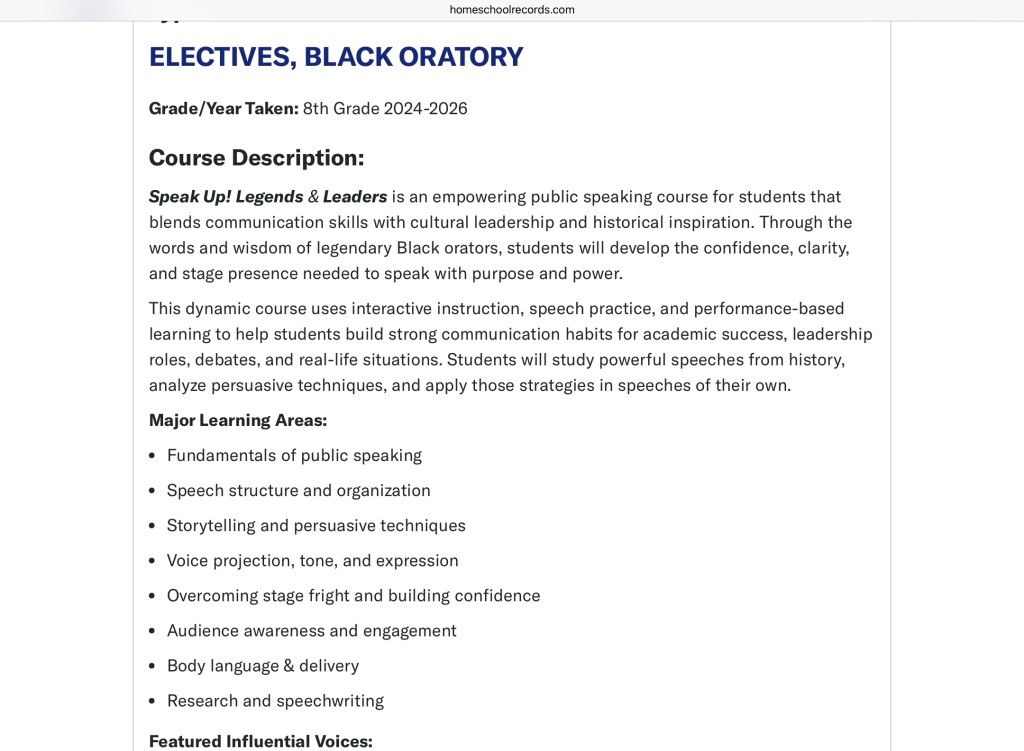
One of my favorite features is the ability to add detailed course descriptions when entering classes. This is such a valuable tool! Along with the transcript, you can submit these professional course descriptions to give admission counselors a real understanding of what your student studied and how your homeschool operates.
It’s simply not enough anymore to just meet graduation requirements. Today’s colleges want context and depth they want to know what your student learned and how. After talking with several admissions counselors myself, they all said the same thing: they love when families provide more information about the courses.
Homeschool Records truly takes the worry and anxiety out of transcript creation. It even automatically tracks credits for you! This platform has made the high school documentation process so much easier and far more professional.
My Final Thoughts
If I were to sum it up: Homeschool Records has been one of the best investments we made in our homeschooling infrastructure. Knowing that when that transcript request came, I was ready is priceless. The recent addition of the duplicate-class feature truly made planning for the spring term easier, and the ability to note “in progress” or “planned” courses gives flexibility that’s perfect for the hybrid model.
In short: you (the parent) spend a few minutes entering your child’s information (course name, description, grade, credit, status) and you’re done. The platform handles the rest. It works now as a tracker for 8th grade, but it’s also a long-term solution for tracking from 8th through 12th grade, making it an excellent system for the next several years of our son’s academic journey. The low cost is worth every dime!!
If you want a science curriculum that treats elementary-aged learners like real thinkers not just workbook checkboxes Real Science-4-Kids (RS4K) Book 3 is one of those rare finds. It hits a sweet spot between hands-on exploration and gentle academic rigor that makes it perfect for both budding scientists who can’t get enough and serious students who need a clear, organized path through foundational concepts.
Quick verdict
Practical, inquiry-friendly, and teacher-friendly. RS4K Book 3 builds scientific habits (observing, measuring, explaining) while covering a broad suite of topics at a depth that’s just right for grades 3–4. If you want kids doing real experiments, writing simple lab notes, and connecting concepts to everyday life this is a great pick.
Who this is best for
Homeschool families who want a science-first approach with hands-on labs.
Students in grades3–4 who are ready for explanations (not just facts) and can follow short experiments with supervision.
Parents/teachers who prefer teacher-led instruction with scripted explanations plus room to extend or simplify.
Students who enjoy building models, measuring, and drawing conclusions — excellent for kids who might pursue more advanced science later.
It’s also friendly for mixed-age siblings: older kids can read the deeper notes, younger ones can do simpler observation tasks.
What’s inside (deep dive, without the fluff)
RS4K Book 3 is organized to introduce robust scientific ideas in small, manageable chunks. Typical elements you’ll find in each unit or lesson:
Clear learning objectives — what the student should know/do by the end.
Short reading passages explaining a concept in kid-friendly language.
Step-by-step experiments using inexpensive, household supplies. Many activities encourage measurement, comparison, and recording results.
Discussion questions to build reasoning and vocabulary.
Teacher notes — background info, common student misconceptions, and safety tips.
Simple assessment ideas — short quizzes, oral review prompts, or notebook
checks.
Typical topics covered
While the exact table of contents varies by edition, Book 3 generally covers core elementary science areas such as:
Introduction to life science — plant/animal basics and ecosystems at an introductory level.
Why it’s a game changer
Hands-on learning is central — experiments aren’t an add-on; they’re built into every lesson. Kids learn by doing, which builds understanding and retention.
Scientist mindset — it doesn’t just dump facts; it teaches how to ask questions, design simple tests, record observations, and draw conclusions. That’s skills training, not memorization.
Straightforward teacher support — if you aren’t a science expert, the teacher notes and scripted explanations make lessons easy to teach while still sounding authentic.
Flexible pacing — one lesson can be a 30–45 minute block or stretched across multiple days for deeper exploration or notebook work. Great for mixed schedules.
Builds confidence for advanced science — students practicing measurement, controlled testing, and lab notes in 3rd/4th grade transition more smoothly into middle school science.
Who it might not be best for
Families who want only textbook-style worksheets and zero hands-on work. RS4K expects experiment time.
Parents looking for unit studies tied heavily to literature, art, or history RS4K is science-first and focused on scientific skills and concepts.
Very independent early readers who want to self-teach without any parental/teacher guidance Book 3 still benefits from a teacher to scaffold experiments and questions.
Practical classroom/homeschool tips
Buy the kit or gather supplies ahead — most experiments use cheap household items, but having a supply box (magnifying glass, thermometer, simple multimeter if you want electrical experiments, ruler, balances) saves time.
Science notebook — require students to write a hypothesis, record procedure, draw/data, and write a conclusion. This trains scientific writing early.
Adapt for mixed ages — give older kids the explanation and data analysis; younger ones can do the observations/drawings.
Extend curious students — add a research mini-project or extra experiments (e.g., more trials, different variables) for kids who want depth.
Safety first — teacher notes usually flag hazards; supervise heat, chemicals, and tools.
Final pros & cons (fast list)
Pros:
Strong emphasis on experiments and scientific thinking.
Clear teacher supports and explanations.
Flexible and engaging — great for curious kids.
Prepares students for middle school science habits.
Cons:
Requires parental/teacher involvement for labs.
Not a literature-integrated unit study (it’s focused science).
Some families prefer more colorful, activity-packed books — RS4K is practical and content-dense rather than flashy.
Closing recommendation
If you’re a homeschool mom who wants your 3rd–4th grader to think like a scientist to make observations, test ideas, and write about findings Real Science-4-Kids Book 3 will pay dividends. It’s the curriculum that gently raises expectations: students get real experiments, useful vocabulary, and the confidence to ask better questions. For serious and budding science students, it’s not just another workbook it’s the beginning of a scientific habit of mind. Real Science-4-Kids Book 3 is a part of the 3rd Grade Timberdoodle Co Curriculum Kit.
Hey y’all! I’m J aka the Middle Schooler/High schooler who’s been homeschooled for a few years now. Few years? Nah we been at this since the beginning. Being an African American and Latino pre-teen at home has been… interesting, to say the least. There are definitely some big wins that make it worth it. Can you believe my mom let me guest write on her blog this month???? Anyways here’s my take:
The Highs
Go at My Own Speed
I can zoom through math when it clicks, and slow down on the parts that trip me up. No rushing, no judgment, just learning at a pace that finally makes sense.
Sleep? Yes Please
Sometimes I sleep in till 9… okay, once I even started school at 12. My mom wasn’t thrilled, but hey no alarm clocks, no freezing bus rides, just me and my cozy bed.
Learning My Way
I get to explore stuff I actually care about like African American history, coding, or books by Black authors. That freedom makes school way more interesting than endless worksheets and lectures.
Family Time = Bonus
Being home means more family time. We celebrate wins together, talk about tough stuff, and I don’t feel like just another student lost in a crowd.
Video Games = Study Break (Mostly)
One of the best perks? Gaming after I finish my work. Picture this: it’s Friday afternoon, I’ve crushed all my lessons, and I’m ready for Apex on my Switch.
But then I see it: 2-hour time limit.
AHHHHHHHHH! Seriously, Mom?! I just aced algebra! Outside I’m like, “I’m good.” Inside? Total meltdown.
That’s life with an overprotective mom—always worried about too much screen time, too much sugar, too much everything. She means well, but sometimes I just want to breathe. Even with her rules, gaming still feels like the ultimate homeschool reward.
The Real Deal
Okay, now that I knocked out all the fun stuff, let me tell you the truth: homeschooling is hard work. It’s not all gameschooling and sleeping in.
Most homeschoolers do school year-round lighter in the summer, heavier during the regular school year. And every state has its own requirements. I’m fortunate my mom, like a lot of moms, stays on top of it.
What’s been great recently is that my parents are letting me chart my own course. No class, no teacher, no book, no outing is decided without me having a say. It feels like a preview of college, where you pick your own classes and set your own goals. My mom always says, “You have to want it for yourself.” I am working on my time management and its coming along nicely I might say so myself. My mom and dad let me drop the live Honors Biology class. It was moving too slow and the live classes were just doing the labs. I don’t need to sit in a class to do a lab. So I elected to do the pre-recorded class and that way I don’t have to log on, take time away from other things. I do the lab turn in my report and BOOM I am done!! I take classes online with John Hopkins Center for Talented Youth, this has been a HUGE game changer for me.
I’m not wasting my time, my parents’ time, or their money. We’re a team that’s what makes this work. My mom told me she had to give herself a reality check too, because at the end of the day, the stakes are mine. That means no wasting time or money on things that don’t move me toward my end goals. Ultimately, my parents get the final say but trust me, my voice is always in the mix. I am also navigating friendships and socialization differently this year.
Cellphone
I still don’t have a cellphone, but my parents are moving to get me a Gabb Wireless phone, because my Gabb watch has gone crazy!! Like seriously it has gone bonkers doing all kinds of weird things. My Gabb watch was good to me over the last several years and I loved it. I am okay with not having a phone at the moment, but since my homeschool groups tends to do activities that parents just drop off, my parents have decided for safety reasons it time to upgrade. Gabb has been trusted by my family for a few years now. I agree, I have no need for social media and all the stuff that has turned kids into phone zombies. So just like my Gabb Watch it will be just for communication with my parents and few trusted friends.
Beyond the Books
Outside of video games, I’m staying busy. I’m on a debate team, part of a teen law program, into public speaking, and I volunteer at our local masjid. I also tutor younger kids, which keeps me sharp and gives back to my community. I recently joined a program for young black and brown aviators. I also still do piano.
Homeschooling doesn’t mean being stuck at home either I’m fully engaged in my homeschool group and we travel a lot as a family these days. We just got back from a mini trip. We’re headed to Rome in January and Puerto Rico in the spring.
Final Thoughts
Homeschooling is freedom, responsibility, personal growth and teamwork all rolled into one. Sure, I love the flexibility and late mornings, but what makes it lit for me is being part of the decisions, setting my own goals, and growing through real experiences. Sure, sleeping in, starting school late, or dealing with screen-time limits makes me roll my eyes sometimes but I get to learn my way, live on my own schedule, and still fit in epic gaming sessions.
So yeah, homeschool life? I wouldn’t have it any other way. I think I like this blog thing may have to convince mom to let me write again.
This September has been a month of clarity in our homeschool. If you’ve been following along, you already know my son LOVES grammar. It’s his jam. He gets the biggest kick out of completing his Fix It Grammar lessons every morning. This year he’s working through Level 5: Frog Prince, and let me tell you, this level has been testing my own gangster in grammar. Real talk I’ve started questioning all the grammar instruction I got in high school!
The best part? My son is thriving. He knows his stuff, he’s teaching me things, and grammar has become our daily warm-up before we move into literature studies.
Why We’re Choosing Literature Over Grammar This Year
Here’s the deal: I don’t have to push grammar with him. He’s naturally gifted, motivated, and has an outside writing teacher (Write with Mrs. Brown) who keeps him sharp. Instead of doubling down on something he’s already excelling at, I want to focus more energy on literature studies reading, analyzing, and engaging with stories that challenge him.
We tried an online literature class earlier this semester, but honestly, it was a mismatch. He wasn’t crazy about the book choices, felt unchallenged, and after three weeks, he was done. I don’t let him quit things easily he knows he has to give it a real shot and come to me with a valid reason and replacement plan. He did just that, and I respected his decision.
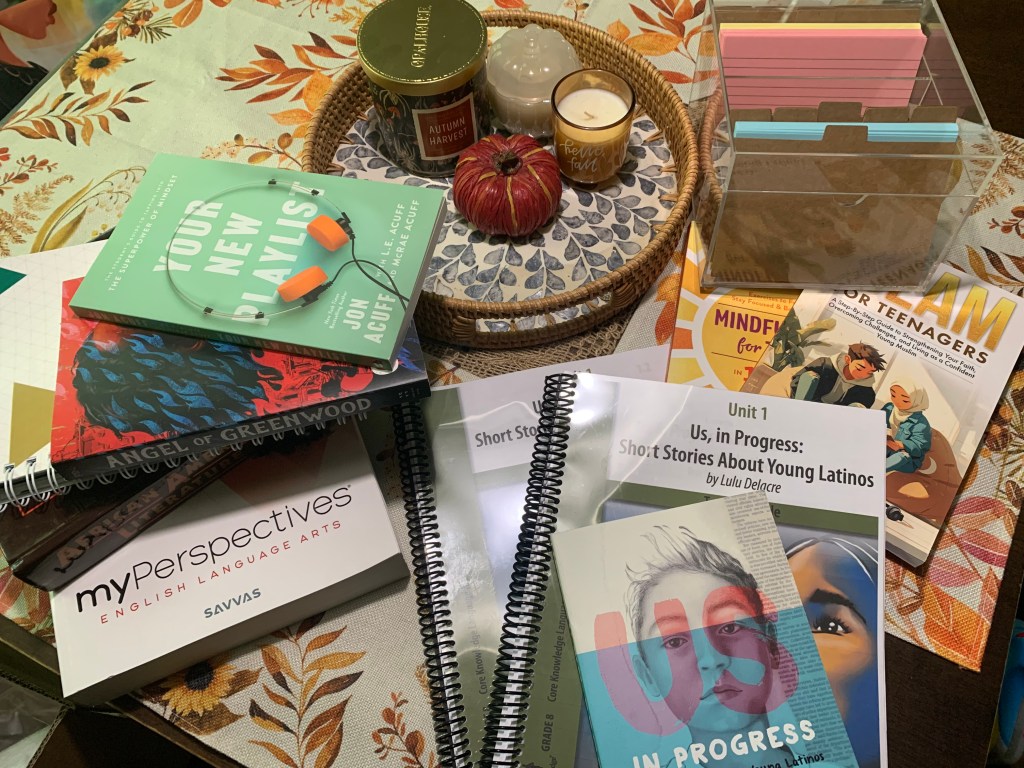
Now, we’ve shifted into using MyPerspective Language Arts 2025 as our anchor. It’s rigorous, literature-heavy, and provides plenty of resources through the online portal. When we’re not using MyPerspective, we pull from our African American Literature Textbook. Together, these two give him both depth and diversity. We wrapped up Oak Meadow English 8. We have put Oak Meadow Hero Journey for the Spring.
What We’ve Been Reading
If you want to know why literature is our focus it’s because my boy has been inhaling books like air. Here’s a snapshot of what he’s already read just this month:
And for November: The Hobbit Illustrated Edition (special thanks to Johana from How We Schoolfor the recommendation). If you haven’t checked her out I highly recommend she has a YouTube, and two Instagram accounts. )
Indigenous chapters book.
Honoring Our Heritage
October will also be special because we’ll be focusing on Hispanic Heritage Month. As a family with both Dominican and Puerto Rican roots, we’ll be diving into events, food, culture, and history that celebrate and honor our heritage. This adds such a rich layer to our homeschool connecting literature, history, and personal identity all at once.
How We’re Choosing Books
I’m intentional about his book list. We read classics, but not the dusty, put-you-to-sleep kind we were forced to read back in the day, you know in the 1900’s. Instead, I’m curating relevant, diverse, and thought-provoking works that make for strong Socratic discussions. Check out stories of color if you are looking to change things up. I sprinkle in “must-reads” while also letting him choose. The balance keeps things fresh and prevents burnout.
We don’t do a novel study for every single book because let’s be real that’s the fastest way to kill the joy of reading. Instead, we pick one about every 6–8 weeks and dive deep. Right now, I have a few from Moving Beyond the Page lined up for later in the year.
Classes, Math, and Beyond
Outside of literature, he’s thriving in co-op this year with four excellent classes that keep him engaged. One big lesson I’ve learned? Some online classes just don’t fit. Especially in subjects where he’s already advanced, he needs a direct, interactive approach without all the extra noise.
Take his honors biology class he loves the teacher but was pacing ahead of the group, so he transitioned to pre-recorded lessons with the teacher’s support. That flexibility has been golden and allows him to dig deeper into the concepts over the course of the week.
In math, we’re wrapping up Algebra I with Denison Math, and it’s been a great fit. We’re also using Mr. D Math as a supplement. While Mr. D Math is excellent, my son says Denison “gets straight to the point” and eliminates extra fluff. Both have their place in our homeschool toolbox. Speaking of Mr. D Math did you know that Mr. D Math has ELA courses? We will be checking these out for next semester as an option, he is still undecided if he wants to do self paced or live. The great thing is Mr. D is accredited with WASC.
What’s New on the Schedule
I’ve tweaked our schedule to carve out time for:
His passion project
Community service
A few extracurricular activities
These additions are giving him outlets for creativity and leadership outside of academics, which I think is just as important at this stage.
Wrapping Up September
This month, I’ve really seen how shifting the focus to literature has opened doors for deeper learning, critical thinking, and joy in our homeschool. Grammar will always be his strong suit, but now literature is where he’s growing, questioning, and connecting the dots.
So here we are grammar still our daily warm-up, but literature? Literature is our feast.
Stay Tuned because the kiddo is guest writing on the blog………….!!!!
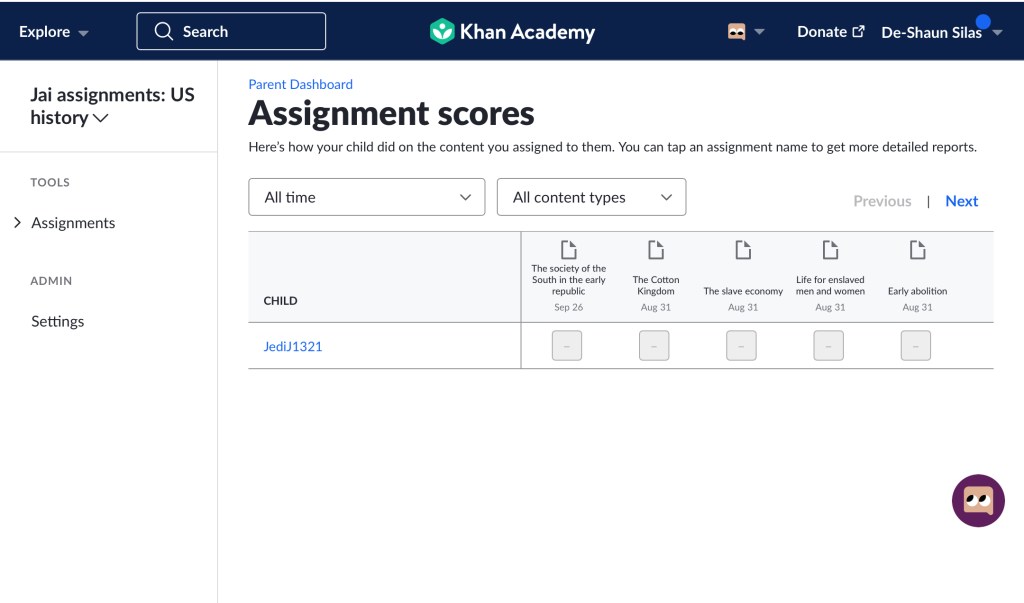
As a middle school homeschool mom, finding the right resources to support my son’s learning has always been a top priority. This year, Khan Academy has been a game-changer for us especially with the Parent Dashboard. The platform not only provides high-quality lessons and practice but also gives me the tools I need to track progress, assign work, and keep both myself and my son accountable.
How the Parent Dashboard Works
The Khan Academy Parent Dashboard allows parents to create and manage up to 10 student accounts under one parent profile. Once a student account is set up, I can:
Assign lessons and practice in any subject area.
View detailed reports of time spent, skills practiced, and mastery levels.
Monitor progress over days, weeks, and months.
See which lessons are completed and which ones need more attention.
For me, this dashboard has been invaluable. It eliminates the guesswork of whether my son is “just doing something online” or actually working through the material in a meaningful way. I can log in, see his progress in real-time, and identify strengths and weaknesses right away.
Why It Works So Well for Middle School Homeschooling
Middle school is a critical stage for building independence, but students still need structure and accountability. The Parent Dashboard strikes the perfect balance:
Student Ownership: My son enjoys checking off lessons and seeing his progress badges. It motivates him to stay consistent.
Parental Oversight: I can keep an eye on his work without hovering over him. This lets him feel more independent while still having clear expectations.
Accountability for Both: If something isn’t completed, the dashboard makes it easy to see exactly where he stopped. It holds him accountable to his learning goals, and it holds me accountable to follow through as his teacher.
A Huge Help for Science, Especially Biology
This year, we’ve been using Khan Academy to supplement our homeschool biology curriculum. The videos, diagrams, and practice exercises have been an excellent companion to our main program. My son often watches a lesson on Khan Academy after we cover a topic in his textbook, which reinforces the concepts and gives him another way to process the information. The interactive elements keep him engaged and help deepen his understanding of topics like cell structure, genetics, and ecosystems.
Benefits of Using the Parent Dashboard
Some of the biggest benefits we’ve experienced include:
Free access to high-quality lessons in multiple subjects.
Ability to assign and track lessons across math, science, history, and more.
Customizable pacing, so we can slow down or speed up as needed.
Clear, easy-to-read progress reports.
One central hub for monitoring multiple children (up to 10 accounts).
Encourages both independence and accountability in students.
Homeschool families who want to supplement their main curriculum with structured online.
Parents looking for a free accountability tool to track their child’s academic growth.
Families with multiple children who need an easy way to manage lessons in one place.
Middle schoolers who are ready for more independent learning but still need guidance and structure.
Final Thoughts
Khan Academy has been one of the most valuable supplemental tools in our homeschool this year. The Parent Dashboard gives me peace of mind because I know exactly what my son is working on and how he’s progressing. It keeps us both on track, makes learning interactive, and supports a wide range of subjects without any added cost. For homeschool moms looking to enhance their child’s education while also maintaining accountability, the Khan Academy Parent Dashboard is an excellent resource.
As a homeschool mom, I often reflect on the resources that shaped our early years. One of the very first science programs we used was the Real Science-4-Kids Focus On series, back when my son was in K–2nd grade. He enjoyed it so much, but honestly, I can’t help but wish this new and updated version Real Science-4-Kids Book 2 had been available back then. He would have absolutely thrived with it as a 2nd grader and loved every minute of it.
Now, years later, I’m thrilled to be reviewing this curriculum from the perspective of having used the earlier editions. And let me tell you—this new edition is every bit as engaging and rigorous, with even more structure and vibrant illustrations that make science come alive. Best of all, it’s secular and included in the brand-new Timberdoodle Co. Curriculum Kit 2025–2026 for 2nd grade. For families who value both solid science and ease of teaching, this update is a fantastic addition.
What’s New and Noteworthy in Real Science-4-Kids Book 2
1. Multi-Disciplinary Approach: This curriculum weaves Chemistry, Biology, and Physics together in one year. Instead of siloing topics, it introduces kids to the interconnectedness of science exactly how real scientists approach the world.
2. Open-and-Go Format: The clean layout, short readings, and step-by-step lessons make it incredibly user-friendly. I don’t need to spend hours preparing—everything is laid out for both parent and child.
3. Hands-On Experiments that Work: One of my favorite aspects is that the experiments are doable and meaningful. They don’t require obscure supplies, and they actually reinforce the lesson concepts in a memorable way.
4. Vibrant Visuals & Engaging Content: The colorful illustrations and clear diagrams make each page appealing. It’s structured enough for serious learning but still fun and approachable for young learners.
Digital Resources Included
Each set comes with digital access to the student book and teacher guide, which is great for flexible learning and printing.
On the Real Science-4-Kids website, you can preview free samples of the curriculum before you commit, and for those who want even more, there’s a Digital Library available at an additional cost. That library includes extended readings, quizzes, experiments, and enrichment opportunities perfect for science-loving kids who want to go further.
Who This Curriculum Is Great For
Families using Timberdoodle Kits who want a rigorous, secular science program.
Young learners ready for an academic challenge it feels about a year ahead of grade level.
Students who truly love science and thrive on digging deeper.
Homeschool parents who appreciate an open-and-go, structured program.
Families who enjoy hands-on learning with vibrant, engaging visuals.
My Honest Opinion
In my opinion, Real Science-4-Kids Book 2 is about a year ahead—and that’s a strength. For kids who love science, this program is a goldmine. It’s structured, user-friendly, and filled with vibrant illustrations that capture attention while keeping the focus on learning.
I can’t help but think how much my son would have loved this curriculum if it had been available during his 2nd grade year. It’s exactly the kind of science program he would have thrived on hands-on, engaging, and deeply satisfying to his curiosity.
Final Thoughts from This Homeschool Mom
As a mom who has used earlier Real Science-4-Kids editions, I can confidently say this updated version is a win. It builds on the strengths of the original series and delivers a more polished, vibrant, and structured experience.
If you’re looking for a secular, rigorous, and joyful science curriculum, you’ll be just as excited as I was to see Real Science-4-Kids Book 2 included in the Timberdoodle Co. Curriculum Kit 2025–2026 for 2nd grade. This is one science program that will both challenge and inspire your young learner—and it’s already a new favorite in our homeschool.
A year ago, I shared my thoughts on U.S. History, Part 1 from The Nomadic Professor. That course quickly became one of our favorite homeschool supplemental history experiences because it wasn’t just reading from a textbook it was living history. This year, we continued on with U.S. History, Part 2: The Noise of Democracy, and I can honestly say it has been just as rewarding, if not more so.
If you’re starting with early American history, I’d definitely recommend going back to my Part 1 review, but today I want to focus on what makes Part 2 so special for middle and high school homeschoolers.
What Makes This Course Different
On-Location Videos
Dr. William Jackson, the Nomadic Professor himself, actually films his lectures at historic locations. My son and I love this because we’re not just hearing about events, we’re seeing the landscapes and cities where they unfolded. It feels like history is unfolding right in front of you.
Comprehensive Dashboard
Everything you need is right inside the course dashboard—videos, notes, readings, quizzes, worksheets, writing prompts, timelines, and even audio versions if your child prefers to listen. I can’t tell you how much easier this makes my homeschool planning. No piecing things together from five different places.
Encourages Thinking Like a Historian
This isn’t a “just the facts” kind of course. Students are encouraged to weigh evidence, look at different perspectives, and think critically about the story of our nation. My son has been challenged to form his own opinions and back them up with evidence—skills he’ll carry well beyond history class.
What’s Covered in Part 2
Part 2, “The Noise of Democracy,” takes us from the ratification of the Constitution through Reconstruction. It covers the early republic, westward expansion, the Civil War, and the rebuilding of America after. It’s rich in both content and context, giving students the “why” behind the events, not just the “what.”
Right now in our homeschool, we are working through Units 3 and 4, which dive into the Indigenous wars and the Civil War. My son has been especially interested in learning more about how these events affected both Indigenous communities and enslaved people. I appreciate that the course doesn’t shy away from difficult but important parts of history it brings depth and balance to the bigger story of America.
Flexible for Every Homeschool Style
One of the best parts of The Nomadic Professor is its flexibility. You can use it as a stand-alone history course, with everything needed for a full year of U.S. history credit. Or, if you already have a history program you enjoy, it also works wonderfully as a supplemental resource adding depth, visuals, and critical thinking opportunities that many traditional programs lack.
Who This Course Is Best For
Upper Middle School and High School Students – The material is geared toward 8th–12th graders who are ready for more depth.
Visual and Auditory Learners – Kids who benefit from seeing and hearing as they learn will thrive with the on-location videos and audio options.
Homeschool Families Wanting Convenience – With everything laid out in the dashboard, it’s easy for both parents and students to follow.
Families Who Like Structure – For added convenience, you can use the Homeschool Planet lesson plans that line up perfectly with the course.
What keeps us coming back to The Nomadic Professor is how engaging and thought-provoking it is. My son isn’t just memorizing dates; he’s learning to understand history, ask questions, and make connections. The on-site videos give us the feeling of field trips without ever leaving home, and I appreciate that the curriculum gives me everything I need without extra prep.
Final Thoughts
If you’re looking for a high-quality history program for upper middle school or high school, I highly recommend The Nomadic Professor’s U.S. History, Part 2. It’s academically strong, visually engaging, homeschool-friendly, flexible enough to be a stand-alone course or a supplement, and even recognized by Timberdoodle as part of their 10th grade curriculum kit. For us, it has been a great continuation from Part 1, and we’re excited to keep going with the rest of the series.
This new homeschool year has already been one of the most unpredictable and “crazy” ones for our family. The stakes are changing. My son is 12 years old, and while he’s technically in 8th grade, he’s also working through pieces of high school curriculum. That means I’m now carefully keeping stronger records, deciding what deserves high school credit, and making sure not to overload or pad his transcripts. It’s a balancing act pushing forward without rushing him.
August has always been our “soft start” month, but this year I pushed the official count to September. That gave us room to breathe, explore, and transition into our rhythm. We kicked off with interest-led history, coding, and continuing Algebra 1. Later in the month, Honors Biology came into the mix, along with Outschool classes in law, history, literature, and science. We tried new extracurriculars like archery, swimming, community service, and golf, while also carving out time for field trips and family connection.
But here’s what I’ve learned: none of that works unless we prioritize self-care, mental healthy and relationships. That’s what holds everything together.
Hidden Stressors Our Kids Carry
When we think of stress, we often picture adults juggling bills, jobs, and family responsibilities. But our pre-teens and teens carry their own burdens many of which stay hidden. For some, it’s the pressure of transitioning into harder academics. For others, it’s navigating friendships, body changes, or the social expectations that come with growing up.
For Black and Brown children, there can be added stressors cultural identity, navigating stereotypes, and feeling unseen in certain environments. And while every child faces challenges, these unique pressures should not be ignored. At the same time, all children no matter their background need safe spaces where they can breathe, be heard, and just be kids.
Helping Pre-Teens and Teens Handle Stress
One of the best things I did this year was sit down with my son and ask him directly what was stressing him out. Kids don’t always volunteer this information, but once they feel safe, they’ll open up. Together, we made some adjustments:
Clear timelines. All assignments are due by Friday at 3 p.m. No hovering every day. No nagging. Just a rhythm he can depend on.
Weekly check-ins. Every Sunday, we spend 30 minutes going over the week ahead. If something looks heavy, we adjust.
Looping lessons. Instead of forcing every subject every day, we loop them for variety and less overwhelm.
End-of-day check-ins. These became one of the highlights of our homeschool. A chance to reflect, connect, and reset.
For personal self-care, my son asked for more downtime in the evenings. We turned his room into a sanctuary gamer theme, collectibles, cozy lights, and even a mini fridge stocked with healthy snacks. He loves his essential oils diffuser, tea lights, and a space where he feels in control. These small changes have given him peace and independence.
Setting Boundaries as a Family
Another big shift we made this year was around screen time and boundaries for all of us, not just my son. Together, we created a homeschool agreement that spelled out expectations for the whole family. Because we wrote it as a family, we’re all holding each other accountable.
And let me tell you, my son is serious about keeping me on track. If I slip, he’ll shut my laptop and remind me that my phone belongs upstairs in my bedroom. I’ve also turned off my social media notifications so I can stay present. Dad has his boundaries too we agreed as a family to respect our homeschool time during the day.
On my side, I rearranged my online teaching schedule to match what works best for us. I also made sure my classes never overlap with his online classes. That way, he knows he’s the priority, and I’m modeling what it looks like to set healthy boundaries.
Self-Care for Mom
As moms, we carry so much—planning, teaching, homemaking, and guiding. But pouring from an empty cup is not sustainable. For me, self-care isn’t optional; it’s survival.
Here’s what that looks like in my day-to-day:
Morning tea and quiet reflection. Before the house wakes up, I sip tea, read my Quran, and center myself.
Nightly brain dump. I write everything down before bed so my mind can rest.
Pampering routines. My new shower routine feels indulgent, but it’s also grounding.
Fresh air breaks. When the weather cools, I plan to spend more time on the porch with tea in hand.
Reading for joy. Not just audiobooks while multitasking, but truly reading, laughing, and enjoying stories.
Creative outlets. Journaling, scrapbooking, and planning bring me peace and creativity.
Music Playlist. I created a “Mental Reset” playlist on Amazon Music, so everyone in my house knows when they hear me ask Alexa to play it…..Mom needs some space.
Declare 1 hour of mom time daily!!!!!
Self-care doesn’t need to be extravagant it just needs to be intentional. Even one small change can bring more harmony into the home.
Level Up & Legacy Talks
One of the best new traditions we started is our Level Up & Legacy Talks. During this time, we read books like Letters to a Young Brother by Hill Harper, talk about culture, mindset, and growing up, and check in with each other. My son calls it his favorite part of the week. These talks are helping him build confidence, identity, and vision for his future. We a few books we are going to rotate through, but we are starting with this one and will move on to a new one soon.
And this year, we’re including Dad more too. When he’s available, he joins our homeschool day for Socratic conversations. It’s been powerful for all of us.
Why This Year Feels Different
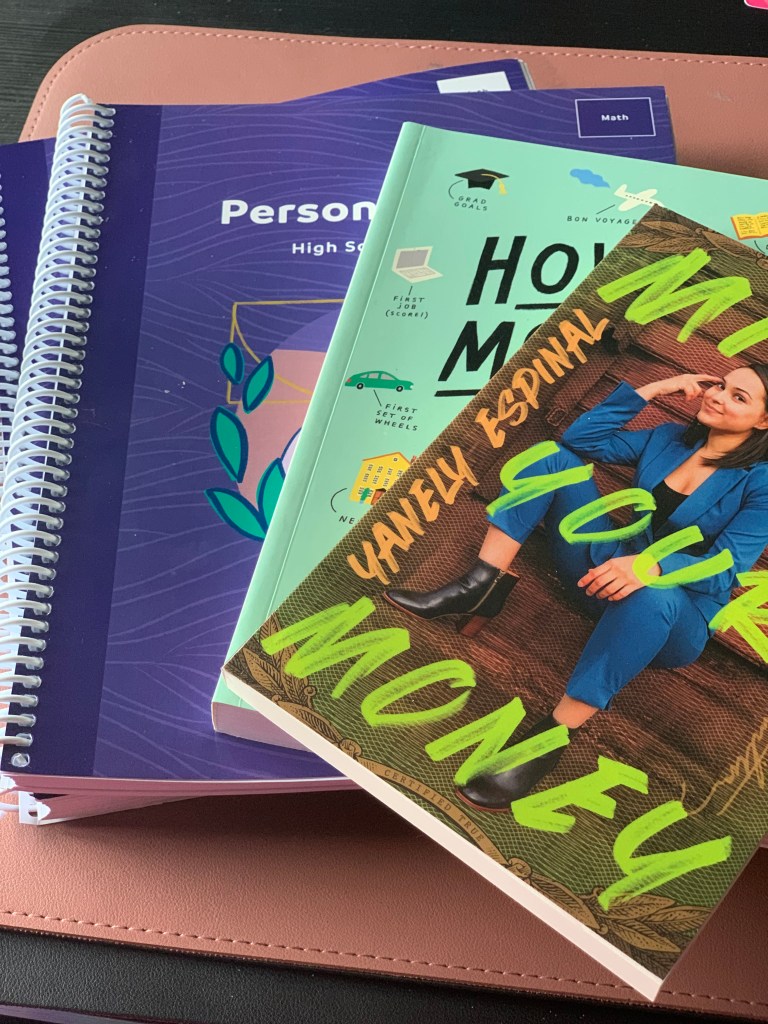
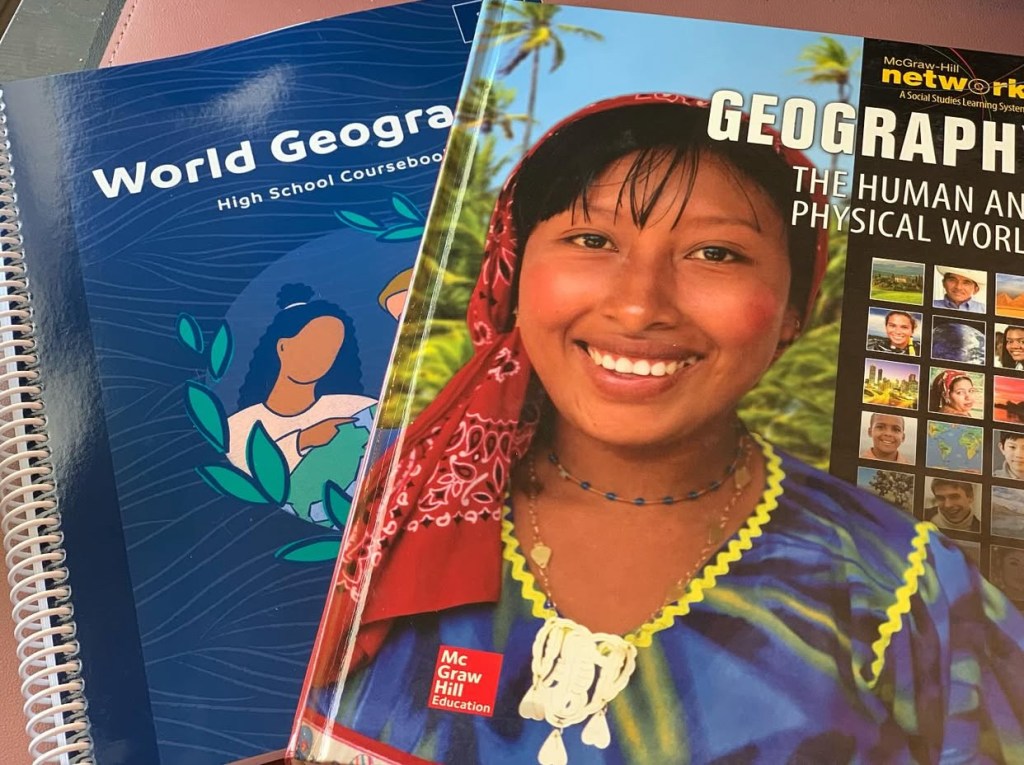
We’re still sticking with a few Oak Meadow Grade 8 its we are wrapping up, but we’ve added in their Personal Finance and Geography courses. Last year, my son loved Oak Meadow Civics, and this year we’re wrapping up what we didn’t finish. Balancing 8th grade with some high school-level work feels new and intense.
Homeschool Kids Aren’t Social?
I wish whoever started this rumor would go somewhere and have several seats. My kid is beyond socialized he keeps my planner filled with all his activities and events. He may not be “scheduled” in the traditional sense, but I’ll say this I actually have to send his dad a monthly itinerary just to keep track of everything!
For this upcoming year alone, he’s been invited to join Junior Beta and a formal Debate Team. Our homeschool co-op will be packed with fun and adventures, and come November, he’ll officially be part of the Teen Collective he’s counting down the days! He’s also joining the Homeschool Honor Society and has received formal mentorship invitations from both Georgia Tech and UGA.
Fun Times with Friends!!
On top of that, we’ve got two big trips planned in October and December, and in January we may be heading to Rome, Italy, to present at the same conference we spoke at earlier this year.
2025 International School Choice Reform Conference
That’s why self-care for both of us has become a top priority. Stay tuned for our full 2025–2026 Homeschool Curriculum line-up; we’ve got a few surprises in store!!
The Power of Meal Planning
Another form of self-care? Meal planning. It may not sound glamorous, but freeing up that mental energy makes a big difference. Our simple routine looks like this:
Monday – Leftovers
Tuesday – Tacos
Wednesday – Leftovers
Thursday – Light (salads, sandwiches)
Friday – Pizza Night
Saturday – Leftovers or Light
Sunday – Big dinner (enough for Monday too)
This routine saves me time, energy, and stress. Even if you only meal prep every other week, it can bring breathing room into your homeschool.
Nobody’s Perfect—And That’s Okay
Homeschooling isn’t about perfection. It’s about finding what works for your family, making small adjustments, and showing up with love. We’re all trying to do what’s best for our kids. Some days will be smooth. Some will be messy. And that’s okay.
A Closing Word for Fellow Moms
This year has already been full of lessons, but the biggest one is this: prioritize your relationships and your well-being just as much as the academics. Because when our kids feel supported and we feel centered, the learning flows more naturally.
To all the homeschool moms reading this I invite you to pause, reflect, and think about what small changes could bring more harmony to your homeschool. Maybe it’s a nightly check-in, a personal self-care ritual, or a simple meal plan. Whatever it is, embrace it. Our families don’t need perfection; they need presence. Here’s to a school year filled with growth, connection, and peace.