Early Childhood Education, Family, Homeschool

Little Hands, Big Reading Adventures: Building Early Literacy with ABC See, Hear, Do Flashcards!

There is something so special about watching little learners discover the wonderful world of letters, sounds, and eventually reading! As a homeschool mom, I have always believed that building a strong foundation in early literacy doesn’t have to involve endless worksheets, complicated lessons, or hours sitting at a table. Sometimes, the simplest learning tools can make the biggest difference, especially when they make learning fun!
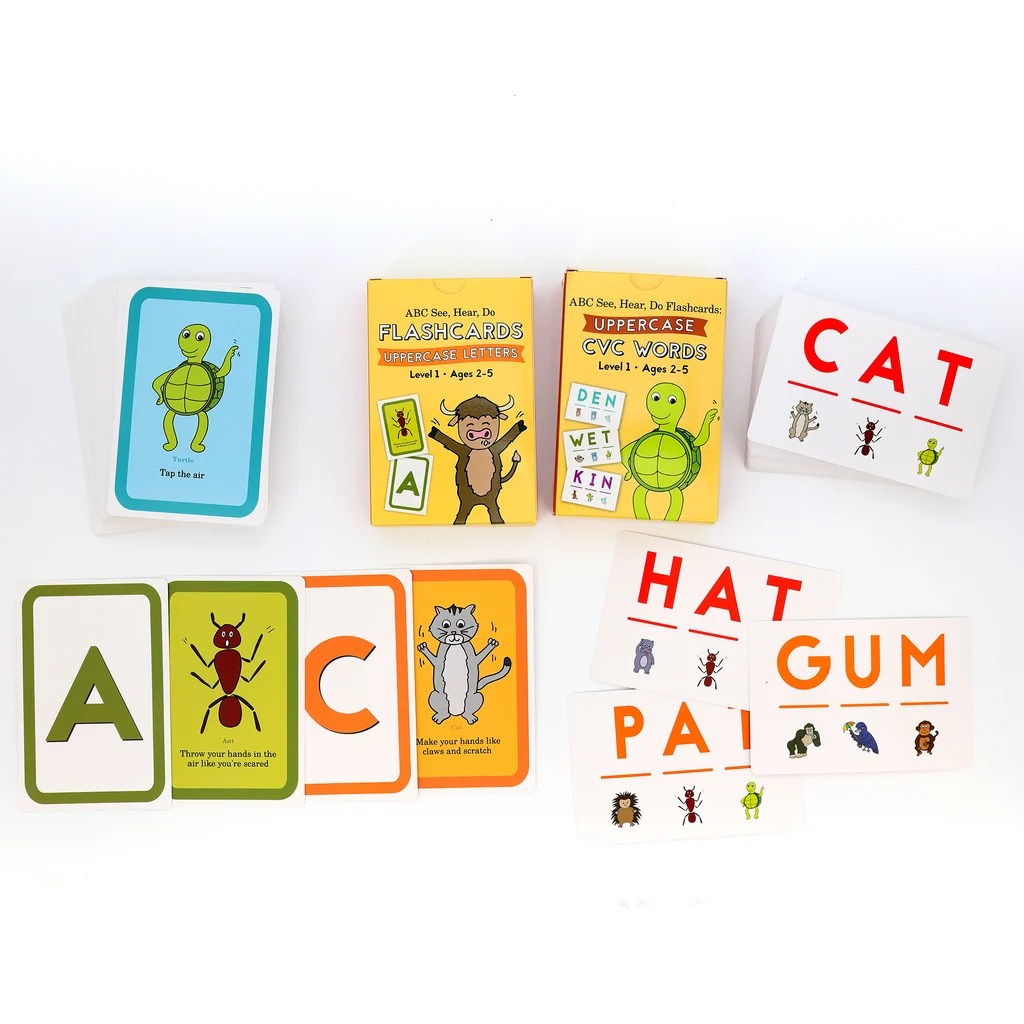
Recently, I had the pleasure of sharing two wonderful early learning resources from Timberdoodle Co.: ABC See, Hear, Do Flashcards: Uppercase Letters Level 1 and ABC See, Hear, Do Flashcards: Uppercase CVC Words Level 1.

What made these two sets extra special was that I had two very special little learners in mind when I received them. Rather than keeping them in our homeschool collection, I decided to share the joy of learning with my great-nephew and a sweet little friend of ours who are both beginning their own early learning adventures. nd let me tell you, it has been such a pleasure watching both kiddos work with their cards!

ABC See, Hear, Do Uppercase Letters Level 1: A Wonderful Beginning for Little Learners

When it comes to introducing the alphabet, I love resources that go beyond simply asking a child to memorize what a letter looks like. The ABC See, Hear, Do Uppercase Letters Level 1 flashcards offer a playful, multi sensory approach to early literacy. These cards introduce children to uppercase letters while encouraging them to connect what they see with the sounds they hear and the movements they make. The concept behind ABC See, Hear, Do is wonderfully simple: children see the letter, hear its sound, and use an accompanying action or movement to help reinforce what they are learning.

This approach is especially helpful for little learners who aren’t quite ready for traditional pencil-and-paper activities. Instead of sitting still and repeating letters, they get to participate in the learning process! I decided to gift this set to my great-nephew as he begins his journey into home learning. I wanted him to have something that would make his first experiences with letters exciting, engaging, and, most importantly, enjoyable. At this stage, it’s not about rushing children into reading. It’s about helping them become comfortable with letters, recognizing their shapes, hearing their sounds, and developing confidence as they learn something new.
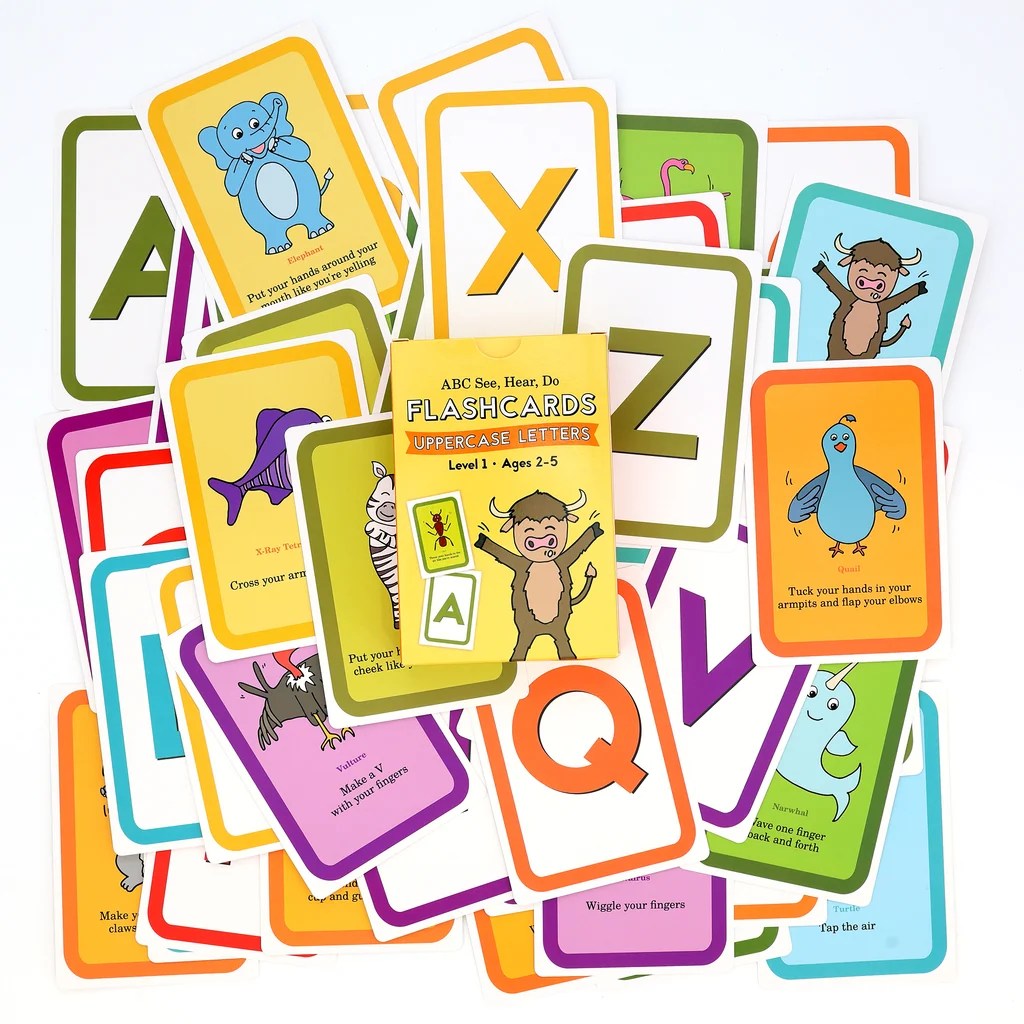
What I especially appreciate about the Uppercase Letters set:

  • It introduces uppercase letter recognition in a child-friendly way.
  • It encourages letter-sound connections, an essential early reading skill.
  • It incorporates movement and visual learning rather than relying solely on memorization.
  • It can be used for short, playful learning sessions without overwhelming younger children.
  • It gives parents a simple way to introduce foundational literacy skills at home.

For families just beginning their homeschool journey, this is the type of resource I love recommending. You don’t need to be an experienced homeschool parent to sit down with your little one and make learning letters fun.

ABC See, Hear, Do Uppercase CVC Words Level 1: Taking Those First Steps Toward Reading

Our second set, ABC See, Hear, Do Flashcards: Uppercase CVC Words Level 1, went to a special little friend of ours who has officially started her three-year-old year doing all the homeschool things! She is beginning to explore reading, and I thought these cards would be a wonderful addition to her early learning activities. Now, if you are new to teaching reading, you might be wondering what CVC words are. CVC stands for consonant-vowel-consonant. These are simple three-letter words, such as CAT, DOG, and SUN, that help beginning readers practice blending individual letter sounds together to form words. Learning to blend sounds is a huge milestone in early reading development!
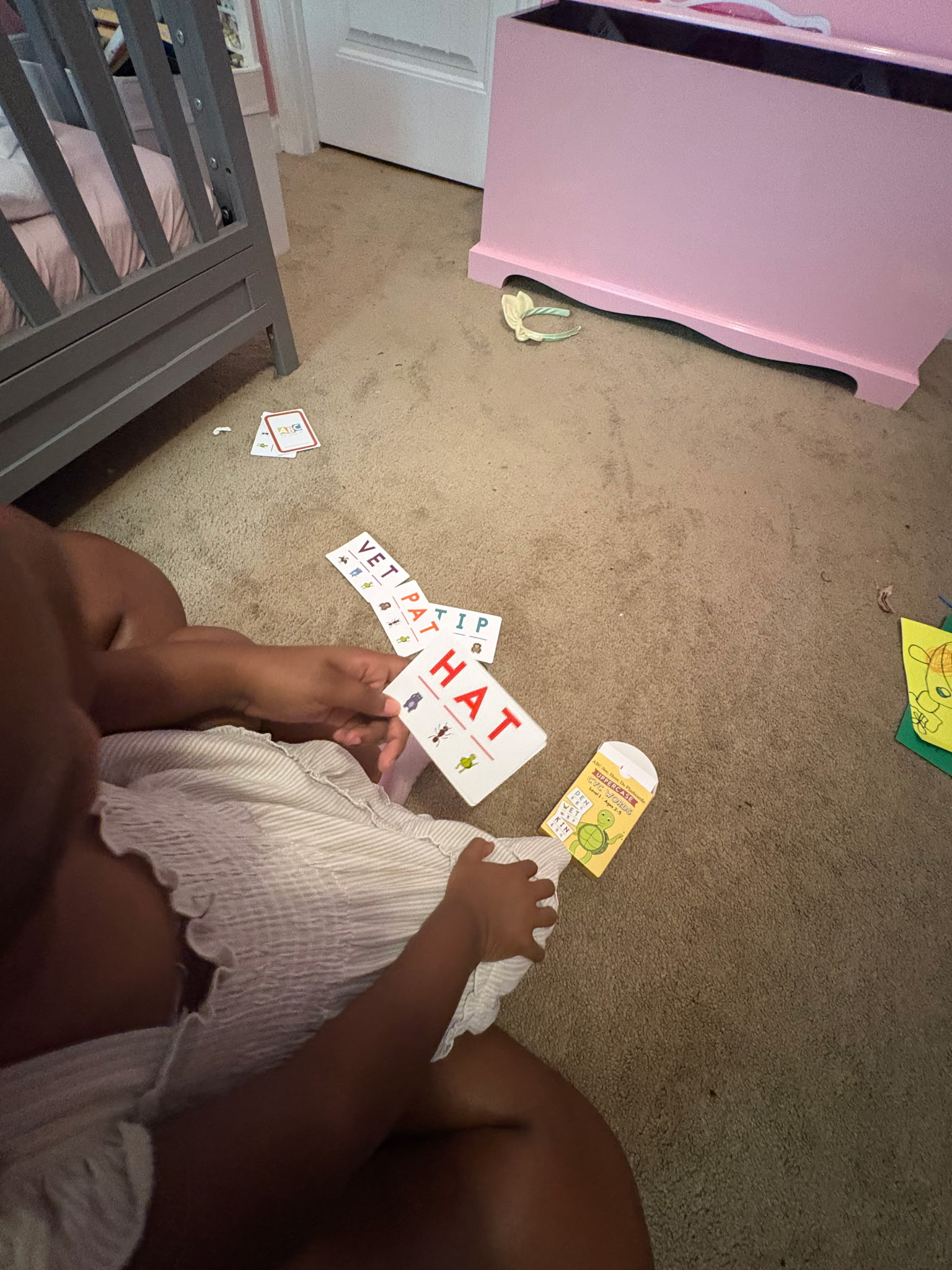
While the Uppercase Letters set focuses on helping children recognize letters and connect them with sounds, the Uppercase CVC Words set helps children begin putting those sounds together. What I love about this progression is that it builds naturally on the skills children are already developing.

The CVC flashcards give little learners opportunities to:

  • Practice recognizing individual letter sounds within words.
  • Develop phonemic awareness and beginning decoding skills.
  • Learn how sounds blend together to create words.
  • Strengthen early word recognition.
  • Build confidence as they begin reading simple words independently.
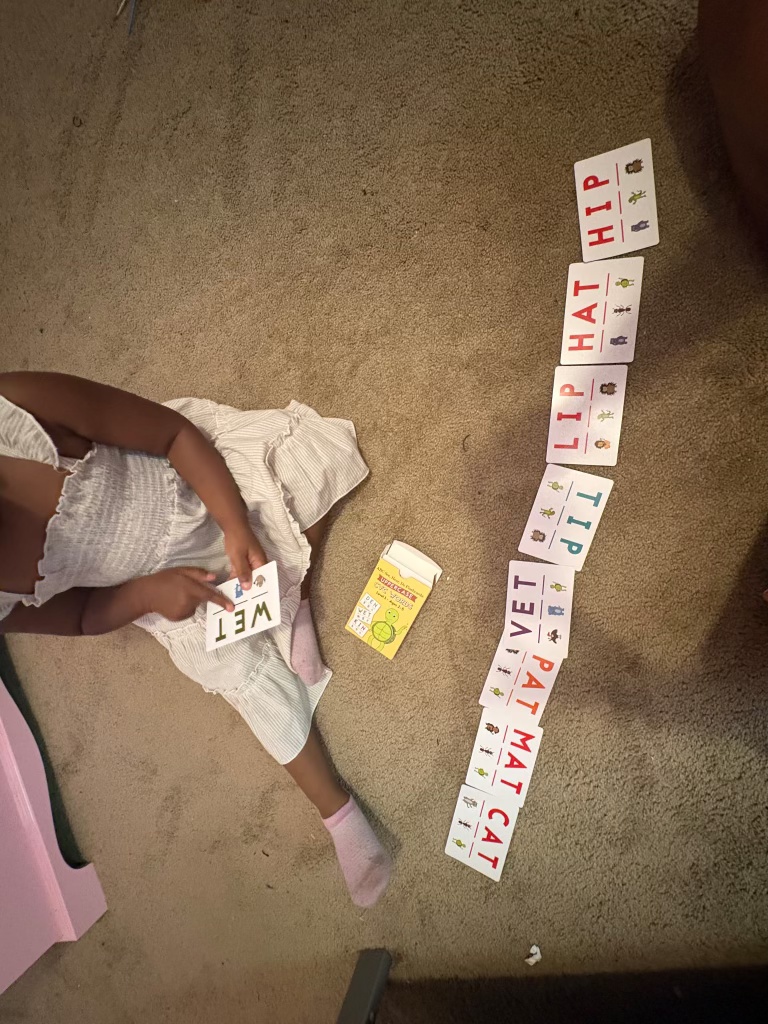
And because the ABC See, Hear, Do approach incorporates visual, auditory, and movement-based learning, it makes the process feel much more interactive than simply drilling word lists. For our little friend, these cards are a great way to explore the beginning stages of reading while still enjoying all the fun that comes with being three years old. One thing I always encourage parents to remember is that early learning is not a race. Some three-year-olds are eager to explore letters and words, while others are still developing those foundational skills through play. Both are perfectly fine! These cards can be introduced gradually, allowing children to work at their own pace.

Let’s Talk About the Cards Themselves: Quality, Durability, and Everyday Use

One thing I always consider when reviewing learning materials for younger children is durability. Let’s face it, little hands aren’t always gentle! Flashcards get shuffled, dropped, spread across the floor, carried around the house, and sometimes become part of an entirely different imaginative adventure. That is why I appreciate having dedicated, reusable flashcards rather than relying entirely on printed worksheets. The ABC See, Hear, Do cards have a colorful, easy-to-follow presentation that makes them inviting for young learners. Their individual card format is also practical because parents can select just a few letters or words at a time instead of overwhelming children with an entire alphabet or a long reading lesson. I especially like how easy they are to incorporate into everyday learning.

You can use them during morning time, at the kitchen table, on the living room floor, or as a quick activity between other homeschool lessons. For families planning to use their cards over several years or pass them down to younger siblings, I recommend storing them together after each lesson and keeping them away from snacks and drinks. With younger learners, taking care of our materials is another little lesson in itself! The cards are also easy to adapt to different activities. You can introduce a few new letters, revisit familiar sounds, play matching games, or encourage your child to demonstrate the movements that go along with what they’re learning.

Who Would Benefit Most from These Flashcards?

I think these sets are wonderful additions for several types of early learners.

Beginning preschool and Pre-K students: The Uppercase Letters set is an excellent starting point for children just becoming familiar with the alphabet and letter sounds.

Children showing an interest in reading: The Uppercase CVC Words set provides a natural next step for children who are beginning to recognize letter sounds and are ready to practice blending.

Hands-on and active learners: Children who enjoy movement and interactive activities may especially appreciate the See, Hear, Do approach.

Homeschool families with multiple young children: These cards can be brought out again and again as younger siblings reach different stages of early literacy.

Parents, grandparents, and caregivers: You don’t have to be a homeschool parent to use these resources. They are also wonderful for families who want to support early learning at home through short, meaningful activities.

I also think these would make thoughtful gifts for a child beginning preschool or starting a home learning journey. After all, that is exactly why I chose to share these sets with two special little people in our lives!

My Final Thoughts: Little Cards, Big Foundations!

As a homeschool mom, one of the greatest joys is watching children develop a love for learning. It doesn’t matter whether they are your own children, grandchildren, nieces, nephews, or special little friends. There is something incredibly rewarding about being part of those early educational milestones.

Gifting the Uppercase Letters set to my great-nephew as he begins his home learning journey and sharing the Uppercase CVC Words set with our little three-year-old friend has made this review especially meaningful.

It has truly been a pleasure watching both kiddos work with their cards, explore new skills, and begin building those important early literacy foundations. I love that these resources meet children at different stages of their learning journey. One child is beginning with letters and sounds, while another is taking those exciting first steps toward putting sounds together to read words. Both are learning. Both are growing. And both are developing skills that will serve them as they continue their educational journeys. The ABC See, Hear, Do Flashcards are a lovely reminder that early literacy doesn’t have to be complicated.

With the right resources, a little patience, and plenty of encouragement, we can make learning to read a positive and memorable experience.
If you are putting together an early learning collection, shopping for a little learner, or exploring homeschool curriculum for the first time, I definitely think these flashcards are worth checking out. And don’t forget to take a look at the 2026 Timberdoodle Co. Pre-K Curriculum Kit while you’re at it! You might just discover some wonderful new resources for your little learner.

Because sometimes, those little flashcards help build the biggest foundations for a lifelong love of reading!

Early Childhood Education, Homeschool, Toddler Books, Toddler Learning

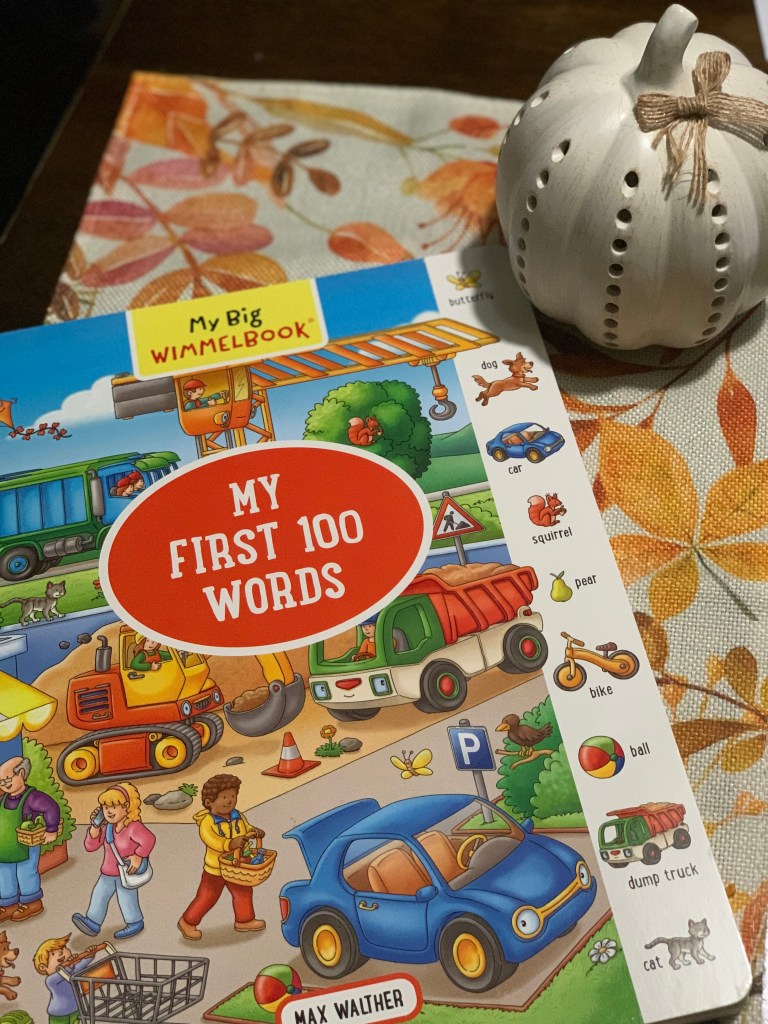
Building His First Library: My First 100 Words Wimmelbook Review

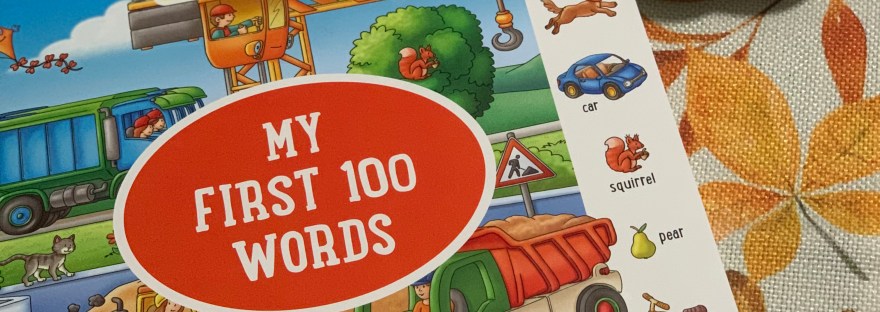
I received for my honest review My First 100 Words Wimmelbook !

There is something so special about building a child’s very first library. As we continue adding quality books to the newest little one in our extended family’s collection, I’m trying to choose books that he can enjoy now but also continue growing with over the next few years. With him turning one this past July, My First 100 Words Wimmelbook is the perfect stepping stone for helping him build his vocabulary while beginning to make real-world connections between pictures, words, and the things he sees around him every day.

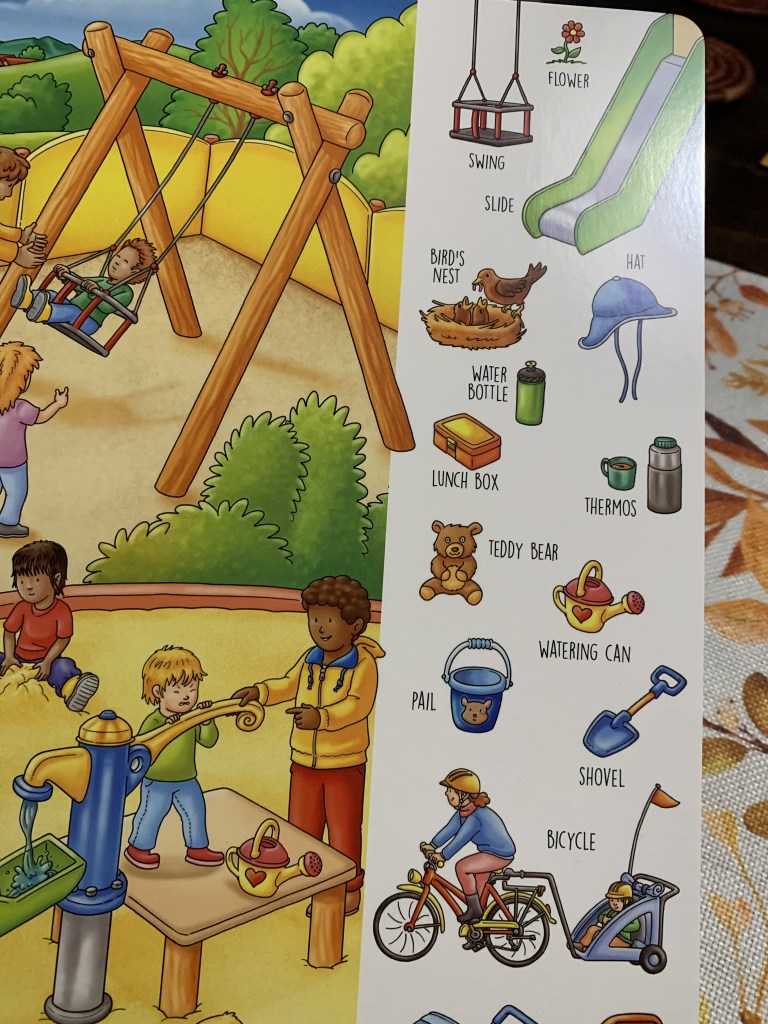
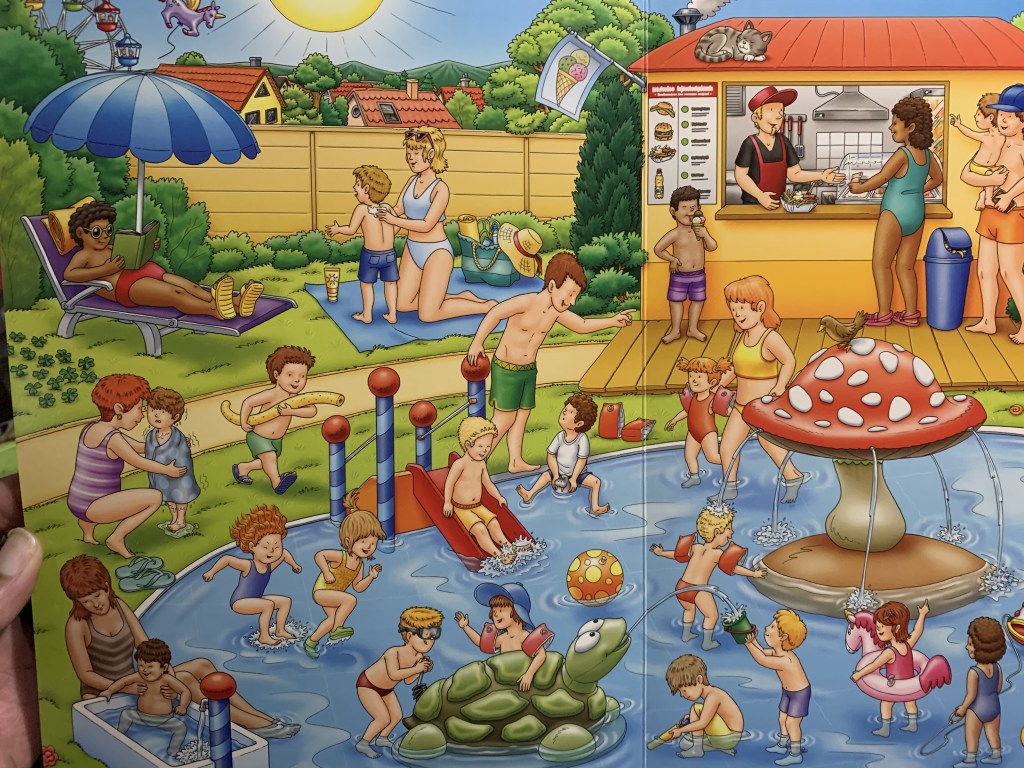
What I really like about this book is that it goes beyond simply showing a picture with a word underneath it. Wimmelbooks are known for their busy, detailed illustrations, giving little ones plenty to look at, point to, and discover. My First 100 Words introduces young readers to familiar objects and vocabulary through colorful scenes that encourage them to slow down and explore the pages.

At this age, we aren’t worried about him memorizing 100 words. Instead, this is a book we can use naturally throughout the day. We can point to an object, say its name, talk about its color or what it does, and then help him recognize that same object when he encounters it in real life. Those simple interactions are wonderful for building early vocabulary, observation skills, and language development.

I also love that this is the type of book that can grow along with him. Right now, reading together may mean pointing, naming objects, making sounds, and letting him explore the illustrations. As he gets older, we can begin asking questions like, “Can you find the ball?” “Where is the dog?” or “What do you see? Eventually, he can start naming objects independently and even using the pictures to create his own little stories.

That makes it much more than a one-and-done baby book. As we build his family library, I want it filled with quality books that encourage curiosity, conversation, and a genuine love of books from the very beginning. My First 100 Words Wimmelbook fits beautifully into that goal.

For our newest one-year-old reader, this has been such a sweet addition to his growing library and I have a feeling this is one we will be pulling off the shelf again and again.

African Studies High School, African Studies Middle School, Curriculum, Grammar, Homeschool

September Update: When Grammar Meets Literature and other Homeschool Shenanigans!

This September has been a month of clarity in our homeschool. If you’ve been following along, you already know my son LOVES grammar. It’s his jam. He gets the biggest kick out of completing his Fix It Grammar lessons every morning. This year he’s working through Level 5: Frog Prince, and let me tell you, this level has been testing my own gangster in grammar. Real talk I’ve started questioning all the grammar instruction I got in high school!

The best part? My son is thriving. He knows his stuff, he’s teaching me things, and grammar has become our daily warm-up before we move into literature studies.

Why We’re Choosing Literature Over Grammar This Year

Here’s the deal: I don’t have to push grammar with him. He’s naturally gifted, motivated, and has an outside writing teacher (Write with Mrs. Brown) who keeps him sharp. Instead of doubling down on something he’s already excelling at, I want to focus more energy on literature studies reading, analyzing, and engaging with stories that challenge him.

We tried an online literature class earlier this semester, but honestly, it was a mismatch. He wasn’t crazy about the book choices, felt unchallenged, and after three weeks, he was done. I don’t let him quit things easily he knows he has to give it a real shot and come to me with a valid reason and replacement plan. He did just that, and I respected his decision.

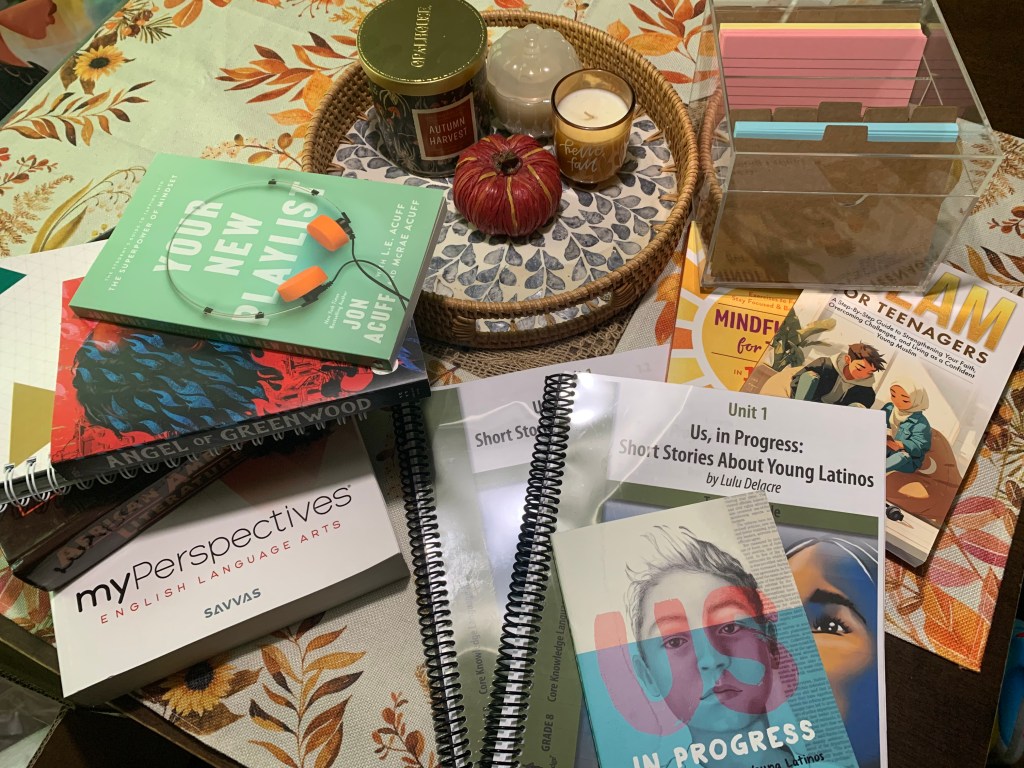
Now, we’ve shifted into using MyPerspective Language Arts 2025 as our anchor. It’s rigorous, literature-heavy, and provides plenty of resources through the online portal. When we’re not using MyPerspective, we pull from our African American Literature Textbook. Together, these two give him both depth and diversity. We wrapped up Oak Meadow English 8. We have put Oak Meadow Hero Journey for the Spring.

What We’ve Been Reading

If you want to know why literature is our focus it’s because my boy has been inhaling books like air. Here’s a snapshot of what he’s already read just this month:

  • Shatter Me
  • The Giver
  • Twilight and New Moon
  • Forgotten Girl
  • Wabi Tales
  • D’Aulaires’ Book of Greek Myths (reread)
  • D’Aulaires’ Book of Norse Myths (reread)
  • The Land
  • Michael Vey (Book 2)

Coming up for October:

  • CKLA Unit 8: Us, in Progress: Short Stories About Young Latinos
  • Gathering Blue (The Giver series, Book 2)
  • Michael Vey (Book 3)
  • Angel of Greenwood
  • Marcus No Habla Espanol
  • And for November: The Hobbit Illustrated Edition (special thanks to Johana from How We School for the recommendation). If you haven’t checked her out I highly recommend she has a YouTube, and two Instagram accounts. )
  • Indigenous chapters book.

Honoring Our Heritage

October will also be special because we’ll be focusing on Hispanic Heritage Month. As a family with both Dominican and Puerto Rican roots, we’ll be diving into events, food, culture, and history that celebrate and honor our heritage. This adds such a rich layer to our homeschool connecting literature, history, and personal identity all at once.

How We’re Choosing Books

I’m intentional about his book list. We read classics, but not the dusty, put-you-to-sleep kind we were forced to read back in the day, you know in the 1900’s. Instead, I’m curating relevant, diverse, and thought-provoking works that make for strong Socratic discussions. Check out stories of color if you are looking to change things up. I sprinkle in “must-reads” while also letting him choose. The balance keeps things fresh and prevents burnout.

We don’t do a novel study for every single book because let’s be real that’s the fastest way to kill the joy of reading. Instead, we pick one about every 6–8 weeks and dive deep. Right now, I have a few from Moving Beyond the Page lined up for later in the year.

Classes, Math, and Beyond

Outside of literature, he’s thriving in co-op this year with four excellent classes that keep him engaged. One big lesson I’ve learned? Some online classes just don’t fit. Especially in subjects where he’s already advanced, he needs a direct, interactive approach without all the extra noise.

Take his honors biology class he loves the teacher but was pacing ahead of the group, so he transitioned to pre-recorded lessons with the teacher’s support. That flexibility has been golden and allows him to dig deeper into the concepts over the course of the week.

In math, we’re wrapping up Algebra I with Denison Math, and it’s been a great fit. We’re also using Mr. D Math as a supplement. While Mr. D Math is excellent, my son says Denison “gets straight to the point” and eliminates extra fluff. Both have their place in our homeschool toolbox. Speaking of Mr. D Math did you know that Mr. D Math has ELA courses? We will be checking these out for next semester as an option, he is still undecided if he wants to do self paced or live. The great thing is Mr. D is accredited with WASC.

What’s New on the Schedule

I’ve tweaked our schedule to carve out time for:

  • His passion project
  • Community service
  • A few extracurricular activities

These additions are giving him outlets for creativity and leadership outside of academics, which I think is just as important at this stage.

Wrapping Up September

This month, I’ve really seen how shifting the focus to literature has opened doors for deeper learning, critical thinking, and joy in our homeschool. Grammar will always be his strong suit, but now literature is where he’s growing, questioning, and connecting the dots.

So here we are grammar still our daily warm-up, but literature? Literature is our feast.

Stay Tuned because the kiddo is guest writing on the blog………….!!!!

6th Grade, 7th Grade, 8th Grade, Education, Grammar, Homeschool, Language Arts, Literature Base, Middle School Math

An In-Depth Look at Lightning Literature’s New Storm Level for Grades 6–8

As a long-time homeschool mom and devoted user of Lightning Literature, I was excited to try their new Storm Level designed for grades 6–8 with my middle schooler. Having used Lightning Lit since my son was in 2nd grade and even using the 1st grade level to tutor a younger student. I was hopeful this new level would meet our needs, and it truly delivered.

A Trusted Curriculum, Elevated for Middle School

One of the standout features of the Storm Level is how it elevates the curriculum while keeping the familiar structure we’ve come to love. It’s still rooted in high-quality literature, thoughtful grammar instruction, and meaningful writing prompts—but with added depth and flexibility that’s perfect for middle schoolers transitioning to more independent work.

Multi-Level Grammar Instruction: A Game-Changer

What impressed me most was that Storm Level covers three levels of grammar instruction not just one. This multi-level approach is a huge benefit, especially for middle school students who may need reinforcement in foundational grammar while also being challenged with more complex concepts. It’s excellent for review, while also introducing new material and gradually increasing rigor.

This layering of grammar provides natural scaffolding and allows parents to tailor lessons based on their child’s comfort level. Whether your student needs extra practice or is ready to accelerate, this flexibility makes the curriculum highly adaptable.

Diverse & Inclusive Book Selections

The literature selections in Storm Level are diverse, inclusive, and thoughtfully chosen. This is something I value deeply as a homeschool mom raising a culturally aware child. The books include different perspectives, backgrounds, and voices, which made for rich discussions and connections. Lightning Lit has always done a great job of making literature engaging, but this level truly shines in its inclusiveness.

The New In-House Reader: A Wonderful Addition

Another thoughtful update is the enclosed reader. This addition makes life easier for homeschool parents because everything is in one place. It also helps students stay organized and focused, especially those who benefit from having all their materials together. My son found it easy to navigate, and the high-quality printing and layout made it enjoyable to read.

A Secular Curriculum That Plays Well with Others

Lightning Literature remains a secular curriculum, which continues to be a draw for our family. It easily pairs with other programs especially helpful for eclectic homeschoolers like us. Since we are currently using a different writing curriculum, we didn’t complete all the writing assignments in Storm Level. However, I loved that my son could choose which writing lessons to do based on his interest and what fit his week. That freedom kept him engaged without feeling overwhelmed.

Weekly Checklists & Student-Friendly Design

The weekly checklist included for students is one of my favorite features. It promotes independence and time management, helping students track reading, assignments, and grammar practice. My son enjoyed checking off his tasks—it gave him a sense of accomplishment.

I also appreciated the inclusion of color and illustrations in this level. It breaks up the text, makes the pages more inviting, and adds visual interest. Middle schoolers benefit from a layout that’s clean but not dull, and Lightning Lit hit the sweet spot.

Who This Curriculum Is Ideal For

Lightning Literature’s Storm Level is ideal for:

  • Homeschool families who value high-quality literature
  • Students who need a review of grammar with increasing rigor
  • Families who enjoy secular, flexible curriculum options
  • Kids who learn well through a mix of reading, discussion, and creative writing
  • Eclectic homeschoolers who may use multiple programs and want a curriculum that integrates smoothly

Why We Love Lightning Literature (and Always Will)

Lightning Literature has been a foundational part of our homeschool journey for years, and the Storm Level reinforces why. It’s thoughtful, well-structured, flexible, and encourages a deep love of reading and language. We plan to continue using Lightning Literature alongside our other programs because it offers such a strong base in language arts without becoming rigid or overwhelming.

Unique Features That Set Storm Level Apart

  • Covers 3 grammar levels to support a range of learners
  • Offers diverse and inclusive book choices
  • Includes a colorful reader and well-designed workbook
  • Provides student checklists for weekly planning
  • Encourages student choice in writing assignments
  • Works as a standalone or supplemental curriculum
  • Fully secular and literature-rich

In short, Storm Level is a strong and welcome evolution of the Lightning Literature series one that honors what’s always worked while thoughtfully stepping up the challenge for middle school learners. We love it and highly recommend it to other families looking for a comprehensive, flexible, and engaging language arts program.

6th Grade, Writing

Evan-Moor’s Daily 6-Trait Writing Grade 6 : Timberdoodle Review!

We received for Evan-Moor’s Daily 6-Trait Writing Grade 6 for our honest review. This review may contain affiliate links at no additional charge to you.

Evan-Moor’s Daily 6-Trait Writing Grade 6 is a valuable resource for parents seeking to enhance their sixth-grader’s writing skills. As a mom, I have had the opportunity to incorporate this program into my homeschool routine, and I would like to share my thoughts on its effectiveness. As many of you know we are long term supporters of Evan Moor products and they frequent our homeschool every year.

Evan-Moor’s Daily 6-Trait Writing Grade 6 is well-structured, covering a diverse range of writing genres and skills. From narrative and persuasive writing to informative essays, the program ensures a holistic development of writing abilities. Each day presents a new writing prompt, allowing students to explore different aspects of language and expression.

One of the standout features of this resource is its engaging and thought-provoking prompts. The prompts are age-appropriate and often tie into real-world scenarios, making the writing exercises more relevant and interesting for sixth-grade students. This approach not only encourages creativity but also helps students connect writing to their everyday lives. The program includes 125 writing lessons, each of which is designed to be completed in 10-20 minutes. Each lesson includes a writing prompt, as well as a detailed explanation of the trait being focused on. Students are encouraged to revise and edit their work, with the goal of producing high-quality writing.

The program effectively targets various writing skills, including grammar, vocabulary, and sentence structure. The daily exercises are designed to gradually build and reinforce these skills, providing a solid foundation for more advanced writing tasks. I have noticed an improvement in my students’ ability to articulate their thoughts and ideas coherently. Students focus on six key traits: ideas, organization, voice, word choice, sentence fluency, and conventions.

One of the benefits of Evan-Moor’s Daily 6-Trait Writing Grade 6 is that it can be easily integrated into your existing curriculum. The lessons are flexible and can be adapted to meet the needs of your students. Additionally, the program includes rubrics, so students can understand the expectations for each assignment.

The resource includes built-in assessment tools, enabling parents to gauge students’ progress effectively. The feedback loop is crucial in refining writing skills, and Evan-Moor has incorporated this aspect seamlessly into its daily writing exercises.

Evan-Moor’s Daily 6-Trait Writing Grade 6 is a commendable tool for enhancing writing skills in sixth-grade students. Its comprehensive curriculum, engaging prompts, and focus on skill development make it a valuable asset in any educational setting. Evan-Moor’s Daily 6-Trait Writing Grade 6 is an excellent resource for parents who want to help their students improve their writing skills. By focusing on the six key traits of writing, students can develop the skills they need to become effective writers.

4th Grade, 5th Grade, 6th Grade, Curriculum, Homeschool, Homeschool Family, Language Arts, Literature Base, Unit Study

Progeny Press: Farmer Boy Study Guide Review!

Disclosure: I received this complimentary product through the Homeschool Review Crew.

We have never read any of the Laura Ingall book series, I know how could we be a homeschool family and never read any of her books? It’s simple for us my son and I didn’t find the books relatable as an African -Latino family. When the crew was given an opportunity to review Progeny Press Farmer Boy Study Guide 4-6 grade, I thought this would be an excellent opportunity to check out the series.

Farmer Boy is the second book in The Little House series, the story follows the adventures of 9-year-old Almanzo Wilder as he works on his family’s farm. As the book moves through the different seasons we learn about the chores of a farmer boy and Almanzo’s many adventures in farm life.

We have previously reviewed two other Progeny Press study guides and have found them to be comprehensive literature guides. We received the pdf and answer key, you will need to purchase the book or you can use the audio. Farmer Boy Study Guide follows the same flow as the previous guides providing the student with:

  • Instructor Notes
  • Book Synopsis
  • Author & Historical Background

Students start the study guide with activity ideas for pre-reading the book. These activities can include reports, giving an informative speech, map work, and much more. The goal is to get your student’s mindest prepared for the book as it whisks them away to the Wilder farm at the turn of the century.

As the student moves through the study guide the lessons are divided into chapters, some lessons covering more than one chapter. Students will work on vocabulary, literary terms, comprehension questions, projects, and writing. You will see Biblical scriptures reference in some of the activities, but it isn’t overwhelming and can be easily skipped over if that is your preference.

I really do like Progeny Press study guides and the Farmer Boy Study Guide was a welcoming introduction to one of the Little House book series. I like how we can easily use the activities that will work well for us and do some activities orally. The study guide can be done over a period of time or it can be used just as your literature lesson for a month. One of the other things I do like about these study guides is that each study guide works on character-building and moral lessons. Farmer Boy Study Guide is for grades 4-6, so your student can work independently.

There are a few more Progeny Press study guides I plan to pick up over the next few years. I really like how they have organized their guides and it’s not a bunch of busy work. The guides are affordable and are in black and white so they don’t eat up your ink. Be sure to check out the other Crew’s reviews of Progeny Press study guides by clicking the banner below.

Social Media Links

Facebook: https://www.facebook.com/progenypress
Twitter: https://twitter.com/progenypress
Pinterest: https://www.pinterest.com/progenypress/
YouTube: https://www.youtube.com/user/ProgenyPress

3rd Grade Curriculum, 4th Grade, 5th Grade, Curriculum, Education, Homeschool, Language Arts

Progeny Press: Wagon Wheels Study Guide Review!

Disclosure: I received this complimentary product through the Homeschool Review Crew.

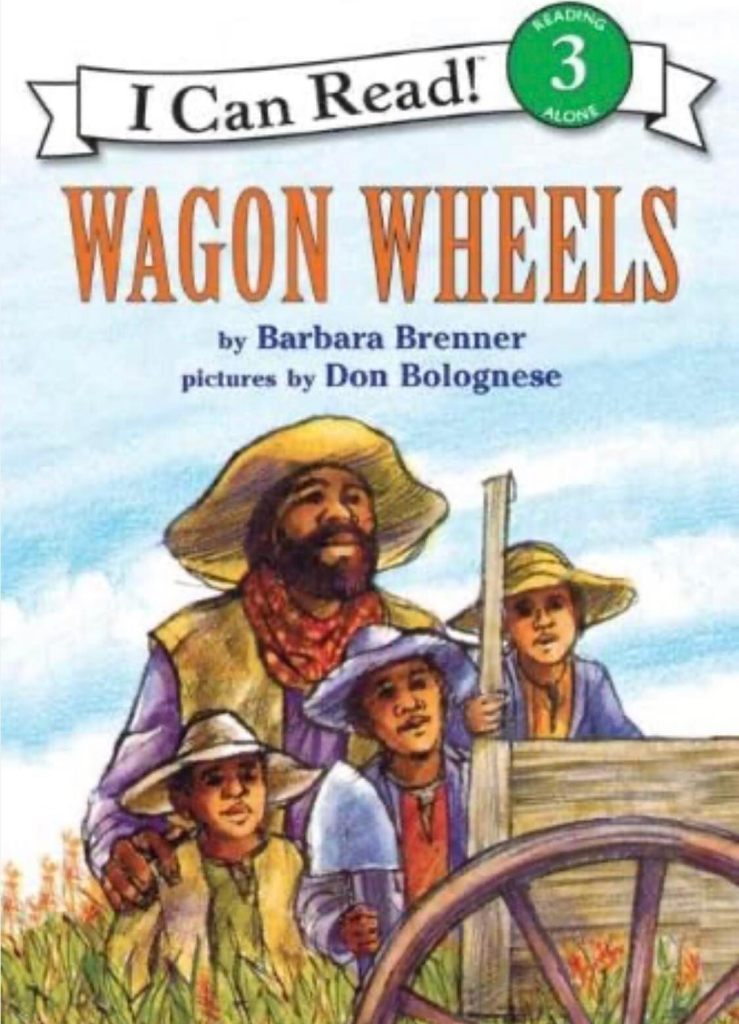
We added the Progeny Press guide to our Language Arts studies for our Black Pioneers study in December, we were excited to receive the Wagon Wheels Study Guide this time to review. Wagon Wheels Study Guide is a digital download that includes the student activity sheets and a separate answer key. The study guide is recommended for grades 1-3rd grade but my 4th grader will be fine doing this.

The book Wagon Wheels is for students in grades 2nd – 4th, you could possibly stretch the book to 5th grade for its historical content. The story takes place during the time after the civil war when freedmen and their children migrate west to Kansas in search of settling in Nicomdemus Town, land provided from the Homestead Act of 1862. The Muldie boys cross the plains and lose their mother along the way. The three boys and their father reach the town and build themselves a dugout and brace for the harsh winter. The Muldie family encounters the Osage Nation and they rescue them from hungry and they are able to survive. The dad must leave to find work and the Muldie boys (11, 8, and 3) are left to fend for themselves and the support of the community to continue their new life. The book is based upon the memoirs of Lulu Sadler Craig.

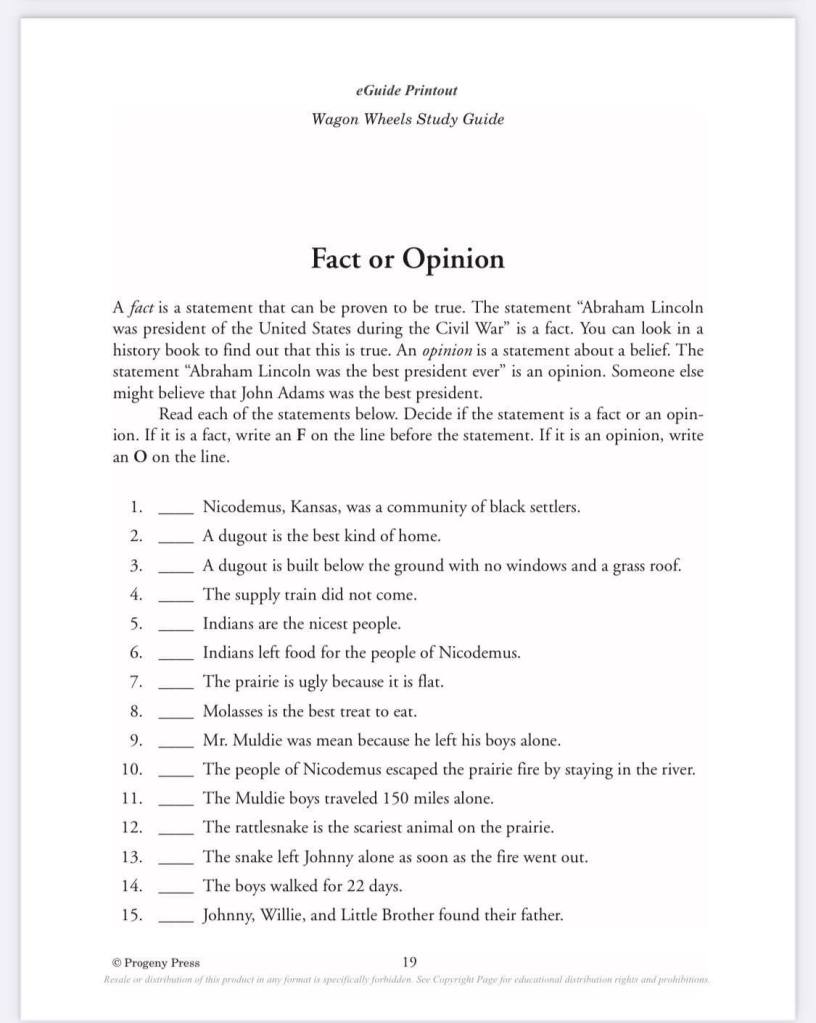
Wagon Wheels Study Guide provides brief background information on the Homestead Act of 1862 as well as the synopsis of the book the Wagon Wheels. Students are also given before and after they read activities, vocabulary, grammar, and literary terms to work on. The study guide also provides an external link to other activities to stretch the study guide. In the study guide, you will find 4 questions that do have Bible scriptures attached to them but I didn’t feel as if they were indoctrinating.

The reading comprehensions are divided into 2 chapters sections and the questions require in-depth reflection. Students will answer 7-10 questions in each section. For a 1st grader, the writing may be a bit much, so you can do those questions verbally and they would do fine. Some of the activities include crossword puzzles and drawing, and cooking.

I personally read the book Wagon Wheels for this review and went over the study guide sheets and questions myself. We plan to study Black Pioneers in December so I didn’t let my son do the activities or read the story. I looked over everything and this will definitely be part of our study and I will come back and update my review. I would have liked to see more book resources in the back of the guide about black pioneers, cowboys, Osage Nation.

Be sure to click the banner below to check out the other crew’s reviews of Progeny Press study guides.

Social Media Links:

Facebook: https://www.facebook.com/progenypress
Twitter: https://www.twitter.com/progenypress
Pinterest: https://www.pinterest.com/progenypress
YouTube: https://www.youtube.com/user/progenypress