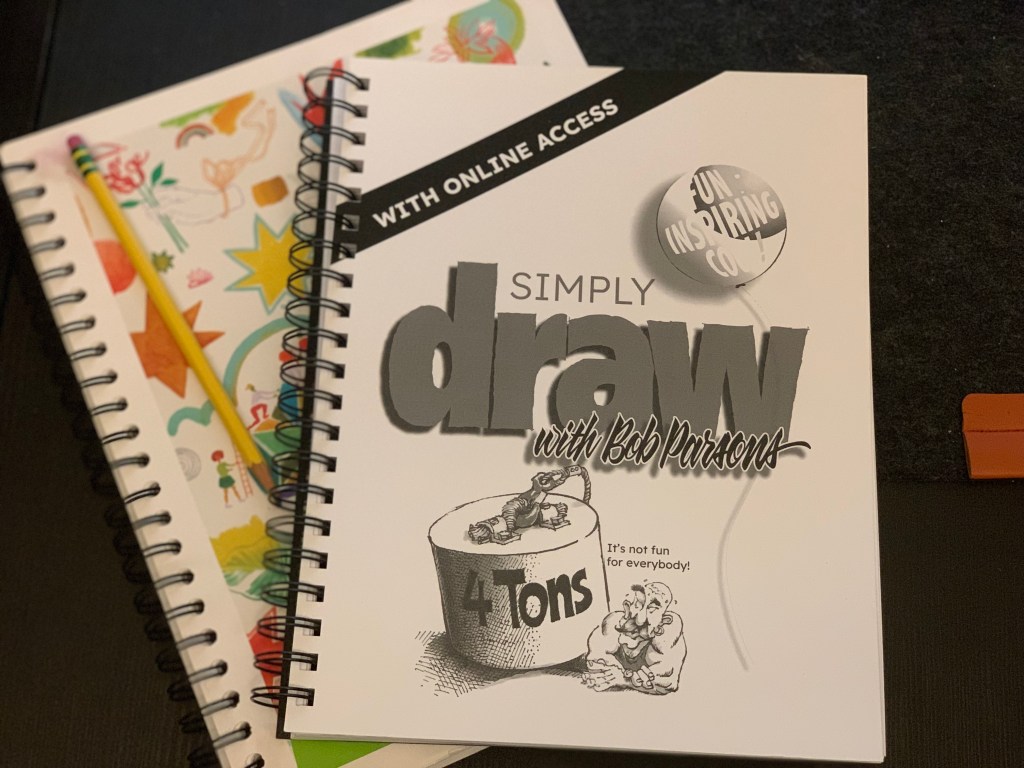
We received Simply Draw with Bob Parsons for our honest review!
I’ll be the first to admit that one of my weaker areas in our homeschool has been Fine Arts. While my son is well-rounded musically he plays piano and trombone and participates in weekly music theory lessons with his instructors—visual art is where I tend to fall short. The interesting part is, my son actually enjoys drawing from time to time. So I knew I needed something that could support that interest without requiring me to become the art teacher. I was looking for a program that was self-paced, easy to follow, and low-pressure, and Simply Draw with Bob Parsons does just that. Even better, this program is included in the Timberdoodle 7th Grade Curriculum Kit, which made it an easy addition to our homeschool lineup.
Why We Chose Simply Draw
We weren’t looking for a formal, technique-heavy art curriculum. Instead, I wanted something that:
Encouraged creativity without pressure
Could be done independently
Fit naturally into our homeschool rhythm (or even free time)
Simply Draw checked every box.
My son has been using it in his spare time, which says a lot because when kids choose to engage with something on their own, you know it’s working. And honestly, I’ve even jumped on the bandwagon and completed a few lessons with him!
How the Program Works
Here’s what makes it work so well:
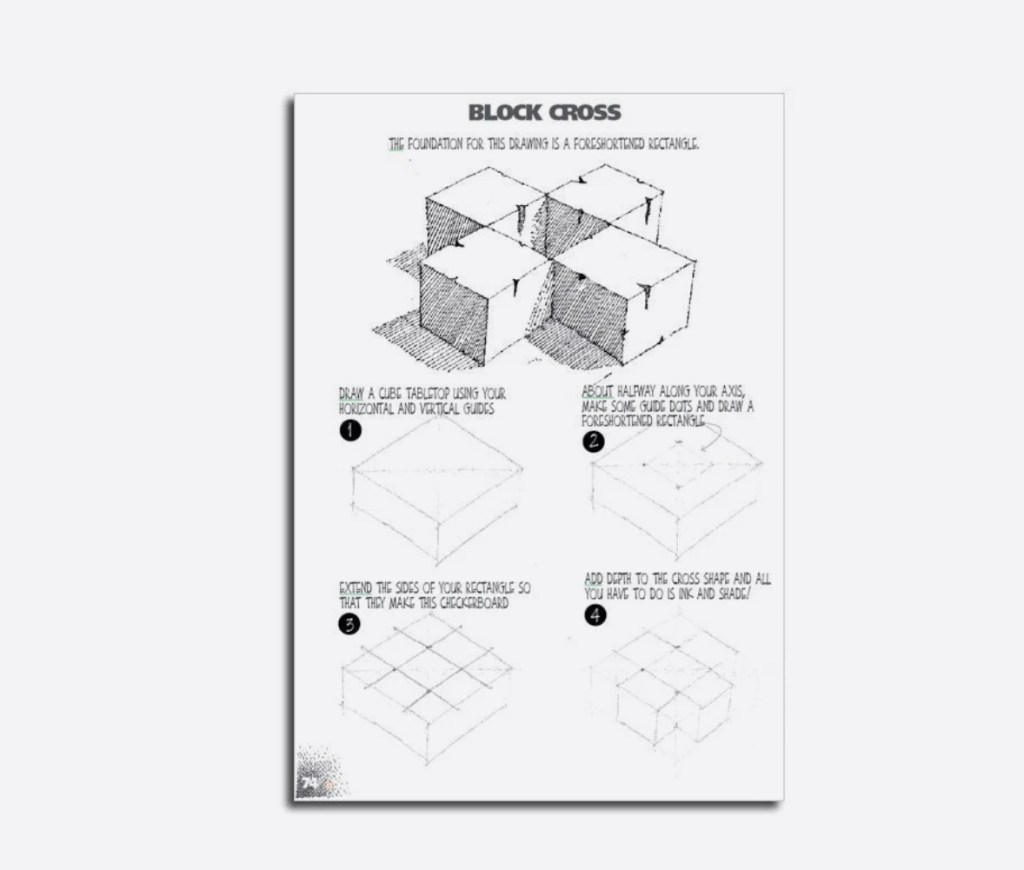
Video-Based Instruction Each lesson is taught through clear, easy-to-follow videos. Bob Parsons breaks drawings down into simple shapes and lines, making it approachable for all skill levels.
Step-by-Step Approach Students start with basic forms (circles, lines, shapes) and gradually build them into complete drawings. This removes the intimidation factor that often comes with art.
Short, Manageable Lessons Lessons are not overwhelming. They are just the right length to keep kids engaged without burnout.
Encouraging Teaching Style Bob Parsons has a calm, supportive tone that makes kids feel like they can draw—even if they’ve struggled before.
What Students Learn
While it feels fun and relaxed, your child is actually building real art skills:
Understanding how to break complex images into simple shapes
Developing hand-eye coordination and fine motor skills
Learning proportion, spacing, and visual balance
Building confidence in creative expression
And most importantly they begin to see themselves as artists.
Our Experience
This program has become one of those “quiet wins” in our homeschool. There’s no resistance. No overwhelm. Just a simple invitation to create. My son enjoys picking it up when he wants to draw, and I love that it doesn’t feel like another assignment. It’s enriching without being demanding. And the fact that I can sit down and do a lesson alongside him has made it even more special.
Who Would Benefit Most
Simply Draw with Bob Parsons is a great fit for:
Homeschool families looking for a low-pressure art option
Students who enjoy drawing but need guidance and structure
Beginners who feel intimidated by traditional art programs
Middle schoolers who want a creative outlet without heavy instruction
Parents who prefer independent, self-paced electives
It’s especially ideal for kids like mine those who enjoy art here and there but don’t necessarily want a full, intensive curriculum.
Final Thoughts
If you’re looking for an art program that blends simplicity, creativity, and flexibility,Simply Draw with Bob Parsons is a wonderful addition to your homeschool. It meets students where they are, builds confidence step-by-step, and keeps art enjoyable—which, in my opinion, is exactly what art education should do. And the fact that it’s included in the Timberdoodle 7th Grade Curriculum Kit makes it an easy, valuable resource for any homeschool family wanting to add meaningful creativity into their day without adding stress.
We received CompuScholar Unity Game Programming for our honest review!
I’m always looking for ways to turn my son’s natural interests into meaningful learning opportunities. One thing about him—he loves video games. But beyond just playing, he started asking deeper questions about how they’re made and what goes on behind the scenes. That curiosity led us to CompuScholar’s Unity Game Programming course, and it has been such a rewarding way to take something he enjoys and transform it into real, skill-based learning. Once he finishes the program I can award him 1 high school credit for his computer science requirement.
About CompuScholar
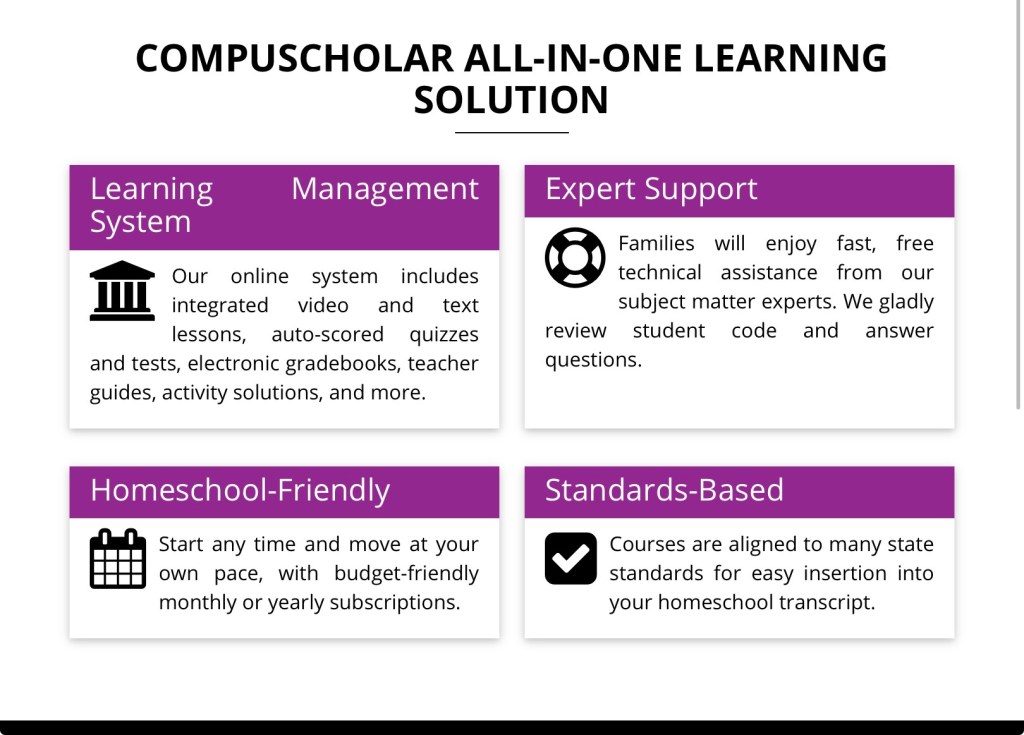
CompuScholar offers a variety of online computer science and digital literacy courses designed specifically for middle and high school students, including subjects like Python, Java, web design, and game programming. These courses are self-paced, homeschool-friendly, and built to help students develop real-world tech skills while earning credit for their transcripts. What I love most is that their courses are structured like true high school electives but still flexible enough for homeschool families.
Screenshot
Unity Game Programming: A Deep Dive Into Game Design
Unity Game Programming is where things really get exciting especially for students who love gaming.This course uses the Unity game engine to teach students how to design and build their own games while learning C# programming from the ground up. And let me just say this is not a surface-level class. This is a true, in-depth look at game development.
What Students Learn
Students don’t just “play around” with coding they learn:
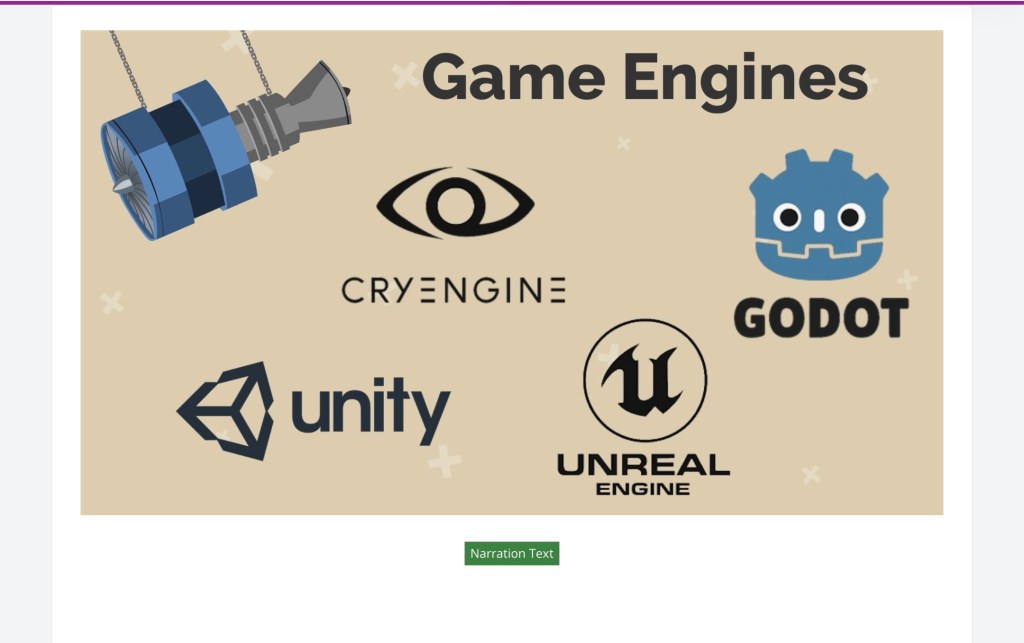
Game engines and how they work
C# scripting and coding fundamentals
2D game physics and mechanics
Animation, sound effects, and game art
Object-oriented programming
Debugging and problem-solving
Artificial intelligence in games
Full game design strategy and development
By the end of the course, students are actually creating their own games walking through the entire development process from idea to final product.
How the Program Works
One of the things I appreciate most as a homeschool parent is how well-structured this program is.
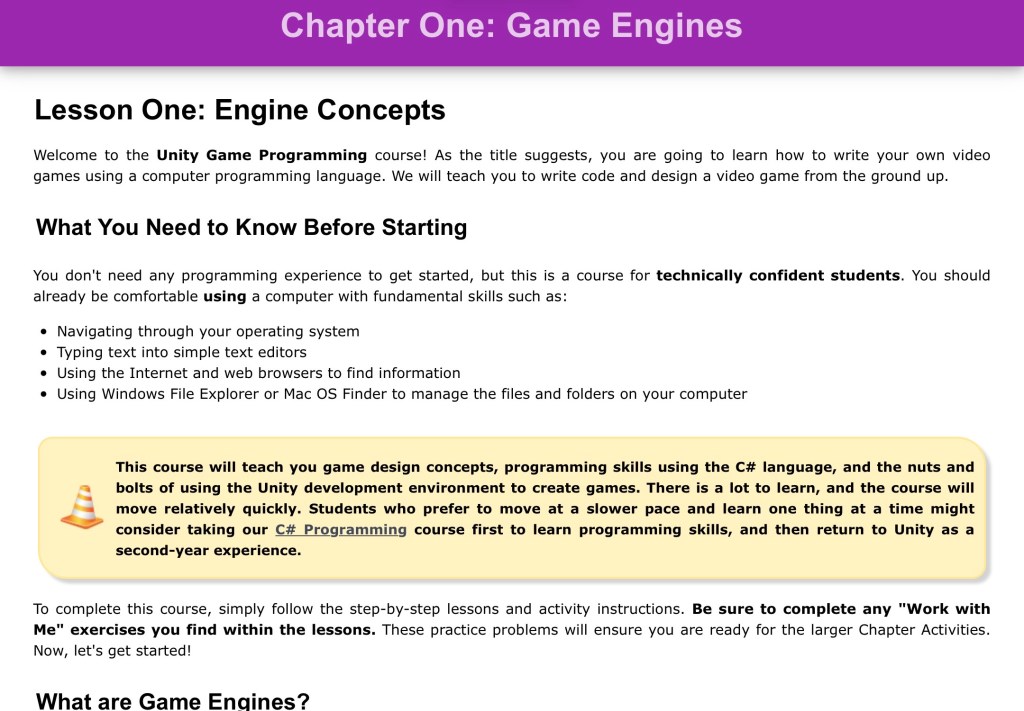
Lesson Text + Instructional Videos – Students learn concepts step-by-step
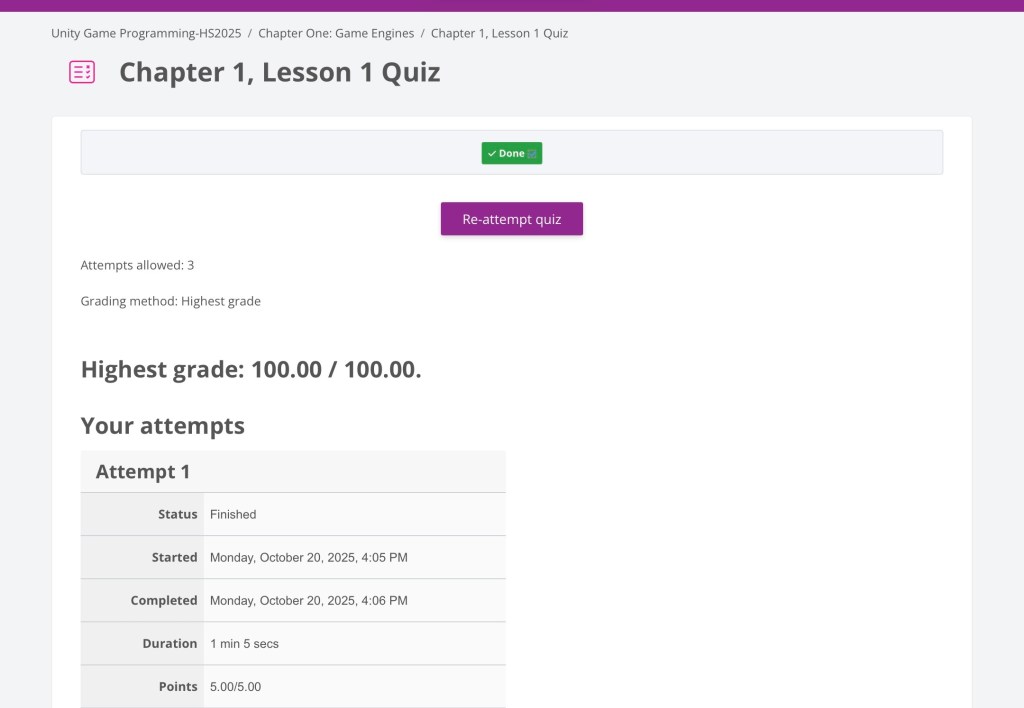
Hands-On Projects – Every chapter includes coding labs
Parent-Friendly Rubrics – Easy grading for project work
The course is designed as a full-year (2 semester) program, typically taking about 3–5 hours per week. It’s self-paced, which makes it perfect for homeschool schedules.
Screenshot
What Makes This Program Stand Out
What really stood out to us is how this course teaches students to think like developers not just follow directions. Students learn how to:
Plan a game
Build it step-by-step
Test and debug it
Improve and refine their work
It’s not just coding it’s critical thinking, logic, and creativity all in one.
One of my favorite things about this program is that it works beautifully as a:
High school computer science credit
STEM elective
Career exploration course
It’s rigorous enough to count on a transcript while still being engaging and fun. Even better this course is included in the Timberdoodle Co. 12th Grade Curriculum Kit, which makes it an easy addition for families already using Timberdoodle.
Screenshot
Why It Works So Well for Homeschoolers
From a homeschool perspective, this program checks all the boxes:
Flexible, self-paced structure
Minimal parent prep required
Auto-grading for quizzes/tests
Clear lesson progression
Real-world, applicable skills
It allows students to work independently while still producing meaningful, measurable results which is something we all want as homeschool parents. If you have a student who loves gaming and is constantly asking “how does this work?”, Unity Game Programming is such a powerful way to turn that curiosity into a real skill. For us, it took something my son already loved and transformed it into purposeful learning, creativity, and future career exploration. And honestly that’s what homeschool is all about.
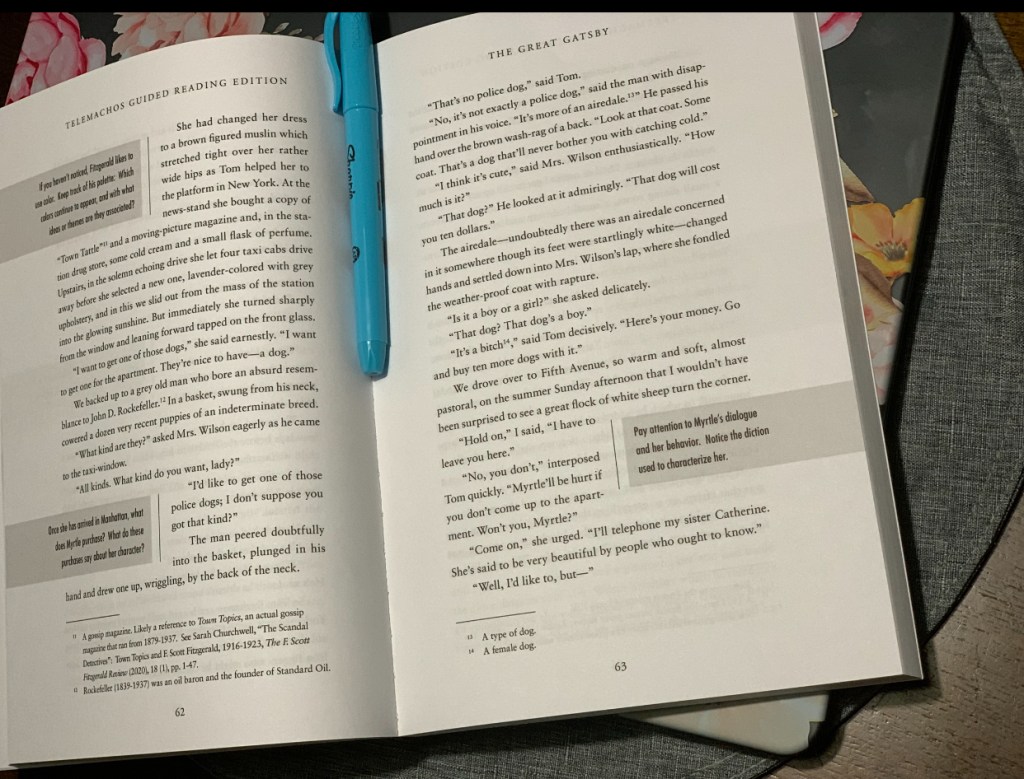
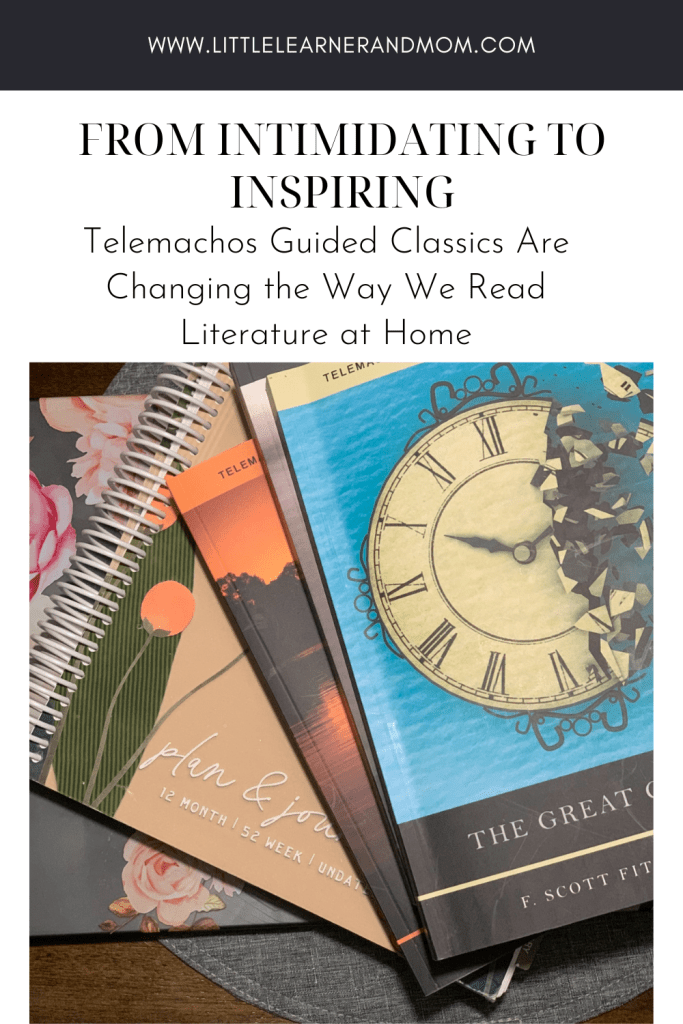
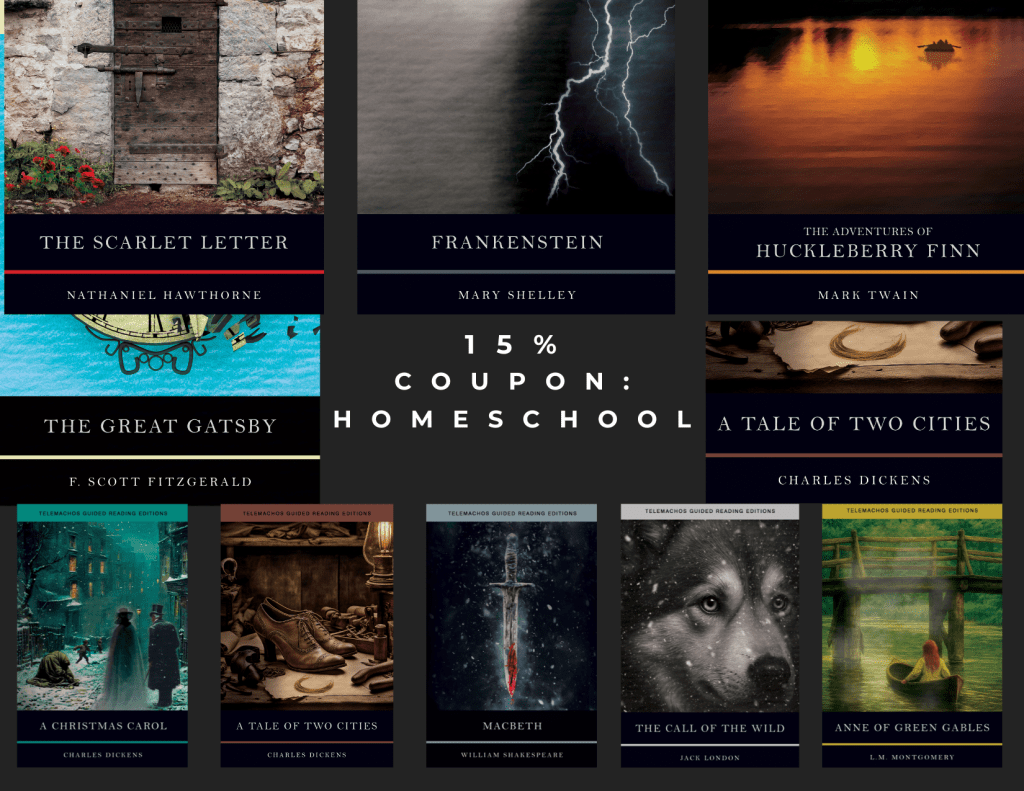
If you’ve been homeschooling for any length of time, you already know that classic literature can feel like both a must… and a mountain. This year, as I’ve been deep in planning for our high school journey, I had one of those moments where preparation met opportunity in the best way. We recently received guided editions from Telemachos PublishingThe Great Gatsby, Adventures of Huckleberry Finn, and Frankenstein and I have to say, I was genuinely impressed from the moment I flipped through them.
To be honest, classical literature hasn’t been a major focus in our homeschool up to this point. With a child growing up in this generation where there is such a wide variety of rich, culturally relevant, and engaging literature we’ve naturally leaned toward books that align with my son’s personality, interests, and voice. Books that pull him in. Books that make him want to read. And that has served us well. But as we step into the high school years, I know that the traditional classics are part of the journey. They build vocabulary, deepen analysis, and expand perspective in a way that’s hard to replicate. The challenge has always been how to introduce them without losing engagement. That’s exactly where these guided editions shine.
What makes these books different from simply handing your student a classic novel is the built-in support system woven throughout every page. These are not just books they are interactive learning tools. Telemachos has truly created something that bridges the gap between reading and understanding. As students read, they are guided through the text with thoughtfully placed annotations, vocabulary support, literary terms, and comprehension questions. There are footnotes that clarify context and meaning, making older language far less intimidating. Instead of feeling lost in the text, students are actively walking through it with support.
One of my favorite features is how these editions actually teach literary analysis. For so many homeschool parents, that’s the piece that can feel overwhelming how do you teach your child to annotate, analyze themes, recognize literary devices, and think critically about what they’re reading? These books do that work alongside you. There is a QR code built right into the first few pages that link to sample writing prompts and additional support, which is such a thoughtful touch. It brings a modern layer to classic literature and gives students structured ways to respond to what they’re reading. It’s not just “read and move on” it’s read, think, analyze, and articulate.
What truly sets these guided editions apart and something I have not seen in other classical editions is the level of academic depth behind the instruction. The guided reading questions are written by current master educators, and each book includes an introductory essay shaped by an editor with experience grading the AP English exam. That perspective matters. It doesn’t just prepare students to understand the text it maps out a clear, intentional process for developing an interpretive voice and building toward a strong, cogent written argument. That is high-level skill building, and it’s woven right into the reading experience.
And honestly, that matters.
I can clearly remember my own introduction to classics in high school being handed Tess of the d’Urbervilles and feeling completely overwhelmed. I eventually found my rhythm, but not without frustration and a few moments where I questioned whether I even liked reading at all. That experience has always stayed with me, and it’s one of the reasons I’ve been intentional about how I introduce more challenging texts to my son. These guided editions would have changed everything for me back then.
They truly make classical literature more approachable, more engaging, and ultimately more enjoyable. Instead of feeling like a chore, the reading experience becomes something students can grow into with confidence. For our homeschool, we’ll be starting with one of the three this school year and intentionally stretching the others across the next four years. I love the flexibility this gives us allowing time for depth, discussion, and real understanding instead of rushing through just to “check the box.”
As of now, there are about ten titles in their collection, and I already have my eye on A Tale of Two Cities and The Call of the Wild. I’m hopeful they continue expanding their library because this is a resource I can truly see becoming a staple in our homeschool for high school literature. If you are a homeschool parent who has ever felt unsure about teaching literary analysis, or if you’ve hesitated to introduce classics because you didn’t want to lose your child’s love for reading, this is a resource worth looking into. These books meet both the student and the parent exactly where they are.
And right now, you can save 15% off with the code HOMESCHOOL, which makes it the perfect time to try them out as you plan your upcoming school year. Telemachos Guided Editions are truly in a league of their own and for families like ours, they make stepping into the world of classic literature feel not only doable, but exciting.
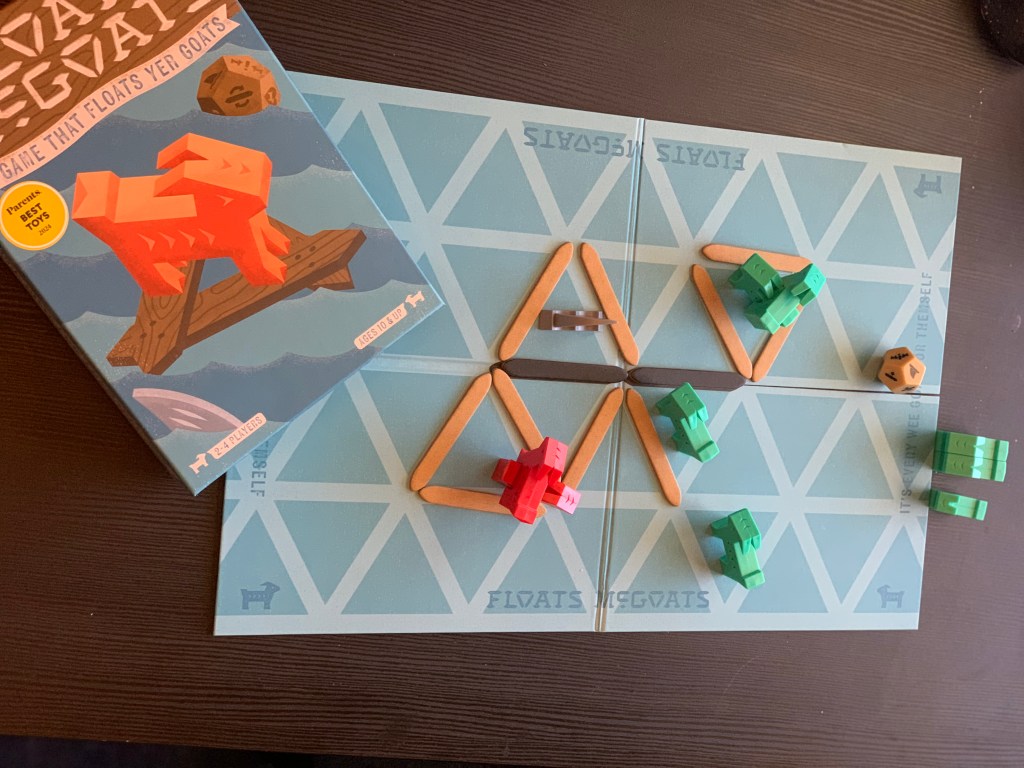
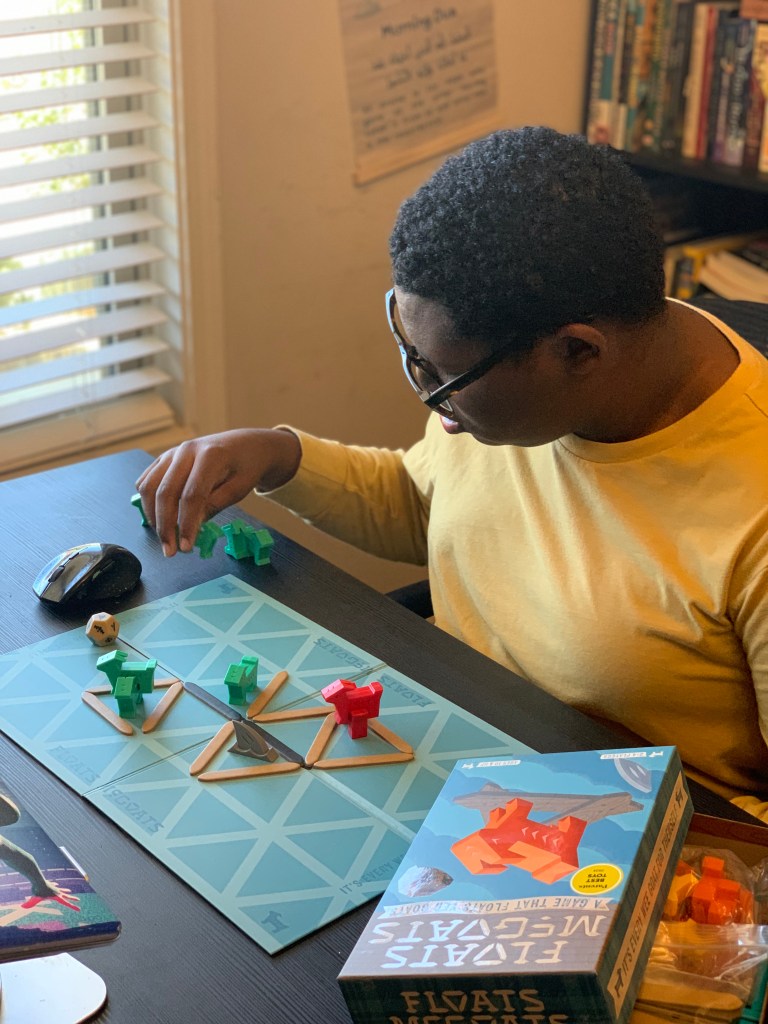
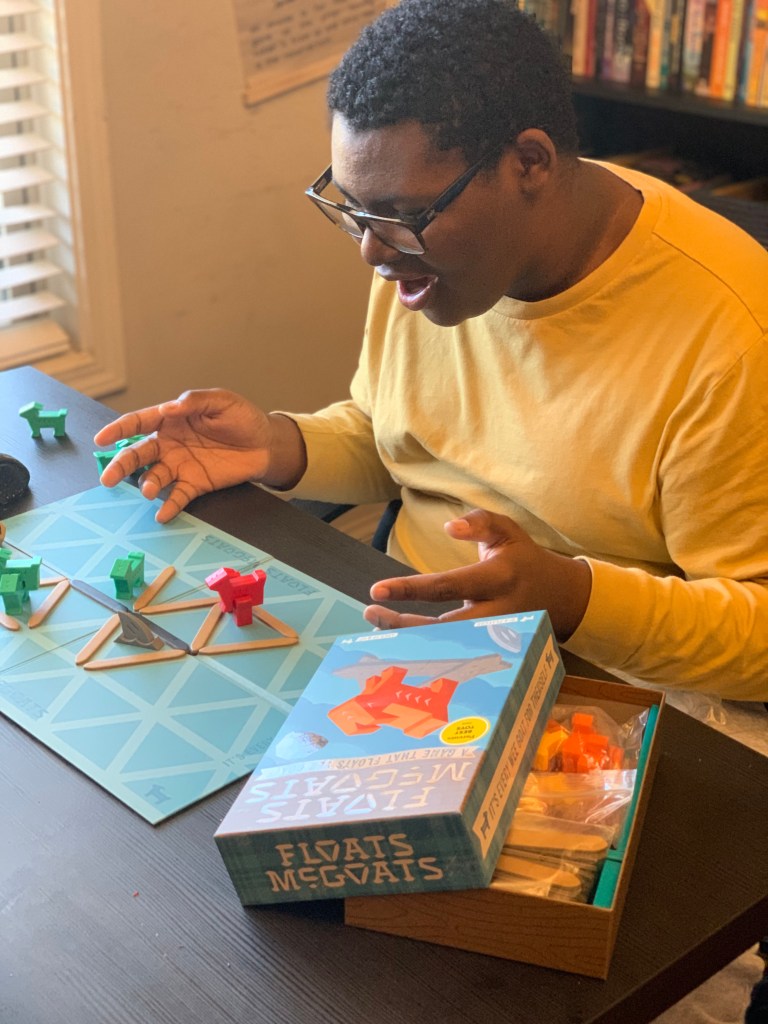
Over the holiday break, my son had an absolute blast playing Floats McGoats, and it quickly became our new family favorite. What started as “just one round” turned into an afternoon of friendly competition, laughter, and surprisingly deep thinking. As a homeschool parent, I’m always looking for games that feel fun first but quietly build important academic and life skills in the background, and this one delivered on every level.
What Floats McGoats Is All About
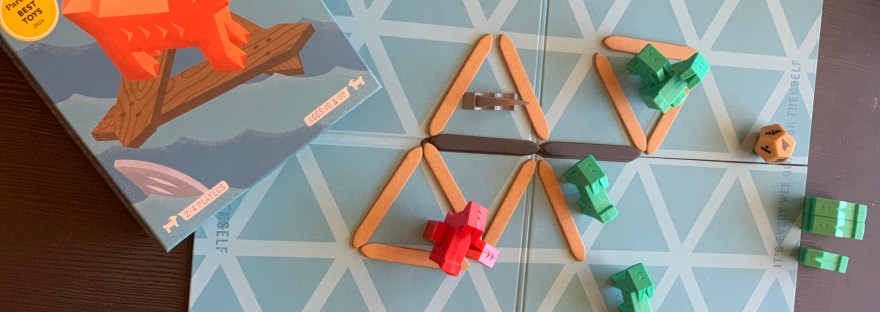
Floats McGoats is a clever, strategy-based tabletop game where players guide their goats across floating tiles while navigating shifting pathways, unexpected changes, and other players’ moves. The board evolves as the game progresses, which means no two rounds ever feel the same. Each turn requires players to assess the layout, predict possible outcomes, and make decisions that balance risk and reward.
The mechanics are easy to learn, making it approachable for kids, but the strategy is layered enough to keep older children and even adults fully engaged. That combination makes it especially powerful for homeschool families who want a game that grows with their child’s thinking skills rather than becoming “too easy” after a few plays.
Building Critical Thinking, Logic, and Strategic Play
What really stood out to me was how naturally Floats McGoatsencourages critical thinking. My son found himself pausing to plan ahead, thinking through how one move might affect the entire board several turns later. The game strengthens logical reasoning as players analyze patterns, anticipate opponents’ strategies, and adjust their own plans in real time.
Strategic gameplay is at the heart of every round. Kids learn to weigh short-term wins against long-term positioning, practice flexible thinking when the board shifts unexpectedly, and develop problem-solving skills as they navigate obstacles. These are the same skills we aim to build through formal logic lessons and project-based learning, but here they happen organically through play.
A Perfect Fit for Older Kids Ages 10+
This game shines for older elementary and middle school students, especially those who enjoy puzzles, strategy, and friendly competition. It’s a great fit for kids who love thinking games like chess, logic challenges, or problem-solving activities, but it’s also wonderful for learners who may not usually gravitate toward academics because the learning feels effortless and fun.
Floats McGoats is also ideal for families, co-ops, and homeschool pods. It encourages communication, turn-taking, and sportsmanship, making it a great social learning tool as well as an academic one.
A Timberdoodle Favorite in Our Homeschool
One of the things I appreciate most is that Floats McGoats is included as part of the Timberdoodle Co. sixth grade kit, which speaks to its educational value and thoughtful design. It fits beautifully into a homeschool day as a logic break, enrichment activity, or even a reward after completing lessons.
This game has earned a permanent spot on our shelf, not just because it’s fun, but because it supports the kind of thoughtful, strategic, and confident learning I want to cultivate in my homeschool. If you’re looking for a game that challenges older kids while keeping them genuinely excited to play, Floats McGoats is a fantastic choice.
As a homeschool mom who is always looking for tools that truly support diverse learners, I recently explored KidzType, an online typing program designed specifically with kids in mind. My son tested it out with me for this review, and after working through several levels, we both agreed it’s extremely user-friendly, engaging, and structured in a way that can genuinely benefit kids with autism, dyslexia, and other learning differences.
What Is KidzType?
KidzType is a free, web-based typing platform that offers:
Colorful, kid-friendly graphics
Simple levels that progress gradually
Typing drills, games, and practice activities
Immediate feedback
No overwhelming menus or distractions
There’s no account needed to get started. Kids simply click and begin.
Why KidzType Works So Well for Kids on the Autism Spectrum
After watching my son explore the program, I immediately saw why this could be such a strong fit for autistic students.
1. Predictable Structure
Autistic learners often thrive when routines and expectations remain the same. KidzType uses:
Repetitive patterns
Consistent layout
Clear visuals
This predictability helps reduce anxiety, which can be a barrier in other online learning tools that rely heavily on pop-ups or fast-changing interfaces.
2. Low-Stimulus Design with Just Enough Engagement
KidzType manages a perfect balance:
Fun enough to hold attention
Calm enough not to overwhelm sensory systems
The activities use soft colors and simple animations instead of loud flashing graphics, which makes it easier for kids to stay focused without sensory overload.
3. Self-Paced Learning = Less Frustration
Many autistic kids become frustrated when they feel rushed or pressured. KidzType allows students to:
Repeat lessons as many times as needed
Work at their speed
Build muscle memory gradually
Because it is self-paced, children can slow down or speed up depending on how they feel that day something that’s incredibly helpful for emotional regulation and reducing frustration.
4. Motor Skills & Hand-Eye Coordination Support
Typing is a life skill, but it also strengthens:
Fine motor skills
Bilateral coordination
Sequencing
Sequencing
These are areas where many autistic children benefit from extra practice, and KidzType gives them a structured, pressure-free place to build those skills naturally.
Why KidzType Also Supports Students with Dyslexia
As a homeschool mom, I could see how the program benefits kids with dyslexia as well. Typing often helps dyslexic learners because it:
Minimizes letter reversals
Supports sound-to-symbol recognition through repetition
Builds automaticity with letter placement
Helps students who struggle with handwriting fatigue
KidzType’s repetitive drills and keyboard-based practice allow dyslexic learners to focus on accurate key strokes without the additional stress of handwriting.
My Son’s Experience With KidzType
My son tested KidzType with me for this review. He immediately commented on how friendly and simple the layout was. After a few minutes he said:
“I can see how this would help autistic kids. It doesn’t feel stressful, and I can go at my own pace.”
He also pointed out that the games and skill levels were easy to understand and didn’t feel overwhelming. He appreciated the clear instructions and steady rhythm of the lessons something that many neurodivergent kids benefit from.
Final Thoughts
As a homeschool mom who works with many different learning styles including autistic and dyslexic children I was impressed by KidzType simplicity, calm structure, and thoughtful pacing.
KidzType is:
Free
Accessible
Easy to Navigate
Gentle on Sensory Needs
Excellent for building confidence
Supportive of multiple learning differences
If you are a homeschool parent looking for a typing program that won’t frustrate or overwhelm your child, KidzType is absolutely worth trying. It’s a tool I can confidently recommend, especially for families with autistic or dyslexic learners who benefit from structured, predictable, and student-paced online programs.
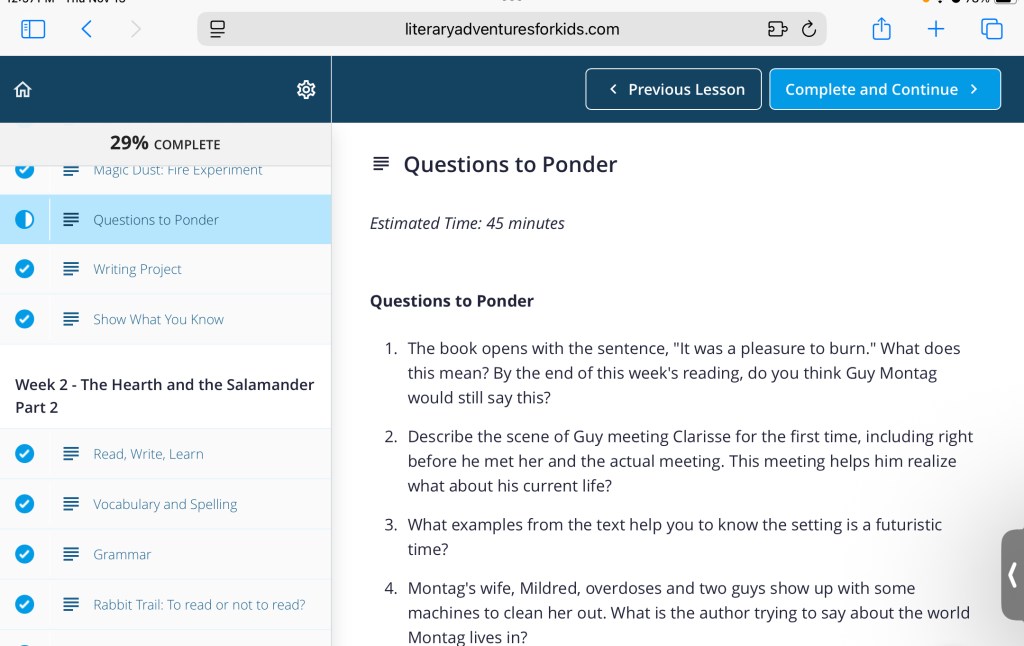
When your teen falls in love with dystopian literature, you follow the trail with them. My son recently dove into The Hunger Games, then The Giver, and most recently Fahrenheit 451. But after finishing Bradbury’s classic, he came to me with big, layered questions about censorship, symbolism, society, and why Bradbury wrote the book the way he did. He wanted to dig deeper, not just gloss over the content. I searched for a novel study that could match his curiosity, but everything I found felt rigid, overly academic, or full of busywork. Then I remembered we still had our Literary Adventures for Kids account. To my relief, they offered a Fahrenheit 451 study, and once I opened it, I knew immediately that it was exactly what we needed.
Literary Adventures for Kids (LAK) is an online, self-paced literature platform designed to bring stories alive through exploration, multimedia learning, and intentional Socratic-style questioning. Instead of draining the joy out of reading with endless worksheets, it enhances the experience. The digital layout is clean and easy to navigate, and lessons are structured in a way that encourages deep thinking without overwhelming the student.
What Makes Literary Adventures for Kids Stand Out
LAK avoids the “read-and-regurgitate” approach that turns teens off from literature. Instead, it blends academic depth with interactive, curiosity-driven learning. Students are guided to think critically, question themes, and draw connections between the story and real-world issues.
Some standout features include:
Rabbit Trails of Wonder — These guided explorations help students dive deeper into topics related to the novel, such as censorship, propaganda, technology, or Bradbury’s historical context.
Socratic-Style Discussion Prompts — Instead of factual recall, LAK offers open-ended questions that push students to analyze, interpret, and evaluate the author’s message.
Creative and Multi-Sensory Activities — Journaling, copywork, theme mapping, mini-projects, and multimedia clips enrich the learning experience.
Rigor Without Burnout — Lessons feel meaningful and meaty, but never overwhelming or monotonous.
A Diverse Catalogue of Books — The platform offers a wide assortment of titles, from classics to contemporary YA, diverse authors, and culturally rich stories.
Inside the Fahrenheit 451 Study
The Fahrenheit 451study was the perfect blend of analytical, creative, and reflective learning. Each module invited my son to slow down and consider the symbolism that runs throughout the book. The platform included context about book banning, historical events that shaped Bradbury’s writing, and discussions that helped my son articulate his thoughts clearly and confidently.
He especially loved:
exploring rabbit trails about censorship and media control
watching short, curated videos that expanded his understanding
answering Socratic-style prompts that made him think deeply
journaling about the ethical dilemmas in the story
comparing Bradbury’s warnings to today’s society
This study didn’t talk at him it invited him into a conversation with the text.
A Strong, Diverse Book Catalog
One of my favorite aspects of Literary Adventures for Kids is the variety of books available. Their catalogue includes:
classic literature
modern young adult novels
diverse and multicultural stories
high-interest titles teens actually want to read
newer releases and timeless favorites
It gives homeschool families the freedom to choose books that align with interests, learning goals, and cultural representation all while maintaining academic richness.
Final Thoughts
Literary Adventures for Kids brought our Fahrenheit 451 experience to life in a way traditional novel studies simply couldn’t. My son thrives on interactive, thoughtful, and well-designed lessons, and LAK delivered all of that with ease. It made him excited to revisit the novel and unpack everything he was curious about. Instead of draining his enthusiasm, LAK amplified it.
If you have a teen who prefers Socratic dialogue, multimedia learning, and meaningful exploration over worksheets, this platform is a gem. It respects how middle and high school students think, question, and understand the world.
If you’re ready to turn novel studies from dry assignments into immersive, curiosity-driven adventures, take a look at Literary Adventures for Kids.
Fahrenheit 451 warns us about what happens when people stop thinking LAK encourages our students to think deeper, question boldly, and let their love of literature burn bright.
This post may contain affiliate links at no additional charge to you!
October has been filled with surprises, independence, and accountability! This month brought several major transitions some that I hinted at last month but didn’t fully take effect until now.
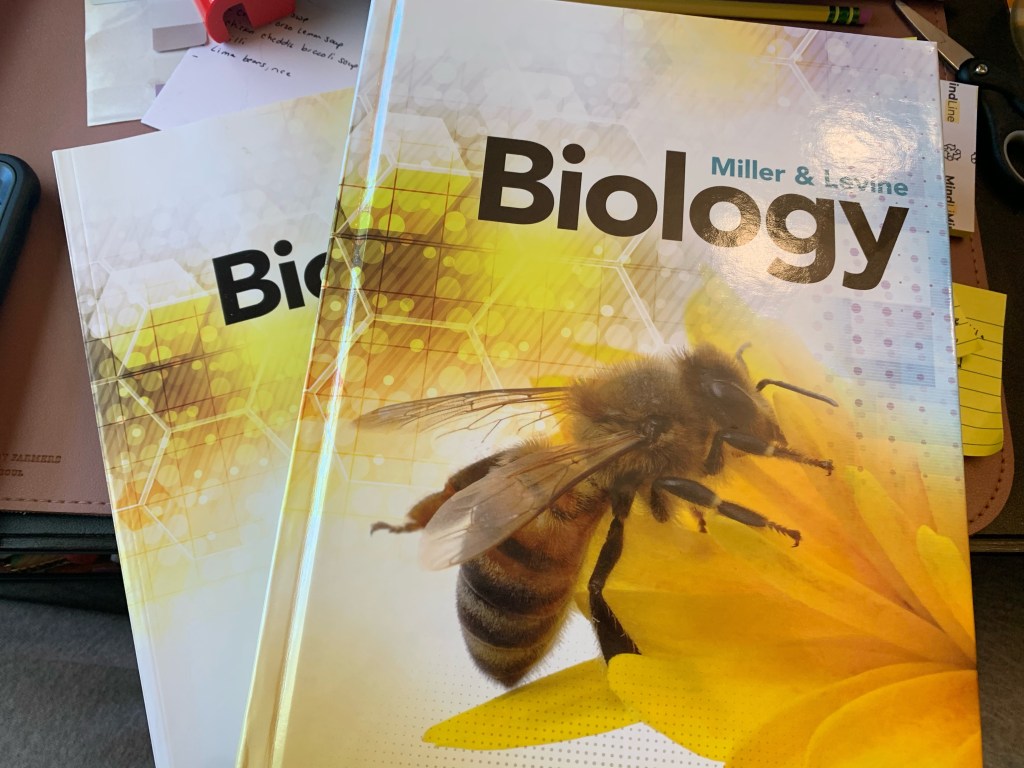
We officially dropped our previous “honors” biology class, which turned out to be a standard biology course marketed as something seriously less than. We’ve since moved into a true honors-level program Savvas Miller & Levine 2019 Biology and it has been phenomenal. The rigor, labs, research opportunities, and interactive learning tools have taken science to the next level. My son is now engaging with real labs, quizzes, tests, research projects, and practicums and yes, no more skipping textbook chapters and sections like in his old “honors” biology online class!
We don’t enroll in classes just to “check boxes.” For us, quality always outweighs quantity, especially on a college-bound path. My son has made it very clear that university is his goal, so we’re aligning his homeschool accordingly.
Math Milestones
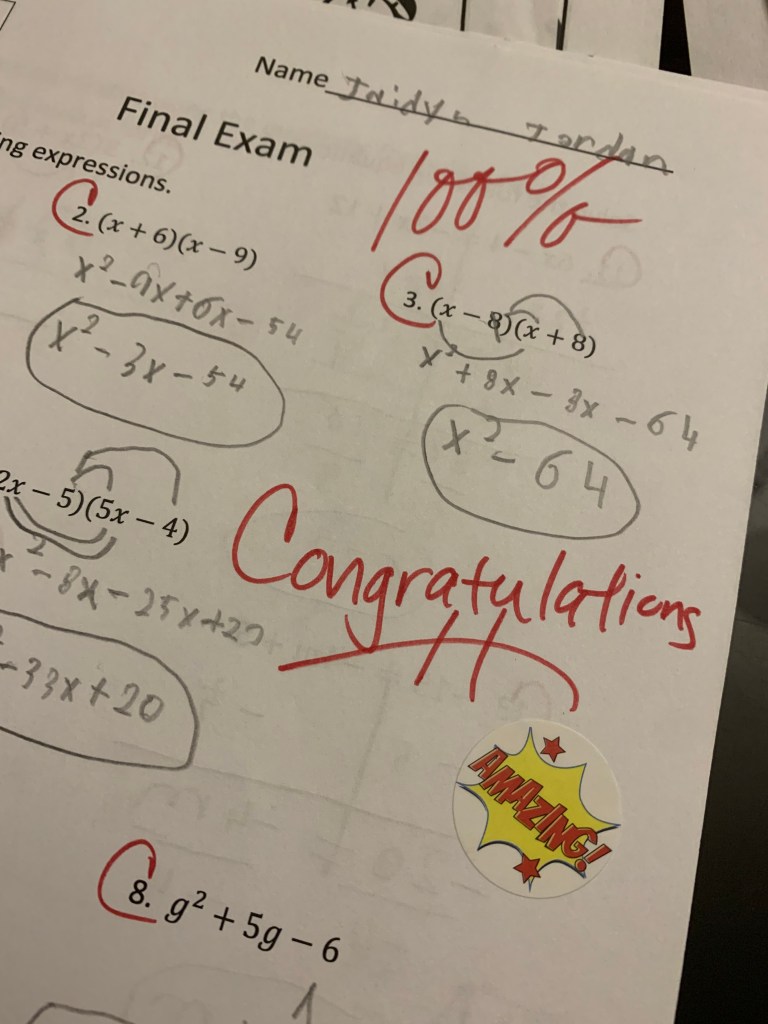
We wrapped up Denison Algebra 1 (huge win!) and have now transitioned into Denison Geometry. To keep Algebra skills sharp, we’re continuing to use Mr. D Math. My son has already decided he wants to start Algebra 2 next semester alongside Geometry, so I’m pacing us carefully to keep balance and mastery in check.
Literature and English
Earlier this year, I mentioned we were shifting directions in literature and what a phenomenal change that’s been! In October, my son officially joined Nia Natal Academy, and it’s been a perfect fit. He’s thriving academically and socially, connecting deeply with his peers and teachers.
In English, they’re diving into research essays and literary analysis while exploring powerful works like The Hate U Give. The classroom discussions are rich with connections to current events, civics, and Black history and the students aren’t holding back! The critical thinking and real-world context in this class have been inspiring to witness. The class he is in is high school level and he is doing really well and keeping up.
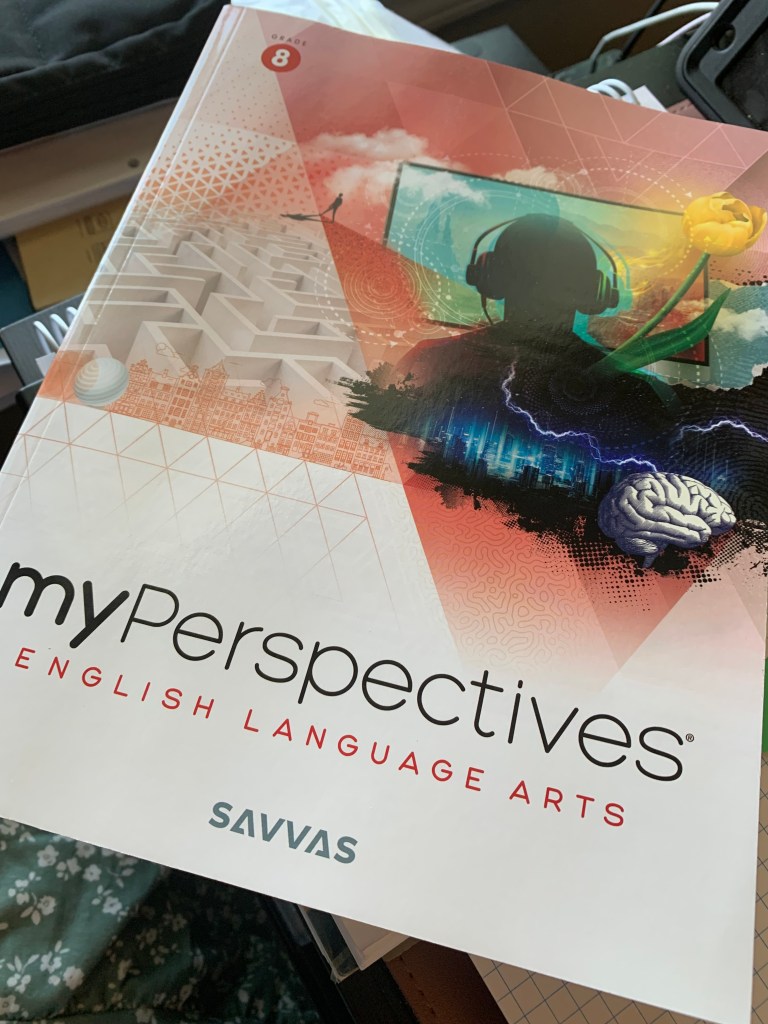
We are still using Michael Clay Thompson MCT Level 5 alongside Savvas 2025 MyProspective grade 8, both these are rigorous English curriculum that are above grade level.
His African Studies class has also been incredible. The teacher brings such depth and insight, challenging the students to think globally and act with purpose. Recently, the class began a world-building project where students created their own societies. My son campaigned for his role as Minister of Defense, which required a written platform, government assessment, and even a campaign video. This kind of project-based learning has had an amazing impact on him.
Leadership, Community, and Growth
Mid-October brought another exciting opportunity: an invitation to a public speaking workshop with Veritas a prestigious student society that meets weekly to study and refine leadership skills. He came out of that workshop absolutely energized and immediately decided to apply for membership. We’ve been gathering transcripts, essays, and recommendation letters since, and I’m so proud of how supportive his teachers and friends have been through this process.
Family Time
We have been spending more time together as family, going to the movies, field trips, game and movie nights. We are also cooking as a family two times a week. My husband has embarked on a new health journey and we have joined him. We all eating more healthy and enjoying new foods. Dad has stepped his game up and is attending homeschool co-ops with us and he also making time out of his busy schedule and spending at least one day a week being more hands on in our homeschool classroom.
Our Secret Weapon: Homeschool Planet in Action
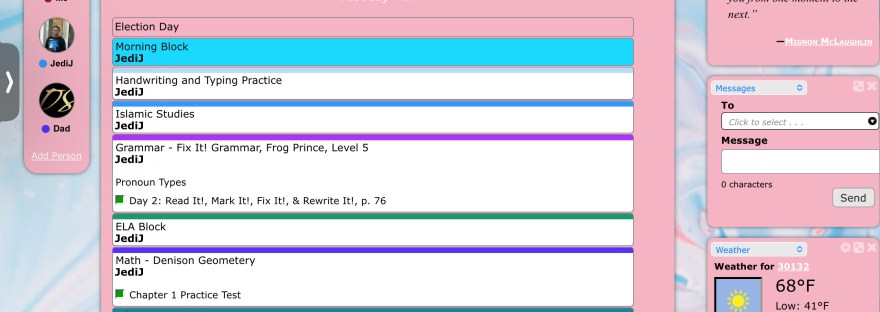
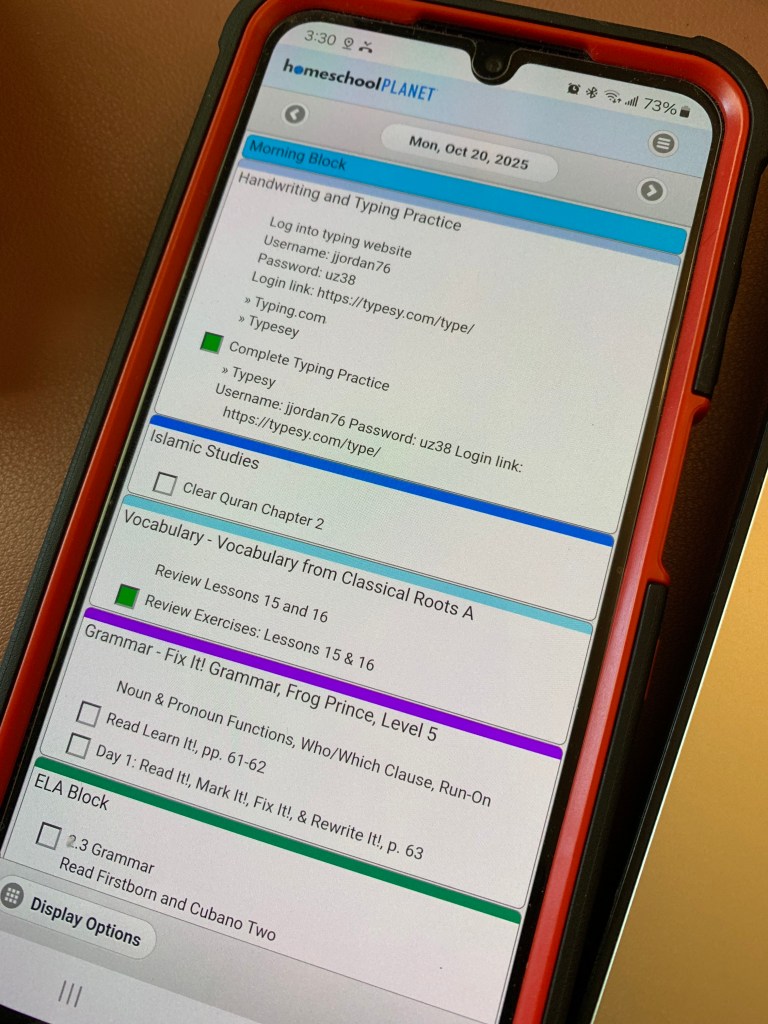
If there’s one tool that has truly held us together through all these changes, it’s Homeschool Planet. Having this platform in our homeschool arsenal has been an absolute game changer. With its constant updates and improvements, it’s become one of the most reliable tools in our homeschool toolbox especially when life gets unpredictable.
The Homeschool Planet app has elevated the experience even more. From managing our schedule, lessons, important dates, and even forgotten Zoom log-ins while at co-op, it keeps us on track no matter where we are.
Last month, when I fell sick and ended up in the hospital, I realized just how powerful this system really is. Because I had planned ahead and uploaded everything into Homeschool Planet, my son was able to follow along independently. He tracked assignments, managed deadlines, and even helped me keep this very update on schedule. It was one of those “in the clutch” moments that reminded me why organization tools like this are worth their weight in gold. Homeschool Planet truly keeps our homeschool orbit steady even when life throws us a curveball.
From My Son’s Perspective
“Yup, I finished Denison Algebra 1! I set a goal to complete it before my 13th birthday and I did it! At the time I’m writing this, I’m still waiting on that birthday to roll around, but I’m really proud of myself.
I also got a Gabb Wireless Phone after my Gabb Watch retired after four years of loyal service. My parents were hesitant, but since Gabb is designed for safe communication, we agreed it was the right next step especially now that I’m doing more independent activities and drop-offs. I am using it smartly and its been nice to connect with friends in a different way. I am also not distracted by social media and internet. The one thing I really love is GABB MUSIC!!!!!! Its the best all my favorite artist no commercials and clean music and lots of genre to pick from.
I love my new biology textbook and new classes with a diverse group of peers. It feels great to be in spaces where I can be my full Afro-Latino self curious, open, and unguarded. The books we’re reading and the conversations we’re having really matter. Homeschool finally feels like homeschool again a place where I can grow, think, and be me.
One of my favorite tools this year is Homeschool Planet. I’m using it for everything assignments, chores, field trips, reminders you name it. The Homeschool Planet app on my phone is especially helpful when my mom’s not around to unlock my MacBook (thanks to those parental controls!). It helps me stay organized, check my schedule on the go, and even coordinate with friends. Total game changer for middle and high schoolers.
This month, I hung out with friends at the Fall Festival, found Veritas and applied, participated in Junior Achievement Finance Park, did some volunteering, and joined a new leadership group. October has been busy but the good kind of busy. I’m really looking forward to November. Oh, and I almost forgot my African Studies class isEXCELLENT!”
A Scary but Valuable Lesson
The end of October brought an unexpected challenge. My mom had to be hospitalized, which was really scary for me. Thankfully, she’s now home and doing much better, but it was a wake-up call for all of us.
Seeing my mom in the hospital was hard it made me realize how much she does every single day to keep things running in our home. When she came home, she couldn’t jump back into her full routine, and my dad and I had to step up. After the first day, I really saw where I had been slacking and how often she quietly picks up the pieces. I’m really sorry for that, and I’m going to do better.
She tried to bounce back quickly but eventually realized she needed to ask for help—and we were happy to be there for her. To all the kids reading this: you only get one mom cherish her and HELP HER!
This experience taught us all about balance, gratitude, and teamwork. Sometimes life slows you down so you can see what really matters.
Closing Reflections
October reminded us that growth often comes with change and sometimes with challenge. This month tested our balance, strengthened our faith, and deepened our gratitude. From rigorous new classes to unexpected life lessons, we’ve experienced so much growth as a family.
And through it all, Homeschool Planet has been the steady hand keeping our homeschool world spinning.
I know this homeschool thing can be tricky we all want what’s best for our kids. But here’s the truth: just because a course, academy, or program is marketed as “the best of the best” doesn’t mean it’s the right fit. Sometimes you’re just paying for the name that says XYZ. Colleges don’t care about fancy labels; they care about academics, character, and depth.
They want to know can this student think critically? Are they a world changer? What will having this student bring to our campus community? Yes, grades and test scores matter, but so do curiosity, compassion, and the ability to hold meaningful conversations about the world around them. They don’t want robots they want thinkers and students who will go beyond the limit of the textbook.
Did they enjoy their learning journey? Can they discuss complex ideas about society and global events? Outside of sports, what else do they bring to the table? What makes them happy? What motivates them?
These are the questions that shape the kind of education I’m building for my son. I’m not chasing big names or shiny marketing I’m seeking substance. Because in our homeschool, it’s not about checking boxes; it’s about creating a thinker, dreamer, and lifelong learner who understand that his education and has purpose.
Here’s to a purposeful, healthy, and inspiring November! Click the Homeschool Planet banner below to grab your free trial.
We’ve finished our hands-on walkthrough of Real Science Kids Level 4 (newest release) and this is our final, comprehensive review of the series. If you’ve been following our earlier write-ups of Levels 2–3, this review ties everything together, compares how Level 4 builds on those earlier levels, and explains why this level is especially suited to some 4th graders and not to others.
Overview what Level 4 is at a glance
Real Science Kids Level 4 steps up both the depth and pace of science instruction compared with the early levels. It keeps the series’ hallmark hands-on experiments and approachable explanations, but it accelerates the curriculum: lessons move faster, explanations are denser, and activities expect stronger reading comprehension and independent thinking from students. For a motivated 4th grader who already enjoys science, Level 4 can feel exciting and rewarding. For a student who needs slower pacing or heavy remediation, you’ll want to plan extra time or pair it with more guided instruction.
Topics covered
Level 4 blends life, physical, and earth science in more sophisticated ways. Expect units that include (but are not limited to):
Life Science: ecosystems, plant and animal adaptations, food webs, basic genetics concepts
Physical Science: matter & its properties, simple chemistry experiments, forces and motion basics
Earth & Space: rock cycle, weather patterns, solar system fundamentals
Scientific Skills: hypothesis development, controlled experiments, measurement, graphing, data interpretation
Practical/Enrichment: lab journals, extension projects, STEM challenges and mini-research tasks.
Why it’s a great fit for many 4th graders
Accelerated, rigorous pacing: Level 4 assumes students can read instructions carefully, follow multi-step experiments, and synthesize results into conclusions. That makes it ideal for curious, independent learners who are ready to think like junior scientists.
Hands-on emphasis: The experiments and projects are engaging and meaningful they’re not just demonstrations, they ask students to predict, measure, record, and reflect.
Limitations / who should be cautious
Not for every 4th grader out of the box: Because the curriculum is accelerated, students with weaker reading comprehension or poor attention to multi-step instructions will struggle without extra support.
Requires parental/teacher involvement for some students: To get full value, some learners will need guided read-alouds, demonstration of techniques, or pre-teaching of vocabulary.
Pacing expectations: If you use Level 4 as a straight replacement for a slower paced Level 3, be ready to adjust schedule or split some lessons.
How Level 4 compares to our earlier Level 2–3 reviews
When we reviewed Levels 2–3, the series felt very gentle: short lessons, lots of picture support, and very guided, parent-led experiments perfect for early elementary learners. Level 4 clearly intends to bridge to middle-school science thinking: it asks students to do science, not merely observe it. If you used Levels 2–3 in your homeschool, Level 4 will feel like a natural but definite step up. Expect to revisit how you scaffold reading and experiment setup: what worked with Level 3 (read-aloud instructions, step-by-step adult demos) may need to become a bit more student-centered with Level 4.
Teaching tips & pacing suggestions
Pre-teach vocabulary: Spend a short pre-lesson on key terms — this pays off on experiment day.
Model one experiment first: Demonstrate an experiment as a whole-class (or parent-led) demo, then let students replicate with guidance.
Use the lab journal: Require students to write predictions, methods, results, and a short conclusion for every experiment — it enforces scientific thinking.
Adjust pacing: If a student struggles, split lessons into two sessions: one for concept + vocabulary, one for experiment + reflection.
Pair reading support when needed: For readers below grade level, read directions together or provide a simplified checklist.
Already shows curiosity about science, asks “why” questions, and enjoys experiments.
Has solid reading comprehension and can follow multi-step directions (or you’re willing to provide a small amount of guided support).
Wants a curriculum that accelerates concept development and builds real scientific thinking skills.
If your child needs a gentler introduction to experiments and vocabulary, consider re-reading our earlier reviews of Levels 2–3 and using those as the transition years before moving into Level 4.
Closing notes — our series wrap-up
This is our final review of the Real Science Kids series. We’ve walked Levels 2–4 in previous posts and can confirm the series does continue beyond Level 4 (there is a Level 5–7 tier available for older students). Across the series, Real Science Kids grows from guided, playful experiments into a rigorous, inquiry-focused program and Level 4 is where that transformation becomes most noticeable. If your goal is to accelerate a curious 4th grader toward middle-school science habits, Level 4 is an excellent, thoughtfully designed choice just plan for comprehension support if needed. Real Science Kids Level 4 is a part of the 4th grade Timberdoodle Co Curriculum Kit.
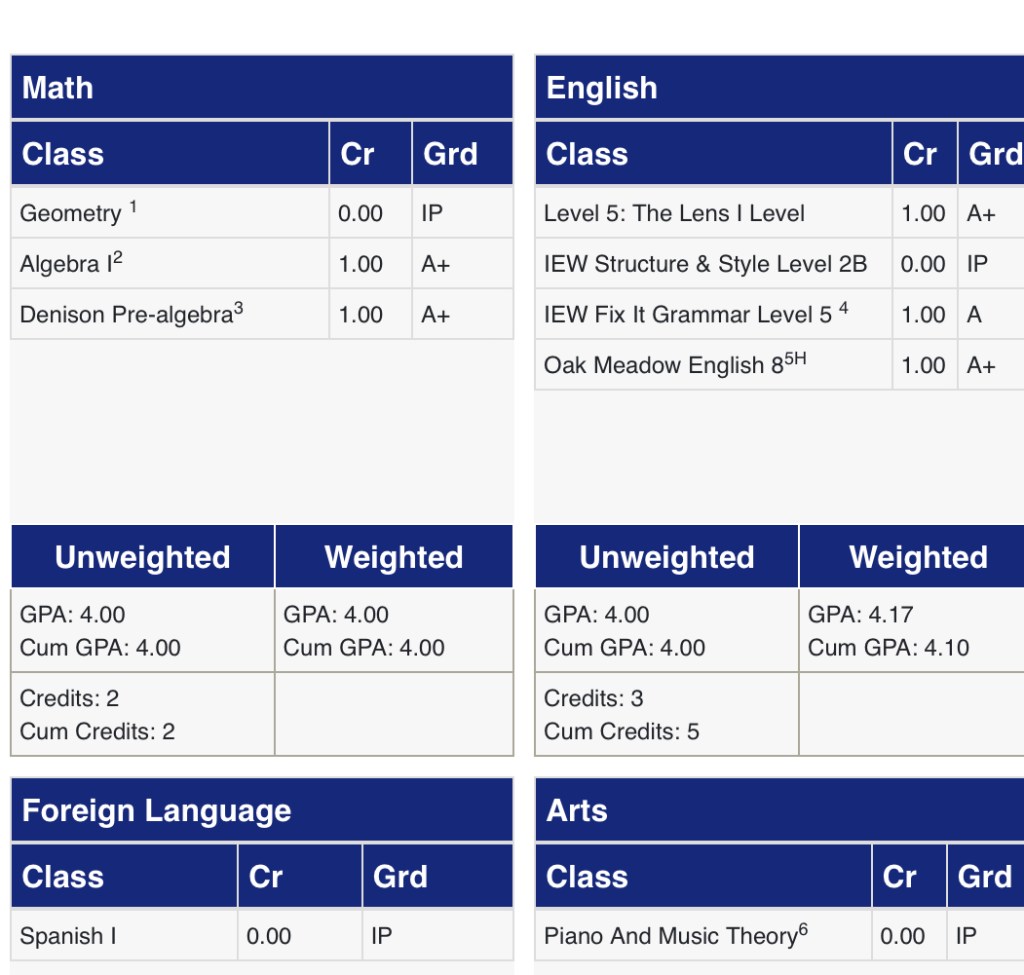
Recently I was asked to provide a transcript for my son in order for him to apply to a prestigious academic program. I was so relieved that I had already been using Homeschool Records to track his academics through his 7th/8th grade year, especially since he did a hybrid school year last year and is again this school year for 8/9th. Having his records already organized meant that I wasn’t scrambling to piece things together at the last minute. You may also recall I reviewed Homeschool Records last year. We are still using it and I am so glad we are.
When I needed to produce his transcript, Homeschool Records was a life-saver. With just a click of a button, I was able to generate a professional, impressive transcript that looked exactly like what the admissions people expected. No frantic formatting, no last-minute data entry, no worries about how to present hybrid/homeschool credits. I felt confident handing it over.
Here’s a deeper dive into how Homeschool Records works, what it offers, and who it best serves.
What Homeschool Records does
It’s a web-based platform that allows you to “create, manage & store all your homeschool records in one place”designed especially for Grades 8-12.
It covers key record-keeping elements: transcripts & reports, course descriptions, attendance tracking, volunteer/community service hours, reading logs, instructional hours.
The workflow: you input your student’s courses (with descriptions, grades, credits) once. Then the system uses that information to automatically build reports, including transcripts.
Recently I discovered the new feature of being able to duplicate classes a game-changer for us. For example, when planning the spring term I could duplicate a class from the fall term and just update the grade or status. Huge time saver.
Also features like marking a course as “in progress” or “planned” are built in, so the transcript can reflect “this course is ongoing” or “this course is scheduled for next term” which is perfect for hybrid/homeschool students who may have non-traditional sequencing.
Sharing courses with other students in your account, this is a great option for multi-family students.
The newest launch: a Transcript Evaluation Service — meaning the platform is now offering a review/validation of your transcript to help ensure it meets college/university expectations (in my case, that give me extra peace of mind) small additional fee applies.
Why it was ideal for our context
My son’s hybrid school year: Because we were using both homeschool curriculum and hybrid/in-class elements, keeping everything organized was complex. Homeschool Records let me track each component (in-class, homeschool days, online days) under one roof.
Middle school into early high school transition: Since we’re moving from 7th/8th grade into higher grades, establishing good records now means less stress later when high school officially begins.
Efficiency: I literally spent only minutes entering course descriptions and grades; the heavy lifting (formatting, report generation) was handled.
Planning & progress-monitoring: The duplicate-class feature helped me plan ahead and see my son’s progress over time (term to term).
Professional look: The transcript output looked clean and credible exactly what is needed when you’re submitting to an academic program that expects high-school-level documentation.
Screenshot
Who would benefit from using Homeschool Records
Homeschooling families whose students are entering high-school years (Grades 8-12) and may need transcripts for college, programs, scholarships.
Hybrid homeschool families (mix of in-person, online, homeschool days) who want one place to track all academic work.
Homeschool parents who want minimal fuss: you enter the data and the system does the heavy lifting — ideal for busy parents who don’t want to become transcript-formatting experts.
Families who want to plan ahead: Being able to mark planned/in-progress courses means you can build a roadmap from middle school through high school, making sure you’re on track.
Those wanting professional documentation: For admissions, scholarships, evaluations a polished transcript matters, and this platform delivers.
Exciting New Dual Enrollment Feature
And now, Homeschool Records has taken it a step further with the new Dual Enrollment Planner! This feature helps families seamlessly track and organize college-level courses taken during high school, including credits, grades, and institutions. It ensures your student’s dual enrollment experience is clearly documented and professionally displayed on their transcript something that really catches the eye of admissions officers.
The Breakdown
One of the biggest concerns for homeschool parents is creating a strong high school transcript one that truly reflects your student’s hard work and individuality.
What I’ve found with Homeschool Records is that it keeps me accountable for everything curriculum, credits, track volunteer hours, extracurricular activities, electives, and even helping my son build his student resume.
Colleges today want to see more than just academics. They’re looking for well-rounded individuals, and Homeschool Records helps make that possible. Their professional transcripts have just the right pop of color, helping your student’s transcript stand out from the typical black-and-white ones that often get lost in a stack.
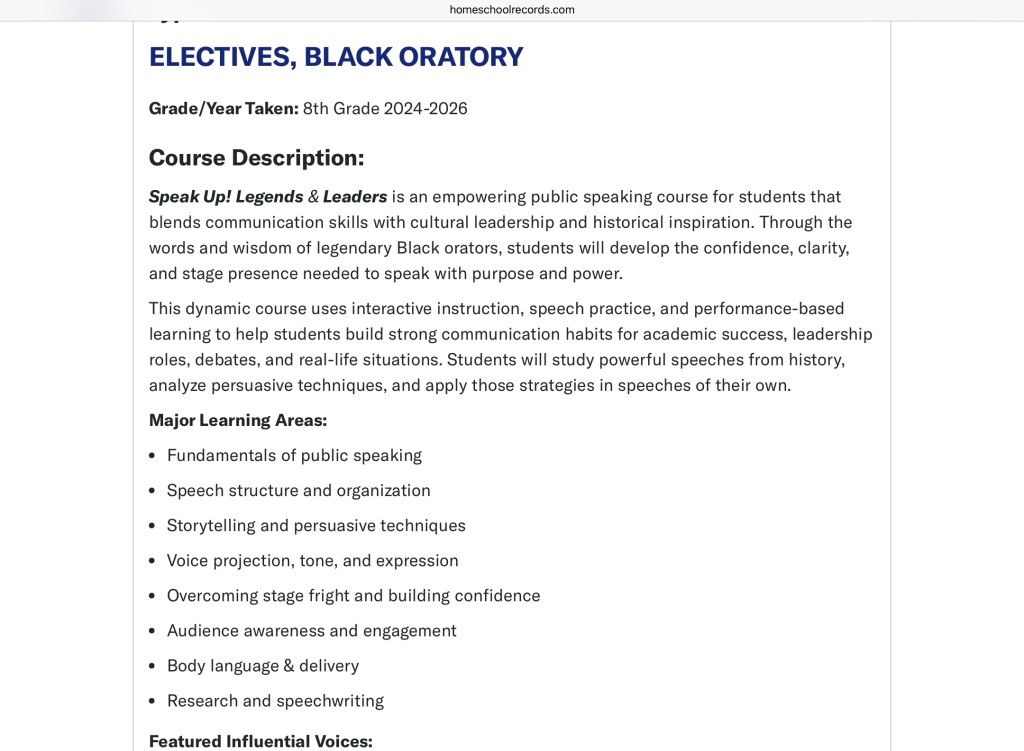
One of my favorite features is the ability to add detailed course descriptions when entering classes. This is such a valuable tool! Along with the transcript, you can submit these professional course descriptions to give admission counselors a real understanding of what your student studied and how your homeschool operates.
It’s simply not enough anymore to just meet graduation requirements. Today’s colleges want context and depth they want to know what your student learned and how. After talking with several admissions counselors myself, they all said the same thing: they love when families provide more information about the courses.
Homeschool Records truly takes the worry and anxiety out of transcript creation. It even automatically tracks credits for you! This platform has made the high school documentation process so much easier and far more professional.
My Final Thoughts
If I were to sum it up: Homeschool Records has been one of the best investments we made in our homeschooling infrastructure. Knowing that when that transcript request came, I was ready is priceless. The recent addition of the duplicate-class feature truly made planning for the spring term easier, and the ability to note “in progress” or “planned” courses gives flexibility that’s perfect for the hybrid model.
In short: you (the parent) spend a few minutes entering your child’s information (course name, description, grade, credit, status) and you’re done. The platform handles the rest. It works now as a tracker for 8th grade, but it’s also a long-term solution for tracking from 8th through 12th grade, making it an excellent system for the next several years of our son’s academic journey. The low cost is worth every dime!!
If you want a science curriculum that treats elementary-aged learners like real thinkers not just workbook checkboxes Real Science-4-Kids (RS4K) Book 3 is one of those rare finds. It hits a sweet spot between hands-on exploration and gentle academic rigor that makes it perfect for both budding scientists who can’t get enough and serious students who need a clear, organized path through foundational concepts.
Quick verdict
Practical, inquiry-friendly, and teacher-friendly. RS4K Book 3 builds scientific habits (observing, measuring, explaining) while covering a broad suite of topics at a depth that’s just right for grades 3–4. If you want kids doing real experiments, writing simple lab notes, and connecting concepts to everyday life this is a great pick.
Who this is best for
Homeschool families who want a science-first approach with hands-on labs.
Students in grades3–4 who are ready for explanations (not just facts) and can follow short experiments with supervision.
Parents/teachers who prefer teacher-led instruction with scripted explanations plus room to extend or simplify.
Students who enjoy building models, measuring, and drawing conclusions — excellent for kids who might pursue more advanced science later.
It’s also friendly for mixed-age siblings: older kids can read the deeper notes, younger ones can do simpler observation tasks.
What’s inside (deep dive, without the fluff)
RS4K Book 3 is organized to introduce robust scientific ideas in small, manageable chunks. Typical elements you’ll find in each unit or lesson:
Clear learning objectives — what the student should know/do by the end.
Short reading passages explaining a concept in kid-friendly language.
Step-by-step experiments using inexpensive, household supplies. Many activities encourage measurement, comparison, and recording results.
Discussion questions to build reasoning and vocabulary.
Teacher notes — background info, common student misconceptions, and safety tips.
Simple assessment ideas — short quizzes, oral review prompts, or notebook
checks.
Typical topics covered
While the exact table of contents varies by edition, Book 3 generally covers core elementary science areas such as:
Introduction to life science — plant/animal basics and ecosystems at an introductory level.
Why it’s a game changer
Hands-on learning is central — experiments aren’t an add-on; they’re built into every lesson. Kids learn by doing, which builds understanding and retention.
Scientist mindset — it doesn’t just dump facts; it teaches how to ask questions, design simple tests, record observations, and draw conclusions. That’s skills training, not memorization.
Straightforward teacher support — if you aren’t a science expert, the teacher notes and scripted explanations make lessons easy to teach while still sounding authentic.
Flexible pacing — one lesson can be a 30–45 minute block or stretched across multiple days for deeper exploration or notebook work. Great for mixed schedules.
Builds confidence for advanced science — students practicing measurement, controlled testing, and lab notes in 3rd/4th grade transition more smoothly into middle school science.
Who it might not be best for
Families who want only textbook-style worksheets and zero hands-on work. RS4K expects experiment time.
Parents looking for unit studies tied heavily to literature, art, or history RS4K is science-first and focused on scientific skills and concepts.
Very independent early readers who want to self-teach without any parental/teacher guidance Book 3 still benefits from a teacher to scaffold experiments and questions.
Practical classroom/homeschool tips
Buy the kit or gather supplies ahead — most experiments use cheap household items, but having a supply box (magnifying glass, thermometer, simple multimeter if you want electrical experiments, ruler, balances) saves time.
Science notebook — require students to write a hypothesis, record procedure, draw/data, and write a conclusion. This trains scientific writing early.
Adapt for mixed ages — give older kids the explanation and data analysis; younger ones can do the observations/drawings.
Extend curious students — add a research mini-project or extra experiments (e.g., more trials, different variables) for kids who want depth.
Safety first — teacher notes usually flag hazards; supervise heat, chemicals, and tools.
Final pros & cons (fast list)
Pros:
Strong emphasis on experiments and scientific thinking.
Clear teacher supports and explanations.
Flexible and engaging — great for curious kids.
Prepares students for middle school science habits.
Cons:
Requires parental/teacher involvement for labs.
Not a literature-integrated unit study (it’s focused science).
Some families prefer more colorful, activity-packed books — RS4K is practical and content-dense rather than flashy.
Closing recommendation
If you’re a homeschool mom who wants your 3rd–4th grader to think like a scientist to make observations, test ideas, and write about findings Real Science-4-Kids Book 3 will pay dividends. It’s the curriculum that gently raises expectations: students get real experiments, useful vocabulary, and the confidence to ask better questions. For serious and budding science students, it’s not just another workbook it’s the beginning of a scientific habit of mind. Real Science-4-Kids Book 3 is a part of the 3rd Grade Timberdoodle Co Curriculum Kit.




























 Little Learner and Mom