Early Childhood Education, Family, Homeschool

Little Hands, Big Reading Adventures: Building Early Literacy with ABC See, Hear, Do Flashcards!

There is something so special about watching little learners discover the wonderful world of letters, sounds, and eventually reading! As a homeschool mom, I have always believed that building a strong foundation in early literacy doesn’t have to involve endless worksheets, complicated lessons, or hours sitting at a table. Sometimes, the simplest learning tools can make the biggest difference, especially when they make learning fun!
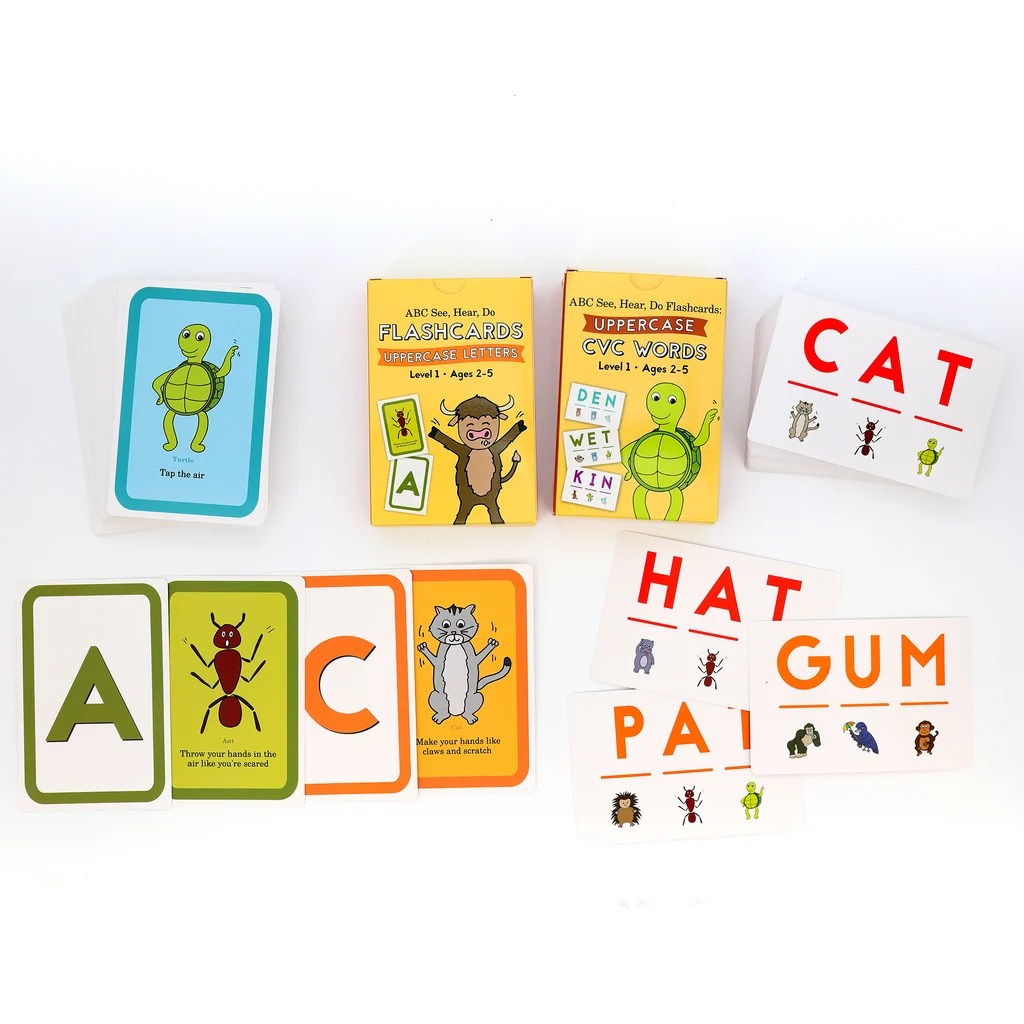
Recently, I had the pleasure of sharing two wonderful early learning resources from Timberdoodle Co.: ABC See, Hear, Do Flashcards: Uppercase Letters Level 1 and ABC See, Hear, Do Flashcards: Uppercase CVC Words Level 1.

What made these two sets extra special was that I had two very special little learners in mind when I received them. Rather than keeping them in our homeschool collection, I decided to share the joy of learning with my great-nephew and a sweet little friend of ours who are both beginning their own early learning adventures. nd let me tell you, it has been such a pleasure watching both kiddos work with their cards!

ABC See, Hear, Do Uppercase Letters Level 1: A Wonderful Beginning for Little Learners

When it comes to introducing the alphabet, I love resources that go beyond simply asking a child to memorize what a letter looks like. The ABC See, Hear, Do Uppercase Letters Level 1 flashcards offer a playful, multi sensory approach to early literacy. These cards introduce children to uppercase letters while encouraging them to connect what they see with the sounds they hear and the movements they make. The concept behind ABC See, Hear, Do is wonderfully simple: children see the letter, hear its sound, and use an accompanying action or movement to help reinforce what they are learning.

This approach is especially helpful for little learners who aren’t quite ready for traditional pencil-and-paper activities. Instead of sitting still and repeating letters, they get to participate in the learning process! I decided to gift this set to my great-nephew as he begins his journey into home learning. I wanted him to have something that would make his first experiences with letters exciting, engaging, and, most importantly, enjoyable. At this stage, it’s not about rushing children into reading. It’s about helping them become comfortable with letters, recognizing their shapes, hearing their sounds, and developing confidence as they learn something new.
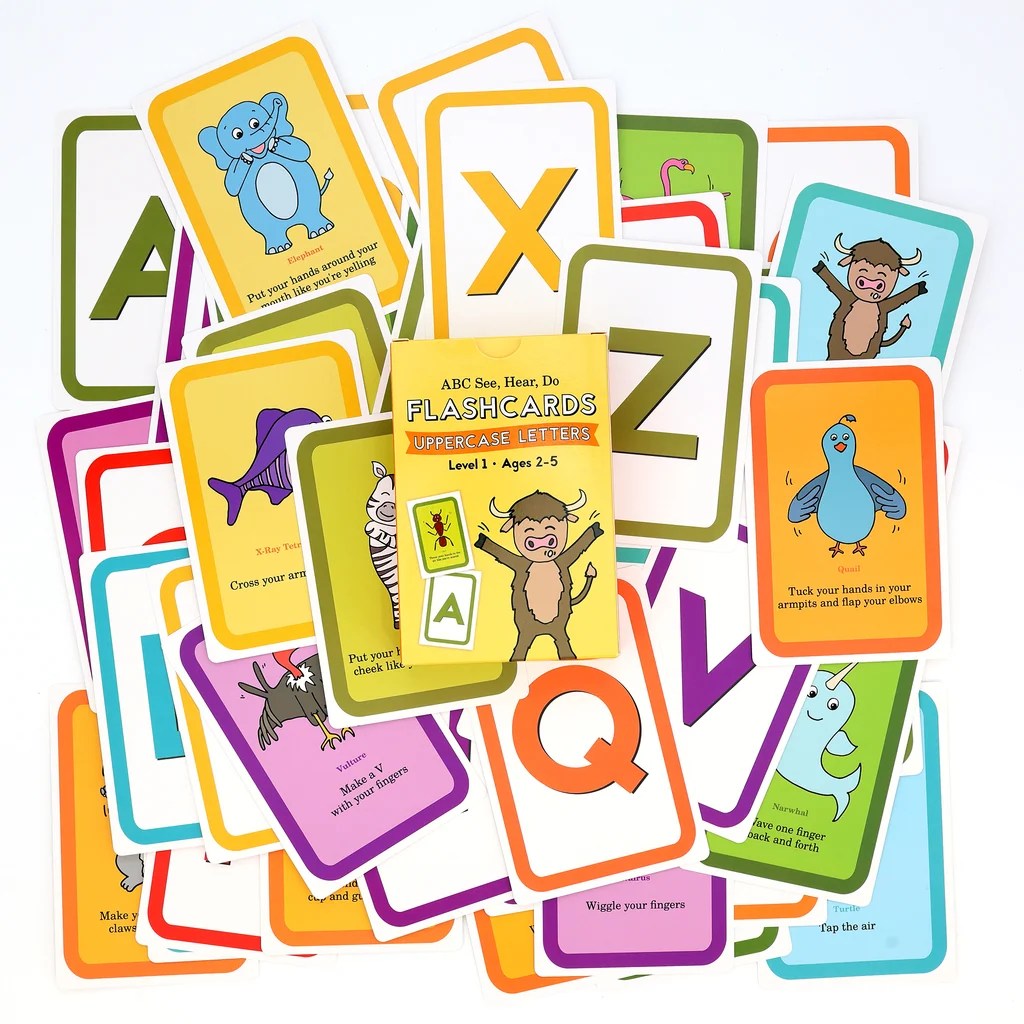
What I especially appreciate about the Uppercase Letters set:

  • It introduces uppercase letter recognition in a child-friendly way.
  • It encourages letter-sound connections, an essential early reading skill.
  • It incorporates movement and visual learning rather than relying solely on memorization.
  • It can be used for short, playful learning sessions without overwhelming younger children.
  • It gives parents a simple way to introduce foundational literacy skills at home.

For families just beginning their homeschool journey, this is the type of resource I love recommending. You don’t need to be an experienced homeschool parent to sit down with your little one and make learning letters fun.

ABC See, Hear, Do Uppercase CVC Words Level 1: Taking Those First Steps Toward Reading

Our second set, ABC See, Hear, Do Flashcards: Uppercase CVC Words Level 1, went to a special little friend of ours who has officially started her three-year-old year doing all the homeschool things! She is beginning to explore reading, and I thought these cards would be a wonderful addition to her early learning activities. Now, if you are new to teaching reading, you might be wondering what CVC words are. CVC stands for consonant-vowel-consonant. These are simple three-letter words, such as CAT, DOG, and SUN, that help beginning readers practice blending individual letter sounds together to form words. Learning to blend sounds is a huge milestone in early reading development!
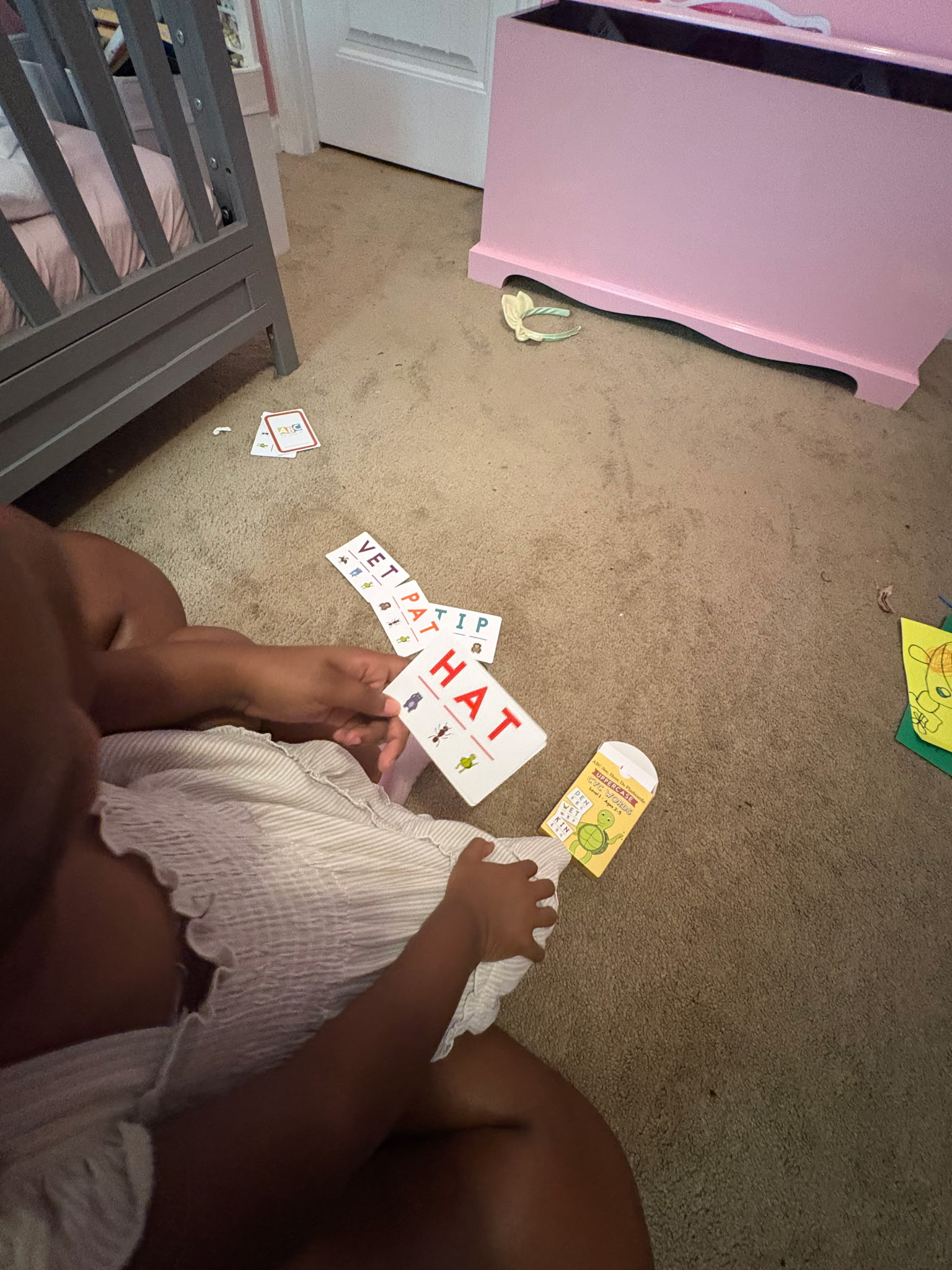
While the Uppercase Letters set focuses on helping children recognize letters and connect them with sounds, the Uppercase CVC Words set helps children begin putting those sounds together. What I love about this progression is that it builds naturally on the skills children are already developing.

The CVC flashcards give little learners opportunities to:

  • Practice recognizing individual letter sounds within words.
  • Develop phonemic awareness and beginning decoding skills.
  • Learn how sounds blend together to create words.
  • Strengthen early word recognition.
  • Build confidence as they begin reading simple words independently.
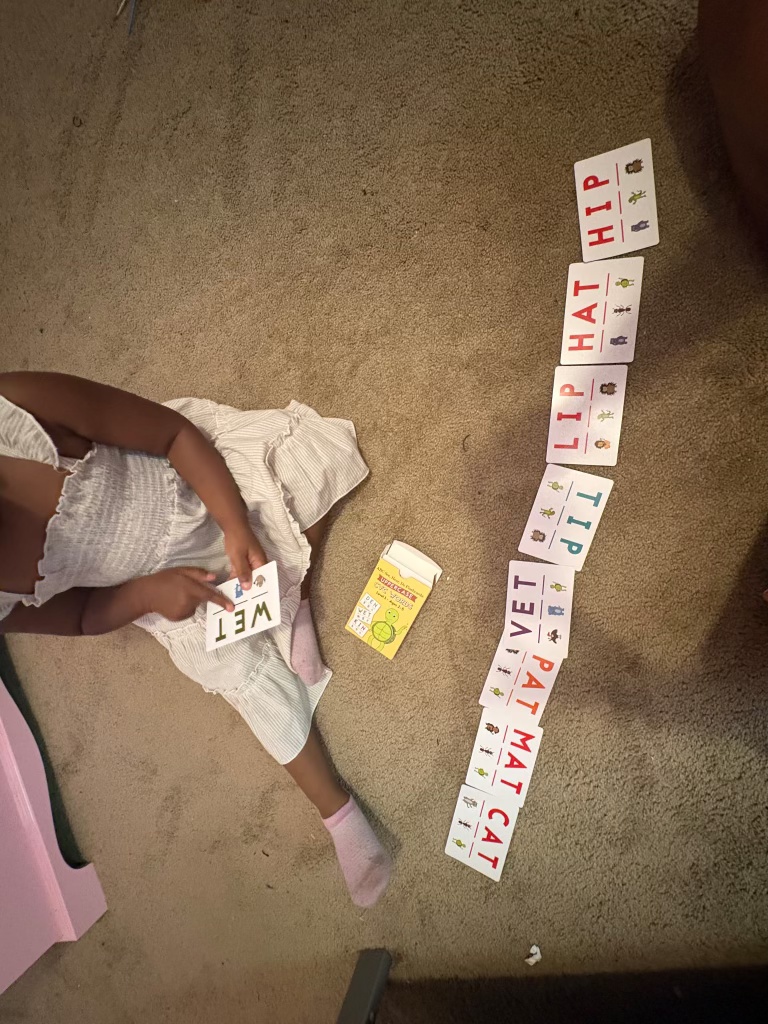
And because the ABC See, Hear, Do approach incorporates visual, auditory, and movement-based learning, it makes the process feel much more interactive than simply drilling word lists. For our little friend, these cards are a great way to explore the beginning stages of reading while still enjoying all the fun that comes with being three years old. One thing I always encourage parents to remember is that early learning is not a race. Some three-year-olds are eager to explore letters and words, while others are still developing those foundational skills through play. Both are perfectly fine! These cards can be introduced gradually, allowing children to work at their own pace.

Let’s Talk About the Cards Themselves: Quality, Durability, and Everyday Use

One thing I always consider when reviewing learning materials for younger children is durability. Let’s face it, little hands aren’t always gentle! Flashcards get shuffled, dropped, spread across the floor, carried around the house, and sometimes become part of an entirely different imaginative adventure. That is why I appreciate having dedicated, reusable flashcards rather than relying entirely on printed worksheets. The ABC See, Hear, Do cards have a colorful, easy-to-follow presentation that makes them inviting for young learners. Their individual card format is also practical because parents can select just a few letters or words at a time instead of overwhelming children with an entire alphabet or a long reading lesson. I especially like how easy they are to incorporate into everyday learning.

You can use them during morning time, at the kitchen table, on the living room floor, or as a quick activity between other homeschool lessons. For families planning to use their cards over several years or pass them down to younger siblings, I recommend storing them together after each lesson and keeping them away from snacks and drinks. With younger learners, taking care of our materials is another little lesson in itself! The cards are also easy to adapt to different activities. You can introduce a few new letters, revisit familiar sounds, play matching games, or encourage your child to demonstrate the movements that go along with what they’re learning.

Who Would Benefit Most from These Flashcards?

I think these sets are wonderful additions for several types of early learners.

Beginning preschool and Pre-K students: The Uppercase Letters set is an excellent starting point for children just becoming familiar with the alphabet and letter sounds.

Children showing an interest in reading: The Uppercase CVC Words set provides a natural next step for children who are beginning to recognize letter sounds and are ready to practice blending.

Hands-on and active learners: Children who enjoy movement and interactive activities may especially appreciate the See, Hear, Do approach.

Homeschool families with multiple young children: These cards can be brought out again and again as younger siblings reach different stages of early literacy.

Parents, grandparents, and caregivers: You don’t have to be a homeschool parent to use these resources. They are also wonderful for families who want to support early learning at home through short, meaningful activities.

I also think these would make thoughtful gifts for a child beginning preschool or starting a home learning journey. After all, that is exactly why I chose to share these sets with two special little people in our lives!

My Final Thoughts: Little Cards, Big Foundations!

As a homeschool mom, one of the greatest joys is watching children develop a love for learning. It doesn’t matter whether they are your own children, grandchildren, nieces, nephews, or special little friends. There is something incredibly rewarding about being part of those early educational milestones.

Gifting the Uppercase Letters set to my great-nephew as he begins his home learning journey and sharing the Uppercase CVC Words set with our little three-year-old friend has made this review especially meaningful.

It has truly been a pleasure watching both kiddos work with their cards, explore new skills, and begin building those important early literacy foundations. I love that these resources meet children at different stages of their learning journey. One child is beginning with letters and sounds, while another is taking those exciting first steps toward putting sounds together to read words. Both are learning. Both are growing. And both are developing skills that will serve them as they continue their educational journeys. The ABC See, Hear, Do Flashcards are a lovely reminder that early literacy doesn’t have to be complicated.

With the right resources, a little patience, and plenty of encouragement, we can make learning to read a positive and memorable experience.
If you are putting together an early learning collection, shopping for a little learner, or exploring homeschool curriculum for the first time, I definitely think these flashcards are worth checking out. And don’t forget to take a look at the 2026 Timberdoodle Co. Pre-K Curriculum Kit while you’re at it! You might just discover some wonderful new resources for your little learner.

Because sometimes, those little flashcards help build the biggest foundations for a lifelong love of reading!

Early Childhood Education, Homeschool, Toddler Books, Toddler Learning

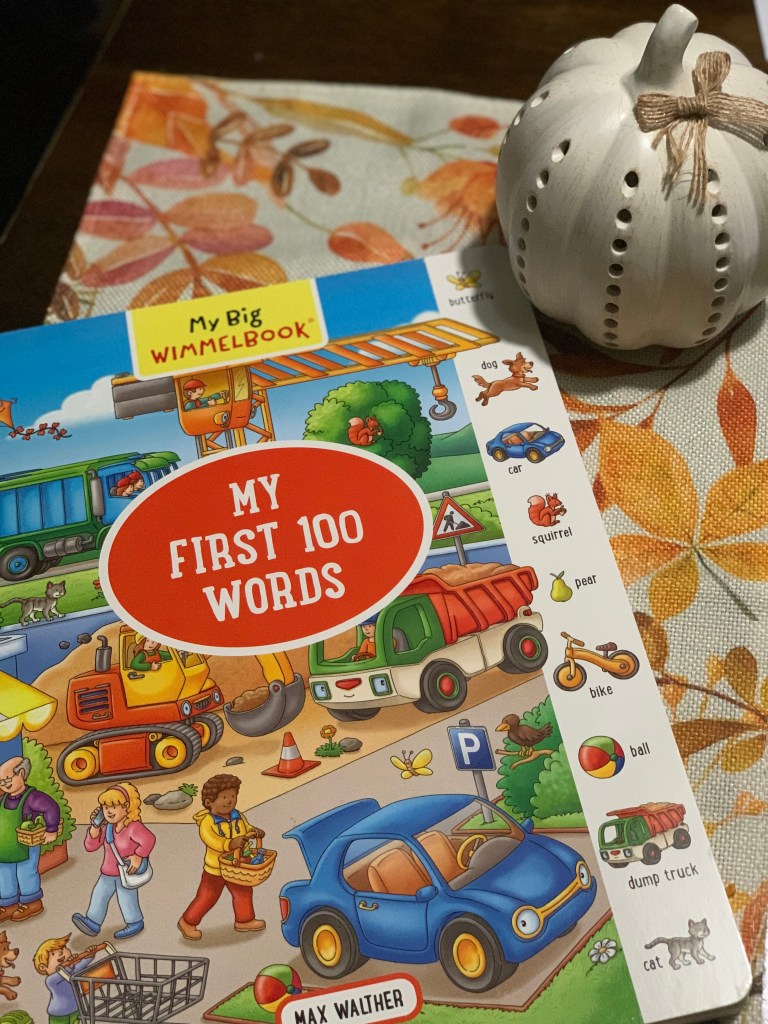
Building His First Library: My First 100 Words Wimmelbook Review

I received for my honest review My First 100 Words Wimmelbook !

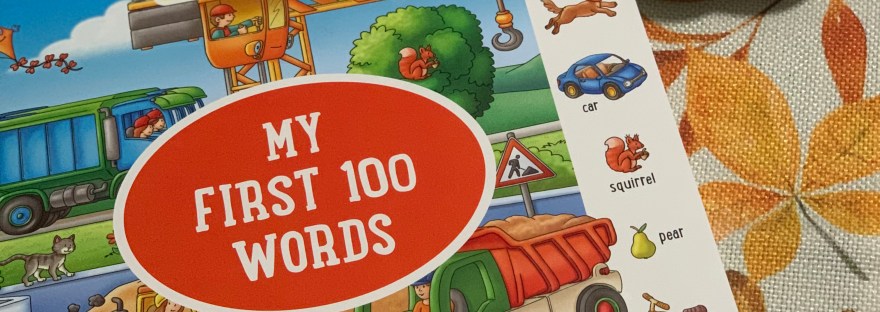
There is something so special about building a child’s very first library. As we continue adding quality books to the newest little one in our extended family’s collection, I’m trying to choose books that he can enjoy now but also continue growing with over the next few years. With him turning one this past July, My First 100 Words Wimmelbook is the perfect stepping stone for helping him build his vocabulary while beginning to make real-world connections between pictures, words, and the things he sees around him every day.

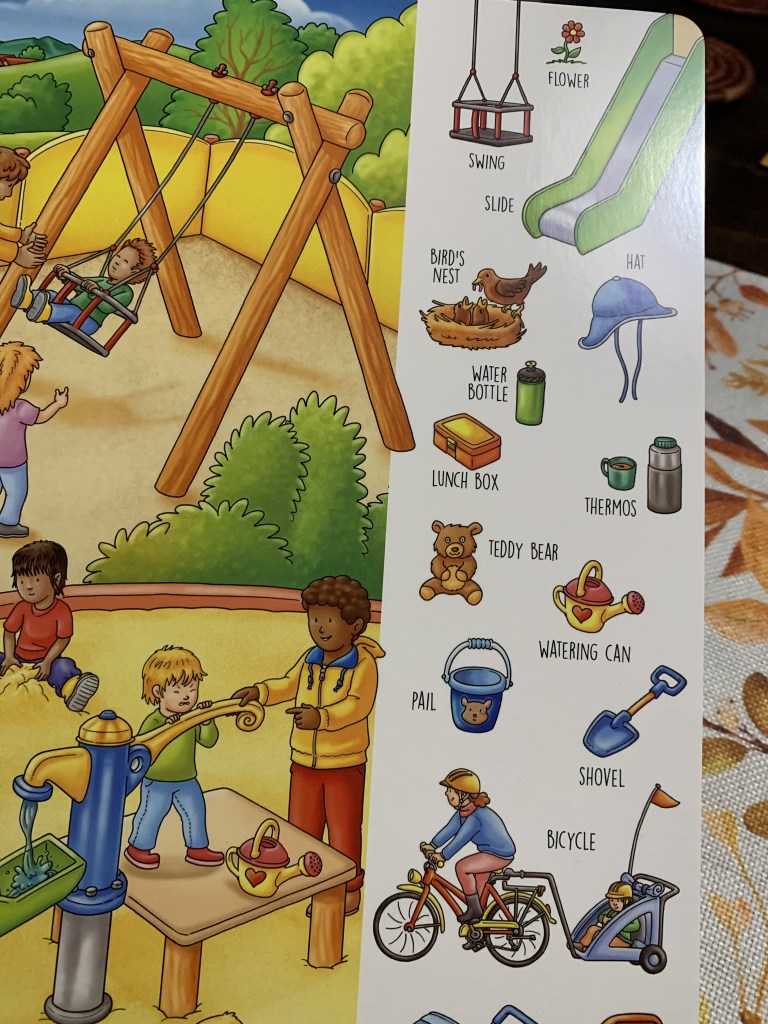
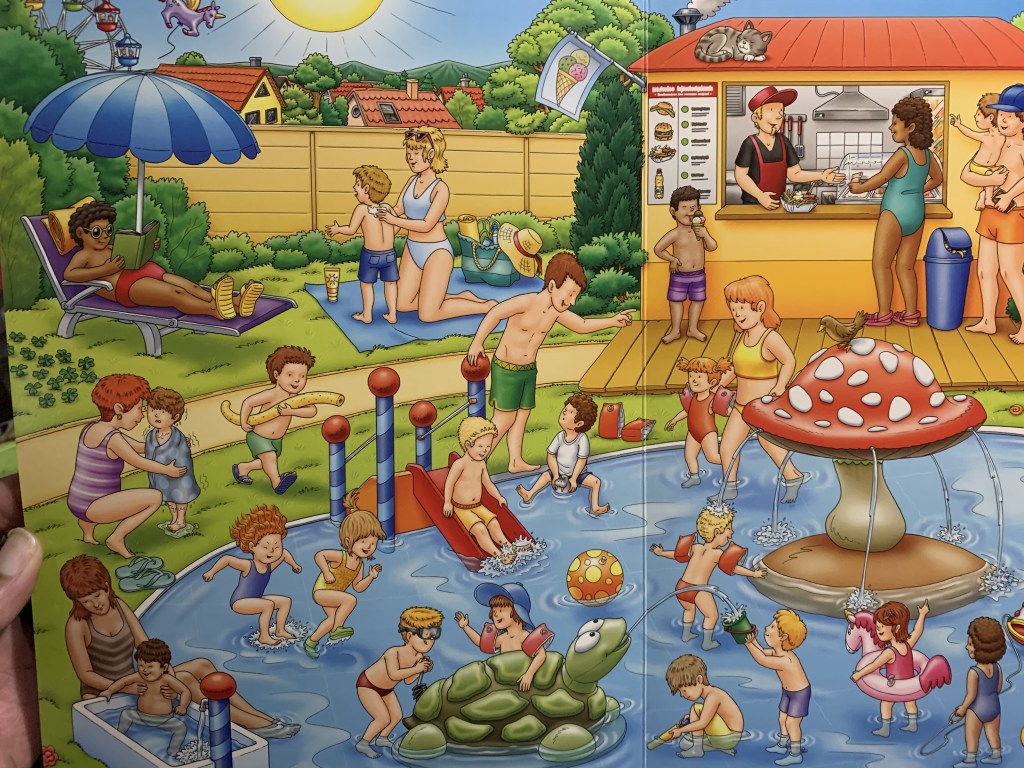
What I really like about this book is that it goes beyond simply showing a picture with a word underneath it. Wimmelbooks are known for their busy, detailed illustrations, giving little ones plenty to look at, point to, and discover. My First 100 Words introduces young readers to familiar objects and vocabulary through colorful scenes that encourage them to slow down and explore the pages.

At this age, we aren’t worried about him memorizing 100 words. Instead, this is a book we can use naturally throughout the day. We can point to an object, say its name, talk about its color or what it does, and then help him recognize that same object when he encounters it in real life. Those simple interactions are wonderful for building early vocabulary, observation skills, and language development.

I also love that this is the type of book that can grow along with him. Right now, reading together may mean pointing, naming objects, making sounds, and letting him explore the illustrations. As he gets older, we can begin asking questions like, “Can you find the ball?” “Where is the dog?” or “What do you see? Eventually, he can start naming objects independently and even using the pictures to create his own little stories.

That makes it much more than a one-and-done baby book. As we build his family library, I want it filled with quality books that encourage curiosity, conversation, and a genuine love of books from the very beginning. My First 100 Words Wimmelbook fits beautifully into that goal.

For our newest one-year-old reader, this has been such a sweet addition to his growing library and I have a feeling this is one we will be pulling off the shelf again and again.

Digital Learning Platform, Education, Grammar, High School, Homeschool, homeschool curriculum, Middle School, Novel Studies, Online Learning, Unit Study

Beyond the Flame: How Literary Adventures for Kids Helped My Teen Go Deeper Into Fahrenheit 451

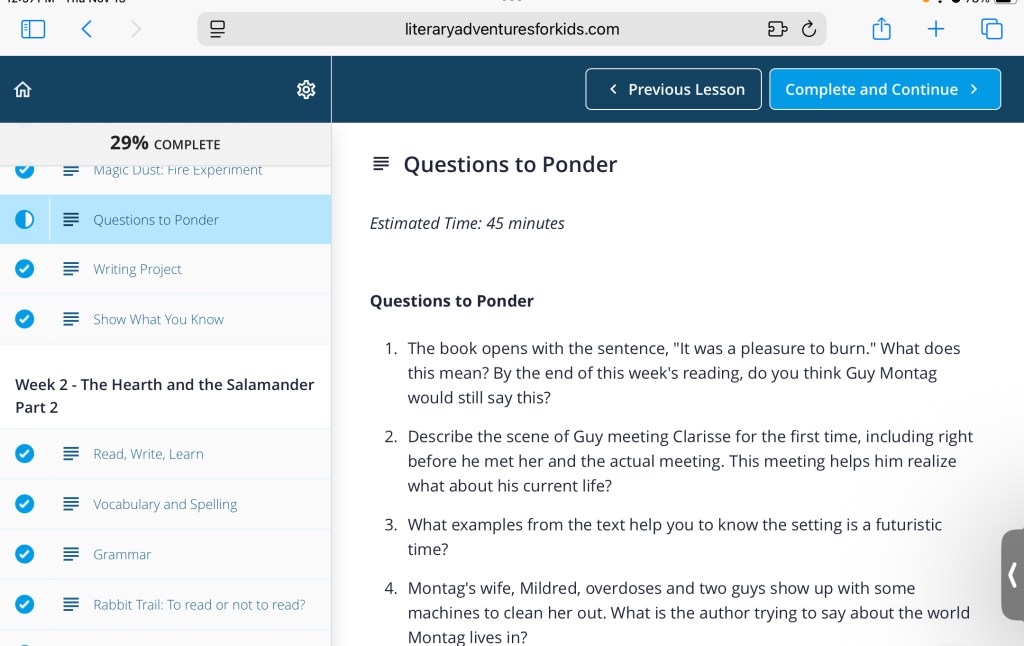
When your teen falls in love with dystopian literature, you follow the trail with them. My son recently dove into The Hunger Games, then The Giver, and most recently Fahrenheit 451. But after finishing Bradbury’s classic, he came to me with big, layered questions about censorship, symbolism, society, and why Bradbury wrote the book the way he did. He wanted to dig deeper, not just gloss over the content. I searched for a novel study that could match his curiosity, but everything I found felt rigid, overly academic, or full of busywork. Then I remembered we still had our Literary Adventures for Kids account. To my relief, they offered a Fahrenheit 451 study, and once I opened it, I knew immediately that it was exactly what we needed.

Literary Adventures for Kids (LAK) is an online, self-paced literature platform designed to bring stories alive through exploration, multimedia learning, and intentional Socratic-style questioning. Instead of draining the joy out of reading with endless worksheets, it enhances the experience. The digital layout is clean and easy to navigate, and lessons are structured in a way that encourages deep thinking without overwhelming the student.

What Makes Literary Adventures for Kids Stand Out

LAK avoids the “read-and-regurgitate” approach that turns teens off from literature. Instead, it blends academic depth with interactive, curiosity-driven learning. Students are guided to think critically, question themes, and draw connections between the story and real-world issues.

Some standout features include:

  • Rabbit Trails of Wonder — These guided explorations help students dive deeper into topics related to the novel, such as censorship, propaganda, technology, or Bradbury’s historical context.
  • Socratic-Style Discussion Prompts — Instead of factual recall, LAK offers open-ended questions that push students to analyze, interpret, and evaluate the author’s message.
  • Creative and Multi-Sensory Activities — Journaling, copywork, theme mapping, mini-projects, and multimedia clips enrich the learning experience.
  • Rigor Without Burnout — Lessons feel meaningful and meaty, but never overwhelming or monotonous.
  • A Diverse Catalogue of Books — The platform offers a wide assortment of titles, from classics to contemporary YA, diverse authors, and culturally rich stories.

Inside the Fahrenheit 451 Study

The Fahrenheit 451 study was the perfect blend of analytical, creative, and reflective learning. Each module invited my son to slow down and consider the symbolism that runs throughout the book. The platform included context about book banning, historical events that shaped Bradbury’s writing, and discussions that helped my son articulate his thoughts clearly and confidently.

He especially loved:

  • exploring rabbit trails about censorship and media control
  • watching short, curated videos that expanded his understanding
  • answering Socratic-style prompts that made him think deeply
  • journaling about the ethical dilemmas in the story
  • comparing Bradbury’s warnings to today’s society

This study didn’t talk at him it invited him into a conversation with the text.

A Strong, Diverse Book Catalog

One of my favorite aspects of Literary Adventures for Kids is the variety of books available. Their catalogue includes:

  • classic literature
  • modern young adult novels
  • diverse and multicultural stories
  • high-interest titles teens actually want to read
  • newer releases and timeless favorites

It gives homeschool families the freedom to choose books that align with interests, learning goals, and cultural representation all while maintaining academic richness.

Final Thoughts

Literary Adventures for Kids brought our Fahrenheit 451 experience to life in a way traditional novel studies simply couldn’t. My son thrives on interactive, thoughtful, and well-designed lessons, and LAK delivered all of that with ease. It made him excited to revisit the novel and unpack everything he was curious about. Instead of draining his enthusiasm, LAK amplified it.

If you have a teen who prefers Socratic dialogue, multimedia learning, and meaningful exploration over worksheets, this platform is a gem. It respects how middle and high school students think, question, and understand the world.

If you’re ready to turn novel studies from dry assignments into immersive, curiosity-driven adventures, take a look at Literary Adventures for Kids.

Fahrenheit 451 warns us about what happens when people stop thinking
LAK encourages our students to think deeper, question boldly, and let their love of literature burn bright.

Curriculum, Curriculum Resource, Homeschool, homeschool curriculum, Science

A Non-Religious Science That Delivers: Our Take on Real Science Kids Level 4

We recieved a copy of Real Science Kids Level 4 for our honest review!

We’ve finished our hands-on walkthrough of Real Science Kids Level 4 (newest release) and this is our final, comprehensive review of the series. If you’ve been following our earlier write-ups of Levels 2–3, this review ties everything together, compares how Level 4 builds on those earlier levels, and explains why this level is especially suited to some 4th graders and not to others.

Overview what Level 4 is at a glance

Real Science Kids Level 4 steps up both the depth and pace of science instruction compared with the early levels. It keeps the series’ hallmark hands-on experiments and approachable explanations, but it accelerates the curriculum: lessons move faster, explanations are denser, and activities expect stronger reading comprehension and independent thinking from students. For a motivated 4th grader who already enjoys science, Level 4 can feel exciting and rewarding. For a student who needs slower pacing or heavy remediation, you’ll want to plan extra time or pair it with more guided instruction.

Topics covered

Level 4 blends life, physical, and earth science in more sophisticated ways. Expect units that include (but are not limited to):

  • Life Science: ecosystems, plant and animal adaptations, food webs, basic genetics concepts
  • Physical Science: matter & its properties, simple chemistry experiments, forces and motion basics
  • Earth & Space: rock cycle, weather patterns, solar system fundamentals
  • Scientific Skills: hypothesis development, controlled experiments, measurement, graphing, data interpretation
  • Practical/Enrichment: lab journals, extension projects, STEM challenges and mini-research tasks.

Why it’s a great fit for many 4th graders

  • Accelerated, rigorous pacing: Level 4 assumes students can read instructions carefully, follow multi-step experiments, and synthesize results into conclusions. That makes it ideal for curious, independent learners who are ready to think like junior scientists.
  • Hands-on emphasis: The experiments and projects are engaging and meaningful they’re not just demonstrations, they ask students to predict, measure, record, and reflect.

Limitations / who should be cautious

Not for every 4th grader out of the box: Because the curriculum is accelerated, students with weaker reading comprehension or poor attention to multi-step instructions will struggle without extra support.

Requires parental/teacher involvement for some students: To get full value, some learners will need guided read-alouds, demonstration of techniques, or pre-teaching of vocabulary.

Pacing expectations: If you use Level 4 as a straight replacement for a slower paced Level 3, be ready to adjust schedule or split some lessons.

How Level 4 compares to our earlier Level 2–3 reviews

When we reviewed Levels 2–3, the series felt very gentle: short lessons, lots of picture support, and very guided, parent-led experiments perfect for early elementary learners. Level 4 clearly intends to bridge to middle-school science thinking: it asks students to do science, not merely observe it. If you used Levels 2–3 in your homeschool, Level 4 will feel like a natural but definite step up. Expect to revisit how you scaffold reading and experiment setup: what worked with Level 3 (read-aloud instructions, step-by-step adult demos) may need to become a bit more student-centered with Level 4.

Teaching tips & pacing suggestions

  • Pre-teach vocabulary: Spend a short pre-lesson on key terms — this pays off on experiment day.
  • Model one experiment first: Demonstrate an experiment as a whole-class (or parent-led) demo, then let students replicate with guidance.
  • Use the lab journal: Require students to write predictions, methods, results, and a short conclusion for every experiment — it enforces scientific thinking.
  • Adjust pacing: If a student struggles, split lessons into two sessions: one for concept + vocabulary, one for experiment + reflection.
  • Pair reading support when needed: For readers below grade level, read directions together or provide a simplified checklist.

Final verdict — who should choose Level 4

Choose Real Science Kids Level 4 if your 4th grader:

  • Already shows curiosity about science, asks “why” questions, and enjoys experiments.
  • Has solid reading comprehension and can follow multi-step directions (or you’re willing to provide a small amount of guided support).
  • Wants a curriculum that accelerates concept development and builds real scientific thinking skills.

If your child needs a gentler introduction to experiments and vocabulary, consider re-reading our earlier reviews of Levels 2–3 and using those as the transition years before moving into Level 4.

Closing notes — our series wrap-up

This is our final review of the Real Science Kids series. We’ve walked Levels 2–4 in previous posts and can confirm the series does continue beyond Level 4 (there is a Level 5–7 tier available for older students). Across the series, Real Science Kids grows from guided, playful experiments into a rigorous, inquiry-focused program and Level 4 is where that transformation becomes most noticeable. If your goal is to accelerate a curious 4th grader toward middle-school science habits, Level 4 is an excellent, thoughtfully designed choice just plan for comprehension support if needed. Real Science Kids Level 4 is a part of the 4th grade Timberdoodle Co Curriculum Kit.

Curriculum, Curriculum Resource, Homeschool, Reviews, Science, Unit Study

Empowering Future Doctors: A Review of the Know Your Body 3-Book Bundle #2′ from Know Yourself

We received Know Your Body 3-Book Bundle #2 for our honest review from Timberdoodle Co.

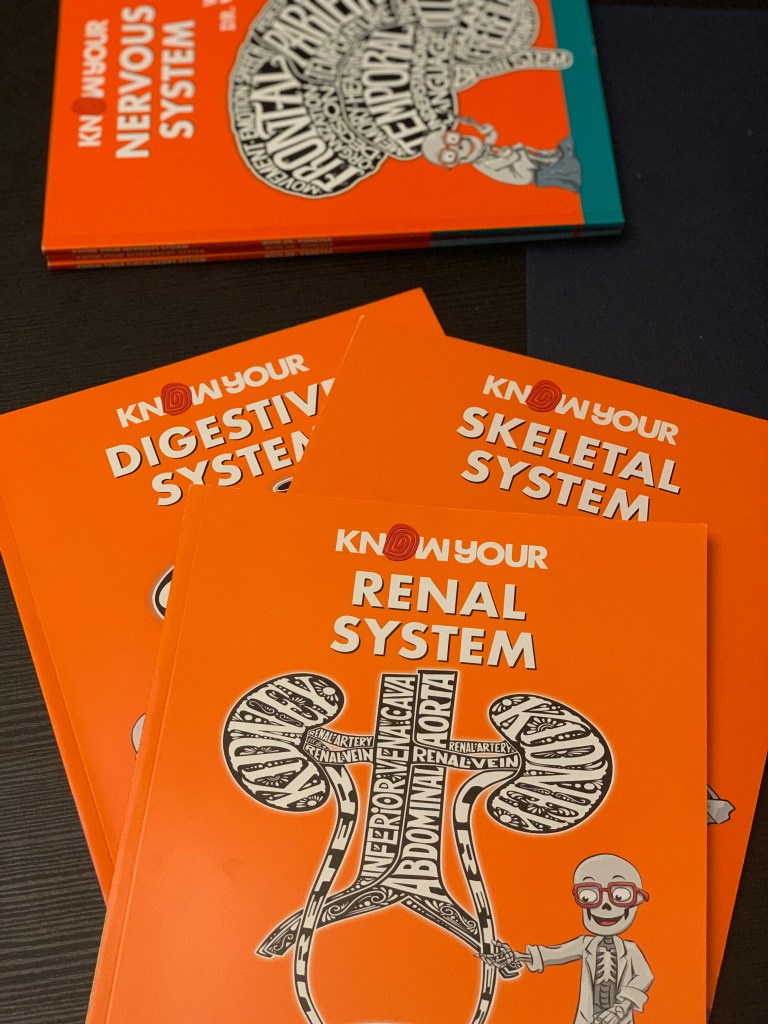
As a homeschool mom with a future doctor in the house, I’m always on the lookout for resources that nurture my son’s passion for medicine. The Know Your Body 3-Book Bundle #2 from Know Yourself Company, part of Timberdoodle Co’s 8th grade curriculum, has been a fantastic addition to our homeschool library. As long-time users of the Systems of the Body: Adventure Series, we’ve always appreciated Know Yourself’s ability to make complex biological concepts accessible and fun for young learners. This bundle goes above and beyond, offering a deeper dive into the wonders of the human body that’s perfect for middle schoolers like my son

Here’s a breakdown of what each book in the bundle offers and why they’ve been a game-changer for our homeschool journey:

Book 4: The Digestive System

This book takes readers on a journey through the digestive process in a way that truly comes alive. From the mouth to the stomach and all the way to the intestines, the illustrations and explanations help break down the complex functions into bite-sized (pun intended!) sections that are easy to digest—literally and figuratively. My son loved learning about enzymes and how food gets absorbed into the bloodstream. It also sparked a lot of discussion about healthy eating and how to support digestive health. For any middle schooler curious about how their body processes food, this book is a must-read.

Book 5: The Renal System

The kidneys, bladder, and the entire urinary system get their time to shine in this detailed exploration of the renal system. This book explains the filtration process in the kidneys and how waste is removed from the blood, a topic that fascinated my son. He found the diagrams extremely helpful, and the quizzes at the end of each chapter tested his knowledge in a fun way. The renal system can seem like a dry subject (pun again intended!), but this book manages to make it engaging and interactive, which is a real testament to the authors. It’s more than just memorizing facts; the book encourages problem-solving and critical thinking, which is crucial for middle schoolers stepping into more advanced studies.

Book 6: The Skeletal System

Out of the three, the skeletal system book was my son’s favorite. He has a deep interest in anatomy, and this book gave him a clear understanding of how bones function, from providing structure to producing blood cells. The book does a fantastic job explaining how bones work in tandem with muscles and ligaments, bringing the human skeleton to life in a fascinating way. The exercises at the end of the chapters were particularly beneficial for reinforcing learning and helped my son think critically about how our body’s framework supports everything we do.

How These Books Differ from the Systems of the Body: Adventure Series

While we have been long-time users of the Systems of the Body: Adventure Series, the Know Your Body 3-Book Bundle #2 offers a more detailed, in-depth look into each body system. The Adventure Series focuses on broader overviews with an adventurous storyline, which was fantastic for introducing concepts to my son when he was younger. Now, at the middle school level, the Know Your Body series brings a more mature approach. It dives deeper into scientific processes and encourages critical thinking through hands-on activities and real-world connections. These books are an ideal fit for older students who are ready to take their understanding to the next level.

Why It’s Perfect for Middle Schoolers

The Know Your Body books strike a perfect balance between fun and educational content. The tone is light and engaging, yet the information is comprehensive enough to challenge a middle school student. My son, who is highly motivated and loves to learn about the human body, found these books incredibly fulfilling. They pushed him to think like a scientist and future doctor, while still being accessible enough for independent learning.

Know Yourself Academy: The Next Step in Learning

We’re also excited to explore the new Know Yourself Academy online platform, launched by the same creators. As homeschoolers who have loved their books, this online platform seems like a natural progression. It promises to offer a rich, interactive learning environment that complements the print materials. For a child with big dreams of becoming a doctor, having access to these kinds of high-quality educational tools is invaluable.

Final Thoughts: A Must-Have for Aspiring Young Doctors

If your child has an interest in science or medicine, I highly recommend the Know Your Body 3-Book Bundle #2 from Know Yourself. These books offer a perfect blend of fun, education, and depth, especially for middle schoolers who are ready to dive deeper into the workings of the human body. Whether your child dreams of becoming a doctor or is just curious about how their body works, this bundle is a fantastic tool for fostering that curiosity and making learning both interactive and meaningful.

Homeschool, homeschool curriculum, homeschool science, Middle School, Reviews

Unveiling Life’s Marvels: Discovering Life’s Story: Biology’s Beginnings and The Evolution of an Idea Review !

We received Discovering Life’s Story: Biology’s Beginnings” and “Discovering Life’s Story: The Evolution of an Idea for our honest review.

Embark on an enlightening journey through the realms of biology with “Discovering Life’s Story: Biology’s Beginnings” and “Discovering Life’s Story: The Evolution of an Idea,” an enthralling two-volume set crafted by the esteemed Joy Hakim, celebrated for her renowned “A History of US” series. Dive into the wonders of life’s origins and evolution as Hakim expertly guides you through the intricacies of biological exploration.

Volume 1: Biology’s Beginnings

In the inaugural volume, Hakim leads readers on a captivating exploration of life’s beginnings, spanning from the cosmos to the emergence of complex organisms. Delve into the realms of cellular biology, genetics, and biodiversity, as Hakim unveils the marvels of the natural world. From the tiniest microorganisms to the grandeur of ecosystems, this volume illuminates the fundamental principles that shape life on Earth. If you interested in the teachers guide for Discovering Life’s Story: Biology’s Beginnings you can find it on Candlewick Press.

Volume 2: The Evolution of an Idea

Continuing the odyssey, Hakim traces the evolution of scientific thought surrounding life’s evolution on our planet. Explore the rich tapestry of evidence supporting evolutionary theory, from the fossil record to molecular biology. Through Hakim’s engaging narrative, readers gain insight into the mechanisms driving biological change and the interconnectedness of all living beings.

Supplement to Homeschool Curriculum

These two volumes can possibly serve as invaluable supplements to any homeschool curriculum, offering comprehensive coverage of key biological concepts in an accessible and engaging format. Whether used as primary texts or supplementary resources, Hakim’s books provide homeschoolers with a solid foundation in biology, complementing hands-on activities and experiments with in-depth explanations and real-world examples.

Reference for Upcoming School Year

As you prepare for the upcoming school year, consider adding “Discovering Life’s Story” to your curriculum as a reference book. Its clear explanations and thorough coverage make it an ideal resource for students to consult as they explore new topics or review key concepts. With Hakim’s expertise and insight at their disposal, students will be equipped to delve deeper into the wonders of biology and cultivate a lifelong passion for scientific inquiry.

Inclusive Diversity Note

While “Discovering Life’s Story” offers a wealth of information on biology, it’s important to acknowledge its minimal inclusive diversity of scientific contributions from other ethnic groups. As educators, we can supplement this aspect by incorporating additional resources that highlight the diverse perspectives and contributions of scientists from all backgrounds, enriching the learning experience and fostering a more inclusive understanding of the scientific community.

Embark on an evolutionary adventure with “Discovering Life’s Story,” where Joy Hakim’s captivating storytelling and comprehensive coverage of biological concepts await. Whether you’re a homeschooling family seeking to enrich your curriculum or an avid learner eager to explore the wonders of life, this two-volume set promises an illuminating journey through the mysteries of biology. Dive in and discover the marvels of life’s story today!

4th Grade, 5th Grade, 6th Grade, Education, Family, Homeschool, homeschool curriculum, Language Arts, Literature Base, Middle School

Hearth & Story Language Arts Curriculum: Nurturing a Love for Language

We received Hearth & Story curriculum for our honest review!

As a homeschooling parent, discovering a language arts curriculum that fosters a love for literature, writing, and effective communication is crucial. Hearth & Story has emerged as a valuable resource for homeschooling journey, offering a well-rounded and engaging secular language arts program. If you are familiar with Pandia Press History Quest is authored by Lindsey Sodano the creator of this new language arts curriculum.

The Program

One of the standout features of the Hearth & Story curriculum is its emphasis on literature. The carefully selected reading materials expose my child to a rich variety of genres and authors, fostering a love for literature. The integration of classic and contemporary works ensures a balanced and comprehensive reading experience.

The writing component of the curriculum is equally impressive. The program provides clear and structured writing lessons that progressively build on foundational skills. The inclusion of creative writing prompts and projects has sparked my child’s imagination, making the writing process both enjoyable and educational.

The flexibility of Hearth & Story can be a significant benefit for an homeschooling schedule. The well-organized lesson plans and resources allow for easy adaptation to our pace and learning style. The inclusion of assessments and progress tracking tools has been helpful in monitoring my child’s development and identifying areas that may need additional focus.

The incorporation of grammar and language mechanics is seamless. Rather than being presented as isolated exercises, these elements are integrated into the broader context of reading and writing. This approach not only reinforces grammatical concepts but also demonstrates their practical application.

Final Thoughts

From a parent’s perspective, the support materials provided by Hearth & Story are comprehensive. The instructor’s guide, supplementary resources, and online support contribute to a smooth teaching experience, even for parents who may not have a background in education.

One aspect that particularly stood out to us was the “brain food” section, which quickly became our favorite. It’s amazing how it effortlessly stimulates young minds while providing valuable insights. Moreover, the curriculum’s design encourages independence in learning, allowing children to navigate through the materials with minimal assistance. As a parent, this feature not only promotes self-reliance but also instills confidence in my children’s academic journey.

It has been a delightful experience. This curriculum truly caters to the holistic development of a child, addressing various learning styles and fostering critical thinking skills along the way.

Regarding grade level suitability, I found this curriculum to be well-suited for advanced 4th graders, while still offering a challenge for those in 5th and even 6th grade. It’s a versatile resource that adapts to the varying needs and capabilities of students.

The graphics within the curriculum are not only visually appealing but also possess a calming effect, creating an environment conducive to learning. The beautifully illustrated content brought back fond memories of another curriculum we had previously used when my son was younger. He particularly enjoyed revisiting similar styles, using it almost as a nostalgic review session. The cost is of the complete curriculum is inexpensive and you have options to purchase individual areas of interest.

I was pleased to discover the literature sections, which included titles like “The Giver,” a book typically reserved for older grades. This demonstrates the curriculum’s commitment to offering enriching and thought-provoking material, catering to a wide range of reading levels and interests.

Looking ahead, I eagerly anticipate exploring the upcoming 6th-grade language arts component. The flexibility of this curriculum is another commendable aspect; it leaves room for additional supplements, allowing for customization based on individual needs and preferences.

Overall, our experience with this curriculum has been nothing short of excellent. It’s a well-rounded educational tool that not only educates but also inspires young learners to explore and grow. I wholeheartedly recommend it to any parent or educator seeking a comprehensive and engaging learning resource for their children.

In conclusion, Hearth & Story Language Arts Curriculum has the potential to be a cornerstone of homeschoolers language arts instruction. Its focus on literature, comprehensive writing lessons, seamless integration of grammar, and flexibility make it a standout choice for homeschooling families seeking a well-rounded language arts program. I highly recommend Hearth & Story to parents looking to cultivate a love for language and literature in their children.

Critical Thinking and Logic, Curriculum, Education, Language Arts, Vocabulary, Writing

Michael Clay Thompson Language Arts: Level 2 Grammar Town Review!

Complimentary Product Received!

This homeschool year has been difficult choosing a language curriculum. I decided to go with the curriculum we had last year, but that was an epic fail. After 3 months of trying to find a new language arts program before our 2nd semester started, I ran across Royal Fireworks Press language arts curricula Michael Clay Thompson Language Arts: Level 2 Grammar Town. The Melanated Gold Squad was offered the opportunity to review MCT Level 2 Complete Homeschool Package and I was selected to review it.

My son is newly turned 9 and he loves grammar, we noticed early on he was gifted in this area of his homeschool studies. Finding a grammar curriculum that was both rigorous and amusing has become arduous. This year alone we have set aside 3 curriculums and decided on multiple review books. Michael Clay Thompson Language Arts: Level 2 Grammar Town has been the curriculum we needed to feed his ferocious grammar inclinations.

Michael Clay Thompson Language Arts: Level 2 Grammar Town is for students ages 9-11 in grades 4-5. Grammar Town picks up where Grammar Island leaves off with the continued practice of the “4 grammar analysis of (1) parts of speech, (2) parts of the sentence, (3) phrases, and (4) clauses.” No worries if you haven’t done the previous level as long as your student has a strong understanding of grammar they will be alright with starting level 2, but I wouldn’t recommend jumping into level 3 without previously doing level 3. Even though the curriculum is presented for children who are gifted/dyslexic I have found that children who are able to read fluently and have strong reading comprehension will find this curriculum gratifying.

Level 2 : Grammar Town Layout

MCT Language Arts: Level 2 Grammar Town is beautifully designed with simple distinctive vibrant illustrations. The curriculum covers 5 strands Grammar (Grammar Practice), Vocabulary, Writing, Poetics, and Literature. The complete homeschool package comes with a lesson guide, student books, and teacher’s manuals (this includes the readers) for each of the MCT sections. The program in my opinion is designed to be conversational. MCT is not like your typical language arts curriculums you will not find the typical question and answer busy work. The lessons are intellectually stimulating and thought-provoking. I found myself relearning and grasping a better understanding of grammar. My son instantly took to the Grammar Town book, he repeatedly would point out how he better understood grammar concepts.

There are 30 weekly lessons of MCT Language Arts: Level 2 Grammar Town the lessons are designed to gradually include the other textbooks included in the MCT Level 2 Complete Homeschool Package. Students should work at their own pace and make sure they have a complete mastery of the Grammar Town book before moving on to the next book. There are assessment pages in the books, but you can also download the assessment pages from a link provided by Royal Fireworks Press inside the book. The assessment pages are there to make sure your student is mastering the materials before moving on to the next section in the book. These assessment pages are not the same as Practice Town.

The very first-week students are to read the Grammar Town book on their own. I was amazed to see how intrigued my son was by the illustrations and the story. Several times he came to me and asked questions and wanted to discuss the stories. On the days we didn’t do lessons he requested MCT Language Arts: Level 2 Grammar Town over his other language arts books.

Today lesson was intellectually restorative….Learning about the complexity of sentence structure and how all the the words we use in sentences are reflective of the 8 parts of speech that make a sentence cohesive. Thinking about it from that point of view makes sense into why a sentence must a have a subject and verb.

J

Caesar’s English is the vocabulary section students will embark on a historical language journey. Students will learn Latin roots, history, and word origins. Again students are exposed to wonderful visual and practice pages. Students will also see a brief intro to Latin roots in Grammar Town on the first pages. Practice Town includes 100 sentences of practice for students on the skills learned in Grammar Town and writing. Paragraph Town is another fun-filled narrative about learning paragraph fundamentals and punctuation. The poetry book Building Poems is metaphoric it is written to teach students poetry terms as if they are constructing a building. MCT Language Arts: Level 2 Grammar Town includes the literature books:

  • Alice’s Adventures in Wonderland
  • Peter Pan
  • The Wind in the Willows

Each book is reproduced in its entirety and includes Michael’s “language illustrations”—close-ups of poetic techniques, four-level analyses of interesting grammar, and comments about writing strategies

Royal Fireworks Press

How We Used MCT Language Arts: Level 2 Grammar Town

For the first 3 weeks, we used the curriculum as the implementation guide suggests. I made little tweaks here in there. My son was introduced to some Latin roots and I wrote these roots on index cards for him. I also wrote out grammar cards for him of all of the parts of speech components. We also put together a vocabulary journal for words we were instructed to define. My son enjoyed the assignments on select pages, some of these we did in his notebook, and some we did on a dry erase board. The lessons are short we spent time in meaningful discussions.

MCT Language Arts: Level 2 Grammar Town was used daily for the first 3 weeks and I added in some supplemental resources just to ensure mastery. After week 3 we went to a 3-day-a-week schedule and 2 days a week supplemental materials. I was sure to use supplemental material that would complement MCT Language Arts: Level 2 Grammar Town. Overall my son prefers MCT Language Arts: Level 2 Grammar Town over his previous language arts curriculum and I have shelved what we were using prior. We are in week 6 of the suggested implementation lesson guide and have begun using Caesar’s English I, Classical Education Color Edition.

Wrap up

MCT Language Arts: Level 2 Grammar Town is a rigorous and complete language arts program. If you are looking for a new way to introduce grammar to your student I highly recommend this curriculum. The curriculum does require parent involvement in my opinion wasn’t intense and I welcomed it. I enjoyed having conversations with him and seeing his face light up. The curriculum is designed for mastery and it is suggested you don’t move on until your student has mastered each section.

While the literature part I thought was going to be monotonous. I understand why the books were selected and remastered to complement the curriculum. I do hope in the future the company would consider adding some optional remastered diverse readers.

Would I buy Level 3 in the Fall absolutely! I again caution against not jumping into level 3 without going through level 2. You can get away with not doing Level 1, but making that jump into level 3 is not advisable. The levels don’t coordinate with the grade levels so please take note of this. If you are the type of homeschooler that needs tons of worksheets after each lesson this is not the curriculum for you. MCT Language Arts: Level 2 Grammar Town is in a class by itself rigor without the complexity of busywork, this was more of relaxed conversational language arts. MCT Language Arts: Level 2 Grammar Town takes its time to ensure students really understand language and how they work together. I learned so much in the last 6 weeks reviewing MCT Language Arts: Level 2 Grammar Town.

MCT Language Arts: Level 2 Grammar Town works on this sequence per their website:

  1. Do grammar first.
  2. Begin the vocabulary text after you finish the parts of speech in the grammar book.
  3. Begin the practice book after the entire text of the grammar book is complete.
  4. Begin the writing text once the four-level analysis is strong, as seen in the practice sentences.
  5. Begin the poetics text after the writing book is complete to develop expertise in controlling the sounds of sentences.
  6. Extend the curriculum with literature.

Royal Fireworks Press provides Overview Chart, Elementary Guide, and Secondary Guide on their website. There are seven levels to the MCT Language Arts program and there are also implementation videos.

The cost of MCT Level 2 Complete Homeschool Package is $290 the company is also converting their books into Kindle format which may help you cut costs. This program is comprehensive and worth the cost. I highly recommend MCT Language Arts: Level 2 Grammar Town if you are looking for a different way to teach language arts. Be sure to check out the other squad’s reviews of Royal Fireworks Press curriculums.

Until the Next,

Mom and J

Education, Family, Games and Apps, Homeschool, Unit Study

The Waldock Way Human Body Unit Review!

Complimentary Product Received!

One of my favorite homeschool mom influencers is Jessica from The Waldock Way. I have always been a fan of her Instagram and YouTube. We have used all of her unit studies and they are in constant rotation in our home. To date, our favorite has been Traveling the World with a strong runner-up Holidays Around the World. My son stalks her YouTube channel for her Amazon Hauls.

Quite natural I am a member of The Waldock Way Community Facebook group, but then it happened the rumors started she has possibly had a new unit in the works that would debut sometime early 2022. Then it happened she announced the new unit would be Human Body which dropped on February 28th during her annual Spring Sale.

So it was an honor to be one of the first people to get an exclusive first look at this amazing unit study! So let me begin this review with OMGOSH!! Human Body Unit is a full package deal it covers EVERYTHING! I mean I saw lessons on cells, tissue types, scientist study, mazes, puzzles, diagrams, human body idioms, and play-doh mats. This is truly an extraordinary unit study.

The Human Body Unit includes:

  • 13 Family Lessons
  • Comprehensive Resource Guide
  • 9 Human Body System
  • Anatomy
  • Health & Nutrition
  • Review Pages
  • Writing Themes
  • Interactive Activities and much more!

The Human Body Unit is beautifully illustrated by Jessica’s husband. Excellent attention to detail in the illustration as well diversity in skin tones (much appreciated ). One of the things I love about how the Human Body Unit is laid out is that you can go at your own pace and order. My plan is to use the Human Body Unit over a period of time. We will begin with her Health and Nutrition and Five Senses.

The Hunan Body Unit is easy to follow and very relaxed. I was able to locate all of her suggested books at my local library. The unit is written in such a way that you can use almost any human body books you may have on hand.

Okay let me put in a side note the Human Body Unit is a unit study, just like her other products. Nowhere on her website or in her materials does she claim that her unit studies are curriculums. Jessica does what she does best create unit studies that are meant to engage your student in an exploration of learning through literature, game schooling, crafts, adventures, resources, and hands-on activities.

The Waldock Way is nonsectarian. None of our products promote any specific view, so that they can be enjoyed by all homeschoolers.

-Jessica

For copyright reasons I am not sharing many pictures from the actual Human Body Unit but you can see a full walkthrough of the Human Body Unit on The Waldock Way YouTube as well as follow The Waldock Way on Instagram.

So I know what you think how much? Right now at the time of this review the unit is on sale for $19 but regularly priced at $28. I highly recommend the Human Body Unit and I can’t wait to dive into it.

If you are interested in reading more about The Waldock Way products be sure to check out the Melanated Gold Squads reviews by clicking the banner below.

Until the Next Time,

Mom and J

3rd Grade Curriculum, 4th Grade, 5th Grade, 6th Grade, Charlotte Mason, Critical Thinking and Logic, Curriculum, Education, Family, Geography, Homeschool, Read Alouds, Reviews

Heritage Mom: Civil Rights Movement

Complimentary product received!

If you don’t know who the Heritage Mom is I am super excited to be able to tell you about this wonderful blogger, mom, homeschooler, philanthropist, and Charlotte Mason guru. Okay so I had had the pleasure of meeting Amber O’Neal Johnston and once a member of her Heritage Homeschoolers group in Georgia and I can honestly tell you she is one of the sweetest and kindest people I have met during my homeschooling journey.

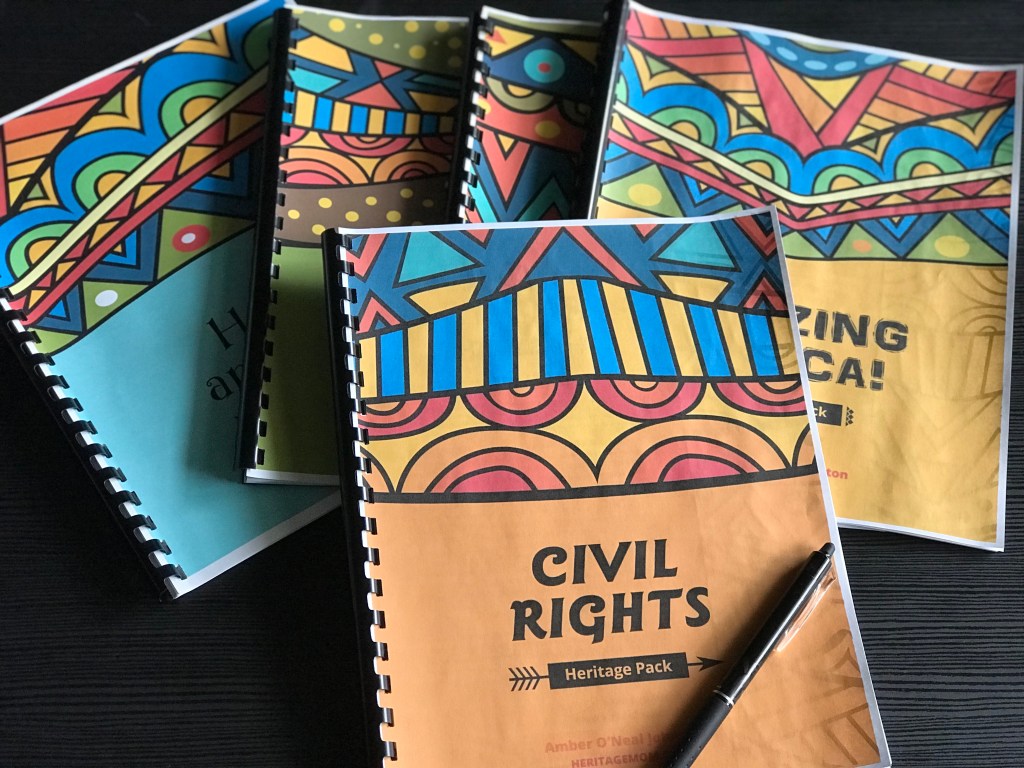
When Heritage Mom offered to have the Squad review 3 of her culture guides, I knew had to be part of this opportunity. Let me keep it real I own about 90 % of her culture guides already and we are still working our way through Amazing Africa. We own Schomburg, Heart and Soul, Harlem Ressianance Stomp, and now the Civil Rights Heritage culture guide. All of the culture guides are excellent, Heritage Mom gives you everything you need to use these guidesto teach African and African American history.

The Civil Rights Movement guide is divided into 10 topics of study starting the journey in the 1950s and ending with Civil Rights today. The guide is meant for grades 4-6 but you can review the suggested living books and materials you can stretch to 2nd grade. Civil Rights Movement is 36 weekly lessons now you can stretch to the entire 36 weeks or you can do more lessons a week. We are averaging 3 lessons a week in Amazing Africa, but after looking through the Civil Rights Movement guide we will spend a little more time on our lessons because is one of my son’s favorite areas of history to study. Anyone who says they were able to unpack any of her culture guides in 8 weeks, I can honestly say they didn’t give these carefully planned guides the respect they deserve.

The Civil Rights Heritage Pack is a survey of the brave men and women who risked their reputation, livelihoods, and often their very lives to press towards what they knew to be right.

Heritage Mom

The Civil Rights Movement includes two core books, you need to select one of these books to use with the guide, both reasonably priced. She also includes bonus books and recommends not substituting the core books because those books are impeded throughout the guide. She also has movie suggestions that hyperlinked and inserted disclaimers to prescreen them to make sure they are appropriate for your family. There are additional books used in the lesson plan, they are a nice mixture I love she included picture books and chapter books. Now that my son is reading more chapter books I miss those days of really great picture books. I found all the books listed in the lesson plan at my local library. There are also additional books for older or advanced children but these books are not scheduled in the lesson plans.

The lesson plans are easy to follow, with clickable links that take you to videos and she tells you what book you will be using and pages to read. There are 4 weeks of plans one page. The culture guides are meant to be just that guides, if you are looking for a long-drawn-out lesson plan with tons of writing and worksheets you aren’t going to find it in this guide. Amber O’Neal is a Charlotte Mason-inspired homeschooler and her guides are written in that way of homeschooling. These guides are literature-based and meant to allow you and your student to explore and go down rabbit holes.

Out of respect for her and all her hard work you won’t see pictures of pictures of her hard work in this review. You can literally go on her social media and you will feel the admiration so many people have for these creative works. Each guide of the Heritage Mom packs are filled with so much potential you can stretch these materials for years to come.

Until the Next Time,

Mom and J