
We received iBrick STEM Learning System for our honest review!
It’s summertime, and one thing I was desperately trying not to do was have my son spend his summer glued to screens especially screen time that isn’t adding anything meaningful to his day. But surprisingly, we have been hit with a lot of afternoon rain this summer! When those Georgia afternoon showers roll in, they can definitely put a damper on pool time, outdoor adventures, and all the things I planned to keep us out of the house. So, I was pretty happy to have the iBrick STEM Learning System sitting there waiting for us!

We received the iBrick STEM Learning System for our review. It is part of the 2026 Timberdoodle Fourth-Grade Curriculum Kit. Timberdoodle includes iBrick as its STEM component, and the version included with the fourth-grade kit is designed for ages 9–12. Now, my son is on the older end of the designated age range, but if you know anything about kids who love building bricks, you know there really isn’t an age where they suddenly stop enjoying a good building challenge! He is still very much a brick-building kid, so I knew the age range wasn’t going to be an issue for us.
And right out of the box, I have to give iBrick HUGE points for something every homeschool parent can appreciate:
THE STORAGE!
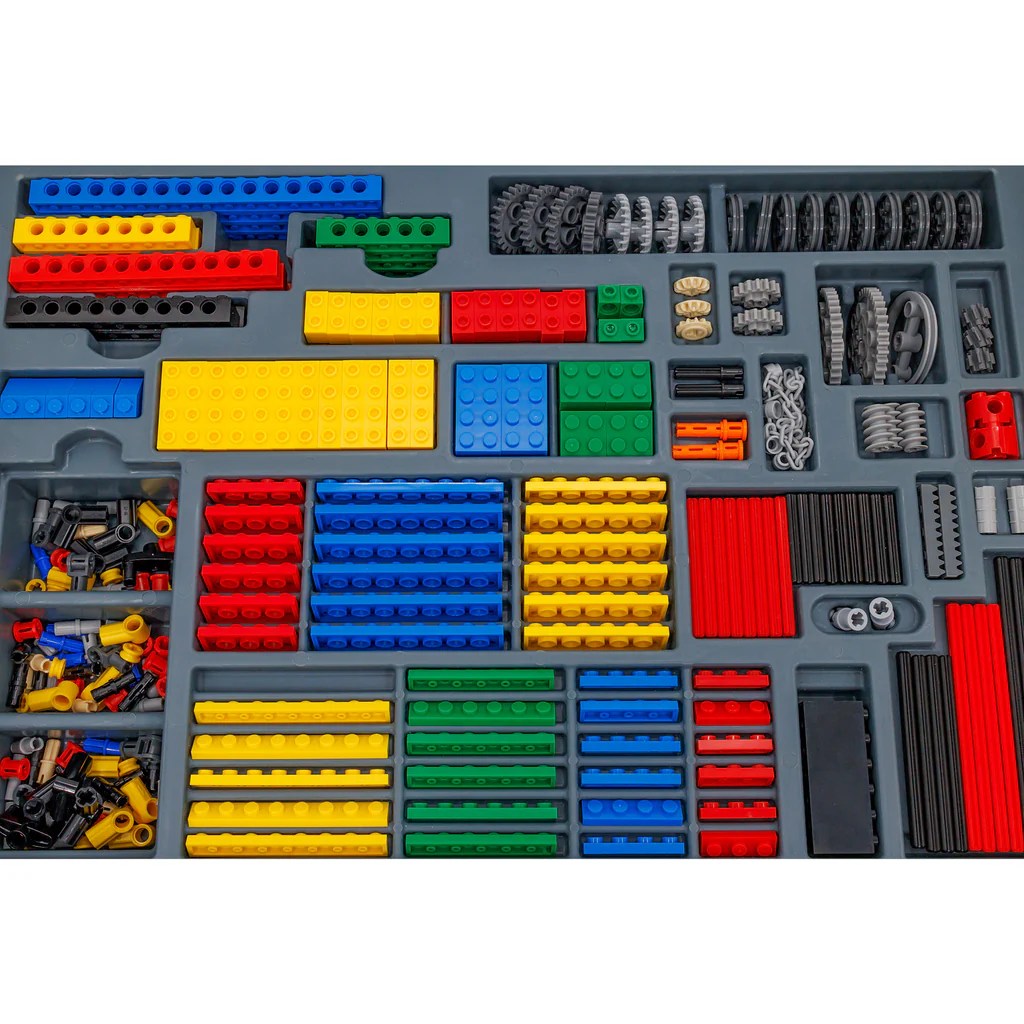
Everything has a place. Everything can stay together. I don’t have to hunt through random bins around the house trying to find the one tiny piece we need to complete a project. That alone makes me much more likely to actually pull a STEM kit off the shelf and use it.
So, How Does iBrick Work?
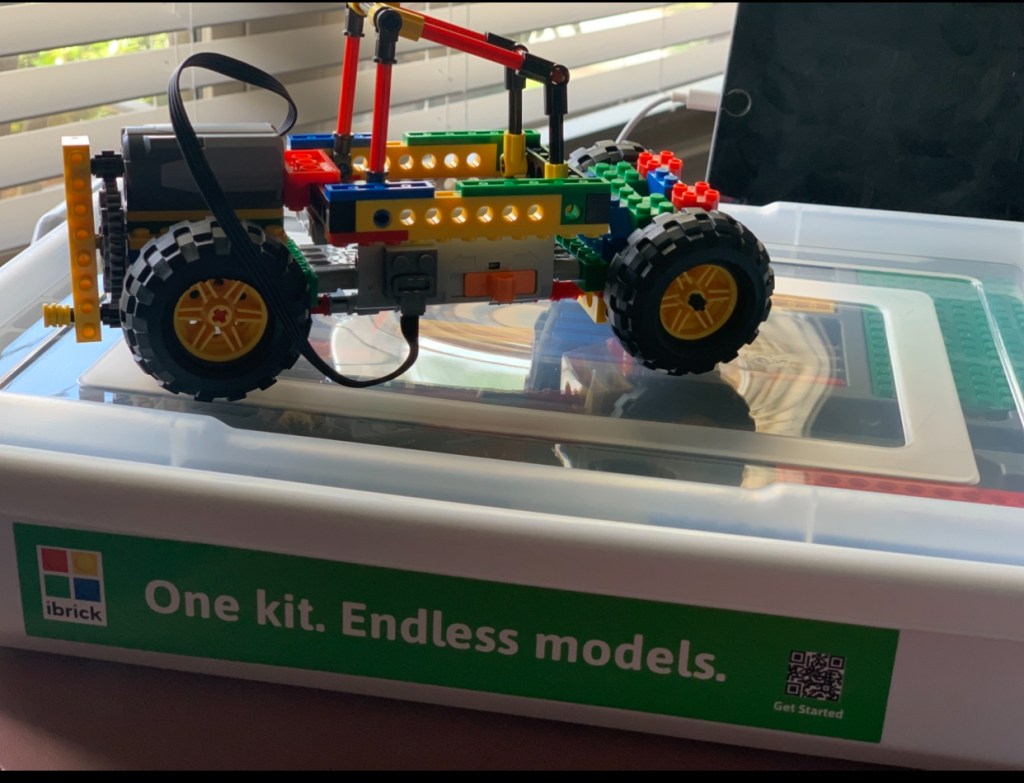
This isn’t simply a box of bricks with instructions telling your child what to build. The ages 9–12 program combines a reusable set of LEGO-compatible building bricks with a 12-month digital subscription that provides new engineering missions throughout the year. The subscription doesn’t have to begin immediately, either, which makes it easy to save it for the school year or activate it when you’re ready. Students receive weekly engineering challenges that use step-by-step instructions, videos, building activities, and opportunities to improve or rethink their designs. Instead of stopping at “I built it!”, the program encourages kids to think about how and why their creation works. That is where I think iBrick moves from simply being another building toy into something that can actually earn a place in our homeschool.
Some of the skills students can practice through the experience include:
- Engineering and the design process
- Problem-solving and critical thinking
- Following multi-step directions
- Building, testing, and redesigning
- Creativity and innovation
- Spatial reasoning
- Applying STEM concepts through hands-on work
- Persistence when the first design doesn’t quite work
I also like the balance between technology and hands-on learning. Yes, there is a digital component, but the screen isn’t the entire lesson. The technology provides the guidance, and then the child actually has to get off the screen and BUILD. That’s a very different kind of screen time in my book.
What About Older Students?
This is probably where I see the biggest potential for our homeschool. Because my son is older, I don’t necessarily have to use iBrick exactly as designed. That’s one of the beauties of homeschooling we can take a resource and level it up. For an older middle school student, I can easily turn an iBrick challenge into an engineering or physics lesson.
Instead of simply completing the build, I can ask: Why does this design work? What forces are acting on it? Where is the load being distributed? What happens if you change the size, weight, wheel placement, or structure? Can you redesign it to make it faster, stronger, taller, or more efficient?
Now we’re talking about force, motion, friction, gravity, energy, stability, mechanical advantage, measurement, design constraints, and the engineering design process. I can also have my son sketch his design before building, write a hypothesis, test different versions, record his results, identify what failed, make modifications, and explain why his final design worked better.
Suddenly, that “fourth-grade STEM activity” has become a legitimate middle school engineering lab. And that is something I always look for when reviewing homeschool materials: Can I stretch it? Can I make it work beyond the suggested grade level? With iBrick, I think the answer is absolutely yes.
My Take So Far
For us, iBrick is landing in a really nice space between play and purposeful learning. My son gets to do something he already enjoys building with bricks while I get a resource that can encourage engineering thinking, problem-solving, experimentation, and even physics. And on those rainy summer afternoons when the pool is out of the question? I’ll gladly take a kid sitting at the table designing, building, testing, failing, rebuilding, and figuring out why something works over mindlessly scrolling on a screen.
That’s the kind of summer screen time I can live with! If you have a brick-loving kid between 9 and 12, iBrick is definitely worth taking a closer look at. And if you have an older student who still loves building, don’t automatically count this one out because of the age recommendation. With a few added questions, experiments, and challenges, there is plenty of room to turn those builds into deeper engineering and physics lessons.
Sometimes the best homeschool resources aren’t the ones that perfectly match the number printed on the box they’re the ones that give us enough room to take our kids’ interests and build something bigger from them. You can learn more about the iBrick STEM Learning System at Timberdoodle and see how it fits into the 2026 Timberdoodle Fourth-Grade Curriculum Kit.